

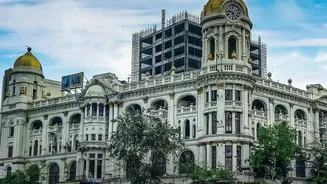
The Empire's Second City
To grasp the 'London of India' label, one must travel back to when Kolkata, then Calcutta, was the epicentre of British power in Asia. From 1772 until 1911, it served as the capital of British India, a bustling port on the Hooghly River and the administrative
heart of the Empire. During this period, it was considered the second most important city in the British Empire, surpassed only by London itself. The British deliberately shaped Calcutta to reflect their imperial might, modelling its avenues and buildings on European standards to create a capital that projected power and prestige. This era of intense development gave birth to the architectural landscape that would earn it the 'City of Palaces' moniker.
An Architectural Echo of England
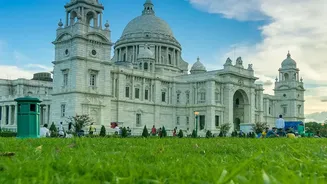
The most visible legacy of this era is the stunning colonial architecture that still defines central Kolkata. A walk through the city feels like a tour through British architectural history, with grand structures in Neoclassical, Gothic Revival, and Victorian styles. The most iconic of these is the Victoria Memorial, a magnificent white marble monument built to honour Queen Victoria. Its design blends British and Indo-Saracenic styles, consciously echoing the grandeur of landmarks like the Taj Mahal. Other structures like St. Paul's Cathedral, with its Gothic spire, the Greco-Roman Writers' Building, and the stately Raj Bhavan, once home to Viceroys, create a cityscape that feels distinctly European. These buildings are not just historic relics; they are lasting symbols of an imperial vision.
Life Beyond the Marble Facades
But to focus only on the grand monuments is to miss the real Kolkata. The city's true character is found in its bustling streets, a vivid tapestry of motion and life that is uniquely Indian. Here, the iconic yellow Ambassador taxis and the slow, rhythmic clatter of the tram—the only remaining network in India—create a cinematic, old-world charm. This is a city of contrasts, where sprawling colonial-era markets like New Market, established in 1874, buzz with modern commerce, and hand-pulled rickshaws share the road with the latest cars. The vibrant street food scene, the flower markets bursting with colour, and the gentle flow of life along the river ghats reveal a city that moves to its own, inimitable rhythm.
The Soul of the City: A Capital of Culture
Beyond its architecture and street life, Kolkata's deepest identity is that of India's intellectual and cultural capital. This is the city of the Bengal Renaissance, a movement that gave birth to modern Indian literary and artistic thought. It is the home of Nobel laureate Rabindranath Tagore, filmmaker Satyajit Ray, and countless other artists and thinkers who have shaped the nation's cultural landscape. This intellectual spirit lives on in places like College Street, the world's largest second-hand book market, and in the city's unique culture of 'adda'—long, passionate, and informal conversations about everything from politics to poetry, often held in historic coffee houses. This is the true soul of Kolkata, a city built not just on stone and marble, but on ideas and creativity.
So, Is It Still the 'London of India'?
While the architectural echoes of its colonial past are an undeniable part of Kolkata's charm, the 'London of India' label is ultimately a relic. The city today is a proud, thriving Indian metropolis that has forged its own identity. It is a place where history is a living backdrop, not a defining constraint. The grand buildings from the Raj now serve a modern India, housing government offices, museums, and cultural centres. Modern Kolkata is a compelling fusion of its layered past and a dynamic present, a city that is at once chaotic, intellectual, traditional, and modern. The colonial grandeur is the stage, but the vibrant Bengali culture is the story that continues to unfold upon it.