



From Uniformity to Uniqueness
For decades, the typical Indian apartment was a space of practicality. Furniture was often inherited or bought in matching sets—heavy, dark wood pieces that were built to last for generations. The goal was durability and function over form and personality.
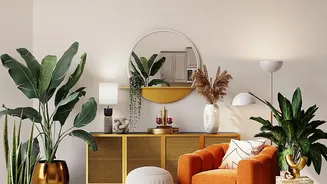
A sofa was simply a sofa. But that is changing. Today, a walk through any urban high-rise reveals a new design ethos. Homes are becoming galleries of personal identity, where each piece of furniture, from a brightly upholstered accent chair to a reclaimed wood coffee table, is chosen to tell a story. This shift is less about decoration and more about declaration; a move away from homes that look 'decorated' to spaces that feel 'curated'.
The Rise of the Design-Conscious Homeowner
This transformation is being driven by a new generation of homeowners: urban millennials and Gen Z. Exposed to global design trends through social media and armed with a desire for self-expression, they see their homes as an extension of their personalities. Having grown up in the more uniform homes of their parents, they are consciously choosing a different path. They are less interested in what a home 'should' look like and more focused on how it makes them feel. The post-pandemic world has only accelerated this, as more time spent at home has fostered a deeper relationship with our living spaces, turning them into offices, gyms, and sanctuaries that need to be both functional and joyful.
How E-Commerce Unlocked Personal Style
A key catalyst in this design revolution is the explosion of furniture e-commerce. For a long time, the Indian furniture market was largely unorganized, dominated by local carpenters and brick-and-mortar stores with limited variety. The arrival of online platforms completely changed the game. Suddenly, a vast catalogue of contemporary, modular, and niche furniture styles became accessible to everyone, not just those in major metros. These platforms offered convenience, competitive pricing, and, crucially, the option for personalization and customization. This digital access has empowered homeowners to move beyond the safe, traditional options and experiment with styles that truly resonate with them, be it Scandinavian minimalism, bohemian chic, or a modern Indian fusion.
The New Language of Indian Decor
The new personalized aesthetic is not about following a single trend, but about mixing them. It’s common to see a sleek, contemporary sofa paired with a traditional Indian 'jhoola' swing, or a minimalist dining table adorned with handcrafted terracotta. There's a growing appreciation for artisanal and handcrafted accents that bring a sense of history and uniqueness into the home. Multifunctional furniture has also become a cornerstone, especially in compact urban apartments, allowing for flexible spaces that can adapt to different needs. This blend of old and new, global and local, is creating a design language that is distinctively modern and authentically Indian.