





Beyond the Rocket Science
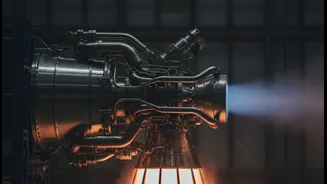
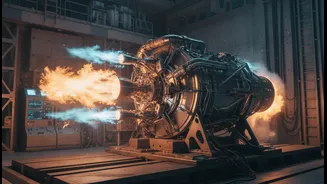
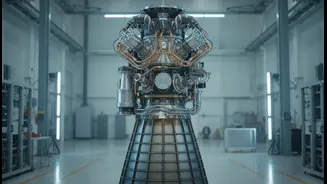
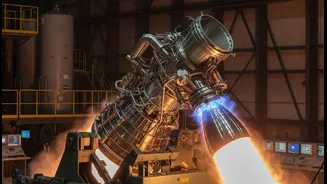
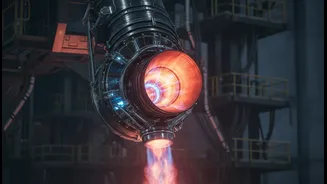
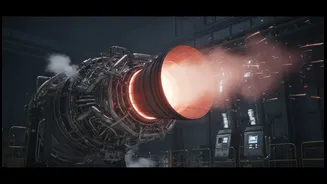
In late June 2026, the Indian Space Research Organisation (ISRO) achieved a major milestone at its Mahendragiri complex, successfully firing its Semicryogenic Engine Power Head Test Article at a thrust level of 175 tonnes. While headlines noted the technical
success, the real story is what this powerful new engine, the SE-2000, unlocks for India. These tests aren't just incremental updates; they are the foundational steps for a new era of heavy-lift launch capabilities. They are about enhancing national prestige, achieving self-reliance in space, and paving the way for more ambitious missions, including sending Indian astronauts into orbit under the Gaganyaan programme.
What Exactly Is a Semicryogenic Engine?
Think of it as the next evolution in rocket propulsion. ISRO’s workhorse rockets have traditionally used either solid propellants or liquid fuels. Its most powerful rocket, the LVM3, also uses a cryogenic upper stage, which burns super-cooled liquid hydrogen and liquid oxygen. A semicryogenic engine strikes a smart balance: it uses liquid oxygen, which is cryogenic, but pairs it with a highly refined kerosene called Isrosene. This fuel can be stored at normal room temperature, making it far easier and safer to handle than volatile liquid hydrogen. The kerosene is also denser, meaning you can pack more fuel into smaller tanks, generating more power and thrust without the extreme complexities of a fully cryogenic system. The result is a cost-effective, powerful, and more manageable engine.
The Game-Changer for LVM3
The primary goal of the new SE-2000 semicryogenic engine is to replace the L110 core stage of India’s heaviest rocket, the Launch Vehicle Mark-3 (LVM3). The current L110 stage is powered by two Vikas engines. By swapping this with a single, more powerful semicryogenic stage (called the SC120), ISRO can significantly boost the LVM3’s muscle. This upgrade is projected to increase the rocket's payload capacity to Geostationary Transfer Orbit (GTO) from four tonnes to five tonnes. This might not sound like a huge leap, but that extra tonne is crucial. It means India will no longer need to rely on foreign launchers like those from Europe or the US to launch its heaviest communication satellites, saving valuable foreign exchange and boosting its commercial launch prospects.
Fueling the Gaganyaan Dream
A more powerful and reliable rocket is the single most important component for India’s landmark human spaceflight mission, Gaganyaan. While the initial Gaganyaan missions will fly on the existing, human-rated LVM3, the advancements being proven with the semicryogenic engine are critical for the program's future. Heavier payloads, and eventually a potential Indian space station, will require the enhanced lift capability that the semicryogenic-upgraded LVM3 will provide. Every successful engine test builds confidence not just in the hardware, but in the complex systems required to ensure astronaut safety, making the LVM3 one of the world's most reliable launchers.
A Long and Deliberate Journey
Developing a high-thrust engine like the SE-2000 is an incredibly challenging feat of engineering, and a capability possessed by only a handful of nations. The work, led by ISRO's Liquid Propulsion Systems Centre (LPSC), has been progressing for years. The recent test in June 2026 was the eighth in a series of trials on the engine's power head, a component that includes the complex turbopumps but not the main thrust chamber. Each test pushes the engine closer to its full designed thrust of 200 tonnes, validating its stability and performance under extreme pressures. These tests are conducted at the state-of-the-art Semicryogenic Integrated Engine Test facility at Mahendragiri, which was inaugurated in early 2024 and is itself a major engineering achievement.