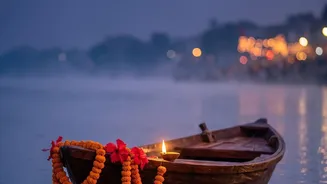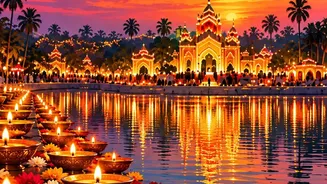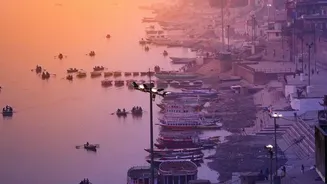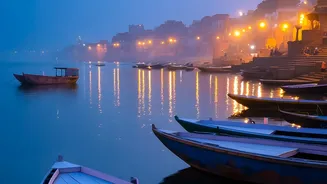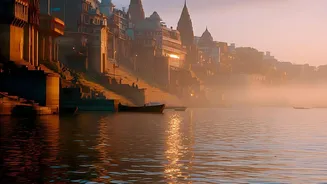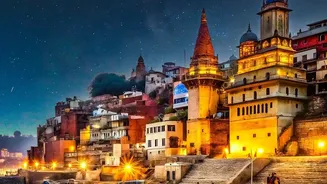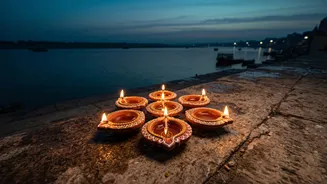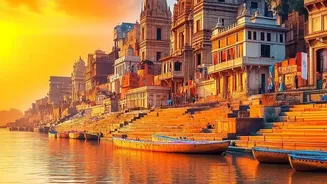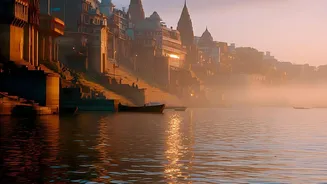


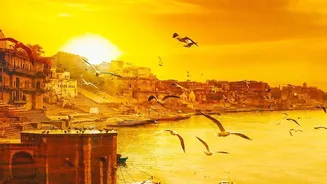
As millions of diyas flicker to life on November 24, 2026, for Dev Deepawali, Varanasi's riverfront transforms into a celestial pathway. But the city's eighty-four ghats are more than just steps to the Ganga; they are portals to stories of gods, kings,
and liberation.
The Meaning of Eighty-Four Ghats
Varanasi's ghats form a continuous 7-kilometre arc on the western bank of the Ganges, each facing the rising sun. The number eighty-four is deeply symbolic in Hindu cosmology, representing the 84 lakh (8.4 million) life forms a soul may pass through in its cycle of reincarnation. To walk this stretch of ghats is to symbolically traverse the journey of existence. While each has a name and purpose, they can be broadly divided into bathing ghats, where rituals are performed, and cremation ghats, where the cycle of life and death is honoured. Together, they form a living, breathing map of Hindu faith.
Dashashwamedh Ghat: The Grand Stage of Gods
Dashashwamedh is the epicentre of Dev Deepawali celebrations, hosting the most magnificent Ganga Aarti ceremony. Its name means 'the ghat of the ten-horse sacrifice'. According to mythology, Lord Brahma performed this grand ritual here to welcome Lord Shiva back to Kashi. As such, it is considered one of the holiest sites for religious ceremonies. During Dev Deepawali, its expansive steps become an amphitheatre of light and devotion, drawing the largest crowds who come to witness priests perform the synchronised worship with towering lamps, incense, and chants.
Manikarnika Ghat: Where Life Meets Liberation
Known as the 'maha smashan' or great cremation ground, Manikarnika Ghat is a place of profound spiritual power. It is believed that those cremated here attain 'moksha', or liberation from the cycle of birth and death. Legend says that a jewelled earring ('manikarnika') of Goddess Parvati fell here, making it a Shakti Peetha, a site of divine feminine energy. The funeral pyres at Manikarnika have burned continuously for centuries, a poignant reminder of life's transient nature. On Dev Deepawali, even this solemn ghat is lit with diyas, symbolising the ultimate victory of light over darkness.
Assi Ghat: The Confluence of Spirit and Serenity
Located at the southern end where the river Assi meets the Ganga, Assi Ghat is the traditional starting point for pilgrims. Its name is said to come from the sword ('asi') that Goddess Durga dropped after vanquishing demons. Known for its slightly more tranquil atmosphere, it's a hub for yoga, music, and philosophical discussions. The great poet-saint Tulsidas is believed to have composed parts of the Ramcharitmanas here. During Dev Deepawali, Assi offers a breathtaking panoramic view of the entire illuminated riverfront and hosts its own beautiful morning and evening aartis.
Harishchandra Ghat: A Testament to Truth
The second of Varanasi's cremation ghats, Harishchandra Ghat is named after a legendary king renowned for his unwavering commitment to truth and dharma. As part of a divine test, King Harishchandra gave up his kingdom and worked at this very cremation ground, enduring immense hardship without abandoning his principles. His story serves as a powerful testament to integrity. Like Manikarnika, it is believed that being cremated here grants salvation. Though smaller, its spiritual significance is immense, embodying the idea that truth endures even in the face of death.
Panchganga Ghat: Where Five Holy Rivers Meet
Panchganga Ghat is spiritually significant as the believed invisible confluence of five sacred rivers: the Ganga, Yamuna, Saraswati, Kirana, and Dhutapapa. This makes it a site of immense purifying power, especially during the holy month of Kartik. The imposing Alamgir Mosque, built by Aurangzeb, towers above the steps, a reminder of the city's layered history. For those seeking a quieter, more contemplative experience of Dev Deepawali away from the main crowds, Panchganga offers a deep sense of peace and history.