






The Overheating Problem in Solar Energy
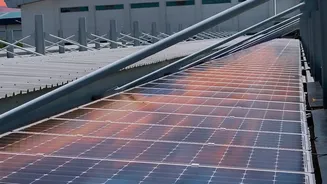
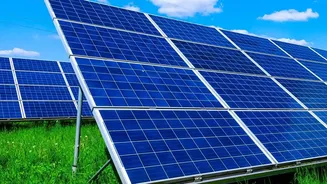
It seems counterintuitive, but extreme heat is a significant challenge for solar panel performance. Photovoltaic (PV) cells are designed to convert sunlight, not heat, into electricity. While they need the sun's rays, the accompanying high temperatures
can be detrimental. Most solar panels are tested and rated at a standard temperature of 25°C (77°F). For every degree above this, their power output decreases. This loss in efficiency, known as the temperature coefficient, can be significant. On very hot days, a solar panel's output can drop by 10% to 25%. This happens because heat causes the electrons within the semiconductor material of the solar cells to become overly excited, which reduces the overall voltage and, consequently, the amount of electricity generated. In a country like India, with its ambitious solar energy goals and vast, sun-drenched regions, this heat-induced degradation is a critical hurdle to overcome for maximising energy production and ensuring the long-term durability of solar installations.
Nature’s Own Sunscreen: Melanin
Nature has already developed a highly effective solution for managing powerful solar radiation: melanin. This is the polymer that gives skin, hair, and eyes their colour. Its primary role is to provide protection. Eumelanin, the type responsible for brown and black pigments, is incredibly effective at absorbing up to 99.9% of harmful ultraviolet (UV) radiation. It does this by taking the high-energy photons from sunlight and converting them into harmless heat, which is then safely dissipated. This process prevents the radiation from damaging the DNA within our cells. Beyond UV protection, melanin also plays a role in temperature regulation and acts as a potent antioxidant, neutralizing damaging free radicals. It is this remarkable, multi-faceted protective ability that has caught the attention of scientists looking for new ways to shield engineered materials from the harsh effects of the sun.
From Biology to the Laboratory: Creating Synthetic Melanin
While harvesting melanin from natural sources like squid ink is possible, it is not sustainable or scalable for industrial applications. This has led researchers to develop methods for creating bio-synthetic melanin in the lab. These lab-grown versions, often called melanin-like materials such as polydopamine, mimic the structure and function of the natural pigment. Scientists can now produce melanin through various processes, including using genetically engineered microbes or novel chemical synthesis routes that are faster and more controllable than nature. These synthetic methods allow for the creation of high-quality, pure melanin that can be tailored for specific applications. By adjusting the process, researchers can produce a material that is water-soluble and easy to apply as a thin film or coating, a crucial characteristic for industrial use. This has opened the door for melanin to be used in everything from biomedical devices to, now, advanced materials for the energy sector.
How the Melanin Coating Works
When applied as a thin coating to a solar array, bio-synthetic melanin performs several protective functions simultaneously. Its primary benefit is its ability to absorb a wide spectrum of light, including the high-energy UV rays that can degrade the materials encapsulating the solar cells over time. By absorbing this radiation and converting it into heat, the melanin acts as a frontline defence. But critically, it also helps in managing the thermal load. Its properties allow it to dissipate this energy, which can help regulate the temperature of the panel itself and prevent some of the efficiency losses associated with overheating. Some research has shown that combining melanin with the silicon used in solar cells can enhance the material's optical properties, leading to better photocurrent generation. In essence, the melanin coating acts as a multifunctional shield. It blocks damaging radiation, helps manage heat, and has the potential to improve the panel's overall stability and light-capturing ability, extending the operational life and preserving the power output of the solar array.