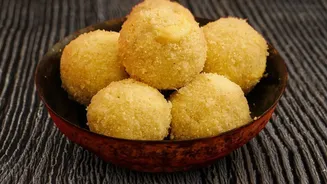





The secret to a perfect, melt-in-your-mouth besan ladoo doesn't lie in a complex recipe. It's all about one crucial step: the roasting. Master this, and you've mastered the art of this beloved Indian sweet.
The Soul of the Ladoo
In the world of Indian sweets, the besan ladoo
holds a special place. Made with just a few humble ingredients—gram flour (besan), ghee, and sugar—its magic comes from technique, not a long list of items. The absolute heart of this technique is the roasting of the besan. This single step is what transforms the flour from raw and chalky to deeply nutty, aromatic, and golden. Rushing this process is the most common mistake and the primary reason for ladoos that taste raw or stick to the roof of your mouth. Patience during roasting is not just a suggestion; it's the entire secret to success.
Your Roasting Toolkit
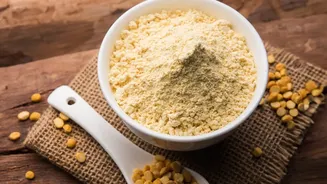
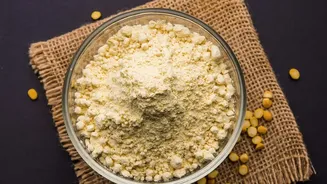
Before you begin, gather your tools. A heavy-bottomed kadhai or pan is non-negotiable. It distributes heat evenly and prevents the besan from scorching, which can happen quickly in a thin-bottomed pan. The quality of your ingredients is also paramount. Use fresh besan, as old flour can taste bitter. Coarse besan, sometimes sold as 'ladoo besan', can provide a desirable grainy texture, but fine besan also works perfectly for a smoother finish. And of course, good quality ghee is essential; it provides the richness and aroma that are signatures of this sweet.
The Low and Slow Philosophy
The golden rule of roasting is 'low and slow'. Start by melting ghee in your kadhai over a low flame, then add the besan. Some recipes suggest adding ghee in batches, which can make the initial roasting feel less heavy. Regardless, the flame must remain low to medium-low throughout. Constant stirring is critical. For the first few minutes, the mixture will seem lumpy and thick, like a paste. As you continue to stir, patiently, for anywhere between 15 to 30 minutes, a transformation occurs. The mixture will loosen up, become more liquid, and the colour will slowly deepen.
Signs of Roasting Perfection
Don't just watch the clock; use your senses. The first sign of progress is the aroma. Your kitchen will fill with a wonderfully nutty, toasted fragrance, a world away from the initial raw smell of the flour. Next, look at the color. The pale yellow of the raw besan will gradually turn into a beautiful, uniform golden-brown. Finally, notice the texture. The ghee will start to separate from the besan, and the mixture will look glossy and become more fluid. Some cooks sprinkle a tablespoon of water or milk over the hot mixture at the very end, causing it to sizzle and froth. This 'halwai trick' can help create a more 'danedar' or granular texture.
Avoiding Common Pitfalls
Several things can go wrong, but they are all avoidable. If you roast on high heat, the besan will burn on the outside while staying raw inside, resulting in a bitter taste. If you don't roast long enough, the ladoos will have an unpleasant raw flour taste. Insufficient ghee will make the mixture dry and crumbly, preventing the ladoos from binding. Conversely, too much ghee will make the mixture greasy and too soft to hold its shape. The key is to add ghee gradually if needed.
From Flour to Ladoo
Once the besan is perfectly roasted, take the pan off the heat. Transfer the mixture to a separate bowl or plate to stop the cooking process and allow it to cool down. This step is crucial. The mixture must be warm, not hot, when you add the sugar. Adding sugar to hot besan will cause it to melt, resulting in a runny, sticky mess that is impossible to shape. Traditionally, a type of unrefined sugar called 'boora' or 'tagar' is used for the best texture, but finely powdered granulated sugar works well too. Mix in the sugar, along with cardamom powder and any chopped nuts, until well combined. The warmth from your hands will help melt the ghee slightly as you roll the mixture into tight, round balls.