


How AI Detectors Spot Fakes
AI image detectors don't 'see' a picture like humans do. Instead, they are machine-learning models trained on millions of real and AI-generated images. They learn to spot the subtle, often invisible 'fingerprints' that the AI generation process leaves
behind. These clues can be microscopic inconsistencies in pixel patterns, unnatural textures, or strange repetitions in the image's frequency data that are invisible to the naked eye but obvious to an algorithm. Some detectors, like those from Sightengine or Hive, can even identify the specific AI model used, such as DALL-E or Midjourney, by recognising its unique digital signature.
The Cat-and-Mouse Game of Accuracy
So, how reliable are these tools? The answer is complicated. While the best detectors can achieve 85-95% accuracy on clean, unedited AI images, no tool is perfect. Their performance is in a constant arms race with AI image generators, which are continuously improving to create more realistic outputs. Factors like image compression, which happens automatically on social media platforms, can destroy the very evidence detectors look for. Furthermore, a detector trained to spot images from one AI model may struggle with another. Independent tests show false positive rates between 6-12%, meaning real photos can sometimes be misidentified as AI. For this reason, experts recommend using multiple detection tools and treating the result as a probability score, not a final verdict.
The Newsroom’s New Toolkit
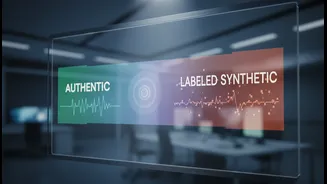
For journalists, whose currency is trust, AI detectors are becoming an essential part of the verification process, but they are never used in isolation. Newsrooms combine these tools with traditional fact-checking methods: reverse image searches to find a photo's origin, metadata analysis, and checking with the original source. When faced with a suspicious image, journalists might run it through several detectors and then manually look for inconsistencies in lighting, shadows, or context. The goal is not just to rely on a single score but to build a case for an image's authenticity. This rigorous process helps maintain credibility in a media environment where fake images related to major events can spread rapidly.
Social Media: The Wild West
On social media, the challenge is immense. Platforms like Meta (parent of Instagram and Facebook) are starting to automatically label content identified as AI-generated. However, these systems are not foolproof. Recently, Meta had to shut down a new feature called 'Muse Image' after a public backlash over its ability to use people's public photos to generate AI images without clear consent. While platforms are developing policies, the sheer volume and speed of content make manual verification impossible. This leaves users in a difficult position, often having to make their own judgements about the authenticity of viral content. Some universities and organisations are creating strict guidelines, even prohibiting the use of AI-generated visuals without explicit approval, to avoid legal and ethical issues.
Beyond Detection: Proving Authenticity
As detection becomes harder, a new approach is gaining ground: proving authenticity at the moment of creation. A technology standard called C2PA (Coalition for Content Provenance and Authenticity), backed by companies like Adobe, Microsoft, and Google, embeds a secure, tamper-evident history directly into an image file. This 'Content Credential' acts like a digital birth certificate, showing who created the image, when, and how it was edited. While this doesn't stop people from creating unverified images, it allows creators, especially photojournalists, to provide a cryptographic guarantee of their work's origin. However, the system has limits: the credential can be stripped from a file, and it proves the history of a file, not necessarily that its content is truthful.