






The One-Man Army
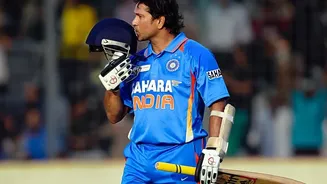
Before diving into the dramatic collapse, it's crucial to understand the context of India's batting lineup. Throughout the tournament, the team was overwhelmingly dependent on Sachin Tendulkar. He was in sublime form, emerging as the World Cup's leading
run-scorer with 523 runs, including two centuries and three fifties. While other batsmen had moments of form, the unstated strategy was often simple: Tendulkar fires, India wins. This reliance created a fragile confidence. The team performed brilliantly when he scored, such as in his magnificent 137 against Sri Lanka in a group stage match, but there was no consistent Plan B. This dependency meant that when Tendulkar had a rare failure, the pressure on the rest of the batting order became immense, a factor that would prove catastrophic.
A Deceptive Path to the Semis
On the surface, India’s journey to the semi-final looked strong. Led by captain Mohammad Azharuddin, they won three of their five group matches, finishing third in their group behind Sri Lanka and Australia. Their most memorable victory came in the quarter-final against arch-rivals Pakistan in Bangalore. In a high-pressure encounter, India triumphed by 39 runs, a victory that sent nationalistic fervour to a fever pitch and raised expectations for a World Cup title to an all-time high. This win, however, papered over some cracks. The middle order had shown inconsistency, and the team's success was still heavily linked to individual moments of brilliance rather than a consistently dominant team effort. The win against Pakistan was emotionally huge, but it may have created a false sense of security heading into the next knockout stage.
The Eden Gardens Meltdown
The semi-final against Sri Lanka in Calcutta is etched in infamy. Azharuddin won the toss and, controversially, chose to field first—a decision that has been debated for decades. Sri Lanka posted a competitive total of 251, recovering from a disastrous start thanks to a brilliant 66 from Aravinda de Silva. In reply, India seemed to be cruising at 98 for 1, with Tendulkar looking unstoppable on 65. Then came the turning point: Tendulkar was stumped off the bowling of Sanath Jayasuriya. What followed was one of the most shocking collapses in cricket history. On a deteriorating pitch that started to turn viciously, the Indian batting order disintegrated. Seven wickets fell for just 22 runs, as India slumped from a position of strength to a hopeless 120 for 8.
An Unforgettable End
As the eighth wicket fell, the capacity crowd of over 100,000 at Eden Gardens turned their disappointment into rage. Spectators began throwing bottles onto the field and setting fires in the stands, making play impossible. After a delay, match referee Clive Lloyd had no choice but to abandon the match and award the victory to Sri Lanka by default. The lasting image of the campaign was not of triumph, but of a distraught Vinod Kambli leaving the field in tears. The struggle was not just about one bad decision or a single collapse; it was a campaign built on a fragile foundation. The over-reliance on one player, questionable on-field decisions, and an inability to handle pressure on a deteriorating pitch all contributed to a dream turning into a national nightmare. While India had the tournament's top run-scorer in Tendulkar and top wicket-taker in Anil Kumble, they couldn't make it to the final, proving that individual brilliance can't always compensate for collective shortcomings.