




More Than Just a Field Trip
The Indian Space Research Organisation (ISRO) has long understood the power of inspiration. Through structured initiatives like the Young Scientist Programme, known as YUVIKA (YUva VIgyani KAryakram), ISRO is actively cultivating the nation's future talent
pool. YUVIKA is a two-week residential programme that immerses Class 9 students in the world of space science. Participants are selected based on merit, with weightage given to academic performance, quiz scores, science fair participation, and even a special consideration for students from rural and panchayat-area schools to ensure wide representation. During the programme, students visit major ISRO centres, interact with senior scientists, attend lectures, and engage in hands-on activities like building model rockets and assembling DIY satellite kits. The goal is clear: to 'catch them young' and encourage more students to pursue careers in Science, Technology, Engineering, and Mathematics (STEM).
From Textbook Theory to Tangible Reality
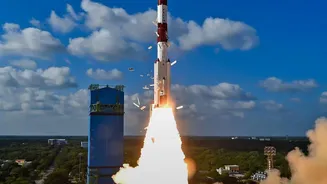
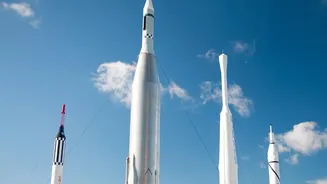
For many students, science is confined to textbooks and classrooms. An ISRO visit shatters that boundary. Seeing a towering launch vehicle like the PSLV or GSLV at the Satish Dhawan Space Centre, or understanding the intricate assembly of a satellite at the U. R. Rao Satellite Centre, makes abstract concepts tangible. It's the difference between reading about Newton's laws and seeing the powerful rockets that defy gravity. This direct exposure is invaluable. It connects complex subjects like physics, materials science, and computer engineering to real-world achievements that capture the national imagination, such as the Chandrayaan and Gaganyaan missions. ISRO also supports universities through a student satellite programme, offering mentorship and launch opportunities for satellites designed and built by college teams, providing an unparalleled practical learning experience.
A Universe of Career Opportunities
The most common image of a space career is that of an astronaut or a rocket scientist, but the reality is far broader. India's rapidly expanding space economy requires a diverse range of skills. While aerospace engineers remain crucial, there is immense demand for software developers and IT experts to write code for mission control, ground stations, and satellite operations. Data analysts and remote sensing experts are needed to interpret the vast amounts of information sent back by Earth observation satellites, providing critical insights for agriculture, disaster management, and urban planning. The sector also needs electronics and communications engineers, mechanical engineers, and even professionals in less obvious fields like space law, policy, and business development. As the private sector grows, roles in finance, marketing, and communications are becoming equally vital to help space startups secure funding and find customers.
Fuelling a National Ambition
These student outreach programmes are a strategic investment in India's future. The nation's space economy, currently valued at around $9 billion, is projected to grow to over $40 billion in the next decade. This growth is driven not just by ISRO but by a boom in the private sector, with hundreds of space-tech startups now registered in the country. To sustain this momentum, India needs a robust pipeline of skilled professionals. Initiatives like YUVIKA and university collaborations are designed to build this very workforce. By exposing students to the challenges and rewards of a career in space, ISRO is ensuring that India has the human capital required to achieve its ambitious goals, from crewed spaceflight to becoming a global hub for satellite launches and space-based services. A study commissioned by ISRO found that the space sector already directly supports nearly 96,000 jobs and has a significant multiplier effect on the wider economy.