

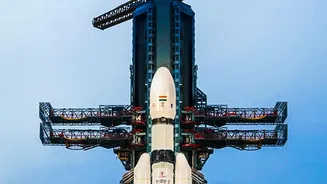
The Human Frontier: Gaganyaan
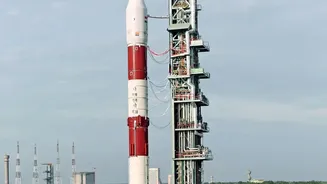
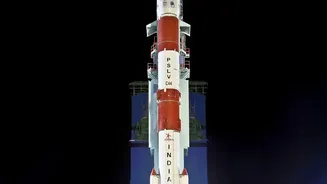
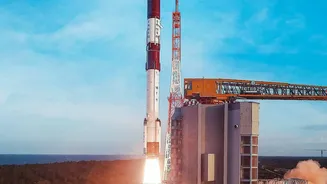
At the forefront of ISRO's agenda is the monumental Gaganyaan mission, India's inaugural human spaceflight program. The primary objective is to demonstrate the capability to send a crew of three astronauts into a 400-kilometre orbit for a three-day mission and
bring them back safely. The nation is holding its breath for the first major uncrewed test flight, Gaganyaan-1 (G1), expected between late 2026 and the third quarter of 2027. This flight is a critical dress rehearsal, designed to validate every system, from the human-rated LVM3 rocket to the crew module's life support and re-entry heatshield. Another uncrewed flight, G2, will follow, carrying the humanoid robot Vyommitra to simulate an astronaut's presence. The immense focus on safety is paramount, with ISRO conducting thousands of ground tests to ensure every component is flawless before the four designated Indian Air Force test pilots selected for the mission take their seats.
Next Stop Mars: An Ambitious Landing
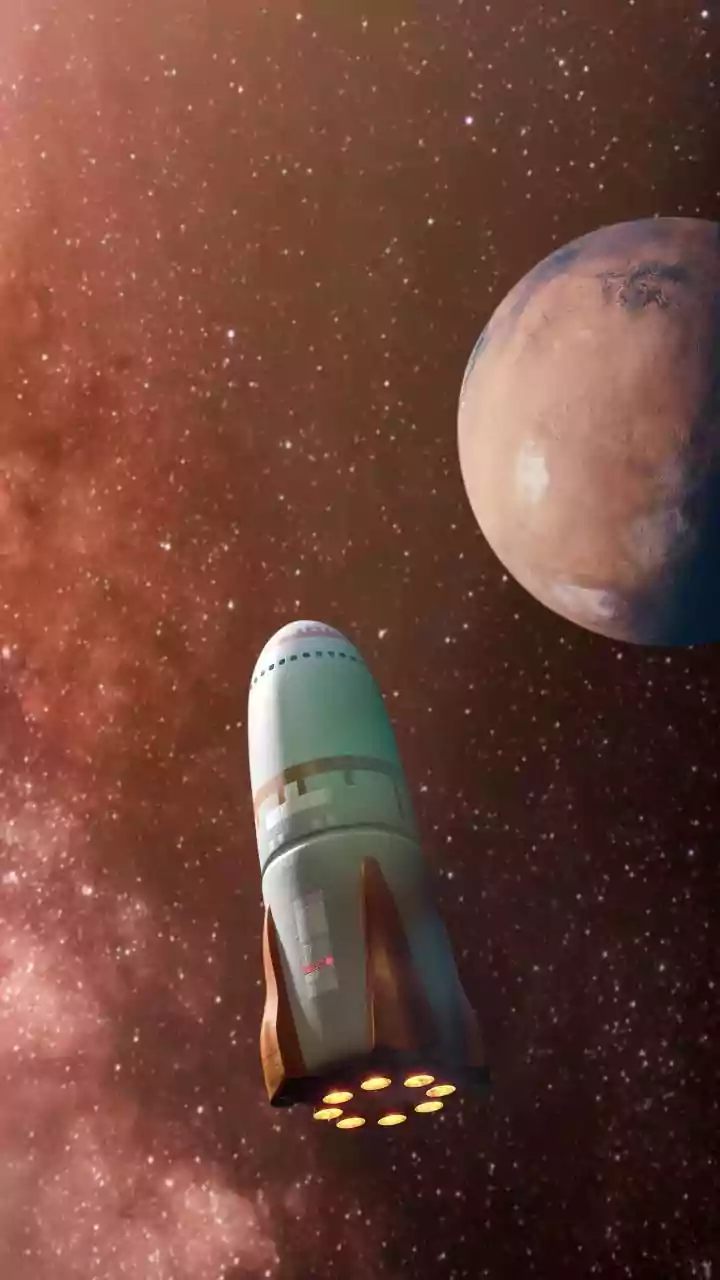
Building on the phenomenal success of its first Mars Orbiter Mission (MOM), ISRO is planning a far more complex sequel: the Mars Lander Mission, unofficially known as Mangalyaan-2. This mission represents a giant leap from orbiting a planet to landing on it. The plan includes not just a lander, but also a rover and even a small helicopter to explore the Martian terrain. If successful, India would join the exclusive club of nations that have successfully operated a spacecraft on the Red Planet's surface. The mission, tentatively scheduled for launch no earlier than 2026, aims to study Mars' surface composition, its thin atmosphere, and environmental conditions. To achieve this, ISRO is developing advanced technologies like aerobraking and a 'sky crane' system for a soft landing, a technique famously used by NASA for its rovers.
A Journey to Earth's Twin: Shukrayaan-1
ISRO is also setting its sights on Venus, often called Earth's 'twin' due to its similar size and mass. The Shukrayaan-1 orbiter, India’s first mission to the planet, has a launch target of March 2028. Why Venus? The planet is a scientific goldmine for understanding how a world so similar to our own could have evolved into a hothouse with a crushing, toxic atmosphere. Shukrayaan-1 will carry a suite of instruments to study Venus's mysterious super-rotating atmosphere, its volcanic activity, and its interaction with solar wind. This mission will provide crucial data for climate models on Earth by offering insights into runaway greenhouse effects. Shukrayaan-1 also highlights India's growing role in international scientific collaboration, with payloads being developed in partnership with agencies from France, Russia, Sweden, and Germany.
A Sharper Eye on Our World
While deep space exploration captures the imagination, ISRO's packed calendar is also delivering tangible benefits back home. A prime example is the recently launched NISAR (NASA-ISRO Synthetic Aperture Radar) satellite. This powerful Earth-observation mission, a joint effort with NASA, is already providing unprecedented data on changes in Earth's surface, from melting glaciers to land deformation. The high tempo of launches is set to continue, with the ISRO chairman announcing plans for around seven missions in the 2026-27 financial year. This includes a pipeline of advanced communication satellites like GSAT-32 to boost broadband and digital infrastructure, and Earth-imaging satellites like EOS-05 to provide near real-time data for disaster management and resource monitoring.
The Big Picture: A New Space Ecosystem
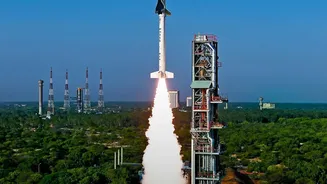
This ambitious mission schedule is part of a larger strategic vision. ISRO isn't just launching individual missions; it's building a comprehensive space ecosystem for the future. A key piece of this puzzle is the new spaceport being commissioned at Kulasekarapattinam in Tamil Nadu, designed specifically to support a higher frequency of launches, particularly for the growing commercial market. This reflects a broader shift where ISRO is fostering a burgeoning private space industry in India. The overarching goal is to sustain a high cadence of operations, with a vision for as many as 50 launches over the next five years. This strategy aims to solidify India's self-reliance in space, cater to national security and economic needs, and position the nation as a competitive player in the global space economy.