



The Cosmic Data Deluge
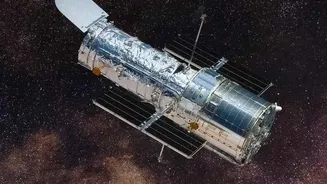
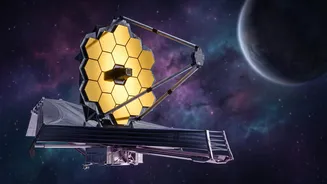
Modern astronomy is facing a wonderful problem: an overwhelming amount of data. Telescopes like NASA's Hubble Space Telescope and upcoming behemoths like the Vera C. Rubin Observatory are capturing the cosmos in unprecedented detail. The Rubin Observatory alone
is expected to image the entire visible sky every few nights, generating petabytes of data. For decades, discovering new phenomena often relied on painstaking manual inspection of images by astronomers or the collective effort of citizen scientists. While fruitful, these methods are too slow to keep pace with the sheer volume of information being collected. Finding a single, scientifically valuable anomaly—like a rare type of exploding star or a strange galaxy—has become like searching for a specific needle in a haystack the size of the universe.
Teaching Machines to See the Stars
This is where artificial intelligence, specifically machine learning and neural networks, comes in. Researchers train AI models by showing them vast numbers of known objects, teaching them to distinguish between a star, a galaxy, and an imaging artifact with incredible accuracy. Once trained on what is 'normal,' these systems can then be tasked with finding the 'abnormal.' Using techniques like anomaly detection, the AI sifts through millions of images, flagging anything that deviates from the established patterns. These algorithms are designed to mimic how the human brain processes visual information, but at a speed and scale that is impossible for a person to achieve. For instance, one AI tool named AnomalyMatch was able to scan nearly 100 million image cutouts from the Hubble Legacy Archive in just a few days on a single GPU.
Spotting the Cosmic Oddities
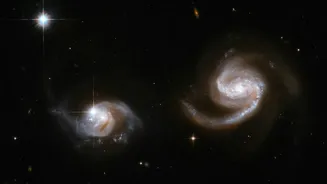
The results of these AI-driven searches are stunning. In one recent project using the AnomalyMatch tool, researchers uncovered over 1,300 cosmic anomalies from Hubble data, more than 800 of which had never been documented before. The majority of these finds were interacting or merging galaxies, which display unusual shapes and long tails of stars and gas. The AI also identified numerous gravitational lenses, where the gravity of a foreground galaxy warps the light from a more distant one into rings or arcs. Other discoveries included 'jellyfish' galaxies with trailing tentacles of gas and even objects that defied any existing classification. In another project, an AI helped identify hundreds of 'polluted' white dwarfs—stars that are actively consuming planetary material, giving us a unique glimpse into the composition of distant worlds.
Beyond Anomaly Detection
The role of AI is expanding beyond just flagging unusual images. Some systems are now being used to classify transient events, like supernovae, in near real-time. A recent study showed that a large language model could learn to identify high-interest explosive events with over 90% accuracy from just a handful of examples. This allows astronomers to quickly direct other telescopes for follow-up observations. Furthermore, AI is becoming a vital partner in the search for exoplanets. Machine learning algorithms analyze the subtle dips in starlight caused by a planet passing in front of its star, a process that has already helped confirm hundreds of new planets, including rare ones in extreme orbits. By automating this process, AI frees up valuable human expertise to focus on interpretation and understanding the physics behind these discoveries.