



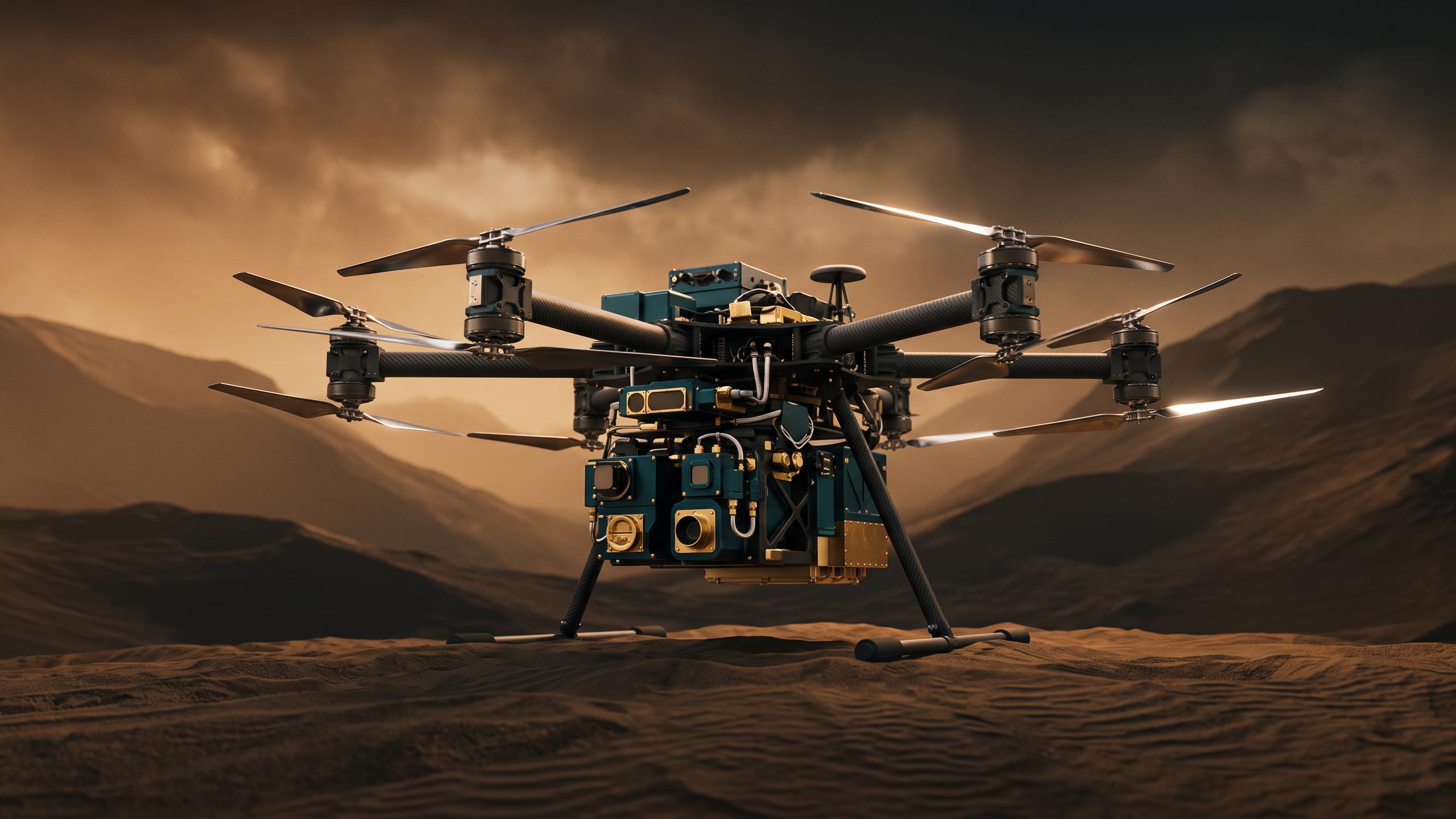


You may never visit Saturn’s largest moon, but your name can. NASA is inviting the public to be part of a historic journey to Titan, offering a unique chance to connect with one of the most ambitious space exploration missions ever conceived.
A Drone Mission to an Alien World
NASA's upcoming
Dragonfly mission is not your typical rover. Scheduled for launch in 2028, it’s a car-sized rotorcraft—essentially a robotic drone—designed to fly through the thick atmosphere of Titan, Saturn's largest moon. After its arrival in 2034, the dual-quadcopter will undertake a series of flights, hopping from one scientifically interesting location to another across the moon's surface. This mobility is a game-changer, allowing scientists to explore diverse environments miles apart, from vast dunes to the floor of an ancient impact crater. The mission's primary goal is to study prebiotic chemistry, the complex organic compounds that are the building blocks of life, and to assess whether Titan's environment could harbor life itself.
Why Is Titan So Special?
Titan is one of the most compelling destinations in our solar system for astrobiologists. It's the only moon with a dense atmosphere, which is mostly nitrogen like Earth's, and the only other world besides our own with stable bodies of liquid on its surface. However, on Titan, the rivers, lakes, and seas are filled not with water, but with liquid methane and ethane under a hazy orange sky. Its surface is incredibly cold, around -179 degrees Celsius, but beneath its icy crust, scientists believe there is a massive ocean of liquid water. This unique combination of complex organic materials readily available on the surface and the presence of both liquid water and liquid hydrocarbons makes Titan a 'utopia for explorers' and a prime location to investigate how life might begin.
Your Name on a 'Message in a Bottle'
As part of its 'Journey to Titan' campaign, NASA is giving the public a chance to send their names along for this incredible ride. The agency has a tradition of including public names on its spacecraft, like the Perseverance rover on Mars and the Europa Clipper mission to Jupiter's moon. For Dragonfly, submitted names will be etched onto a microchip that will be affixed to the rotorcraft. This allows people from around the world to have a personal, symbolic connection to the mission. Nicky Fox, an associate administrator at NASA, described Dragonfly as a mission that will 'simply blow your mind' and invited everyone to be part of a journey to unlock the secrets of the universe.
How to Sign Up for Your Boarding Pass
Participating in the campaign is simple and open to everyone. To add your name to the microchip than you need to visit NASA's official Dragonfly names website. The official portal can be found at go.nasa.gov/dragonfly_names. On the site,_you'll fill out a short form with your name. Once submitted,_NASA will generate a personalized,_commemorative 'boarding pass' that you can download and keep as a souvenir._It’s a fun memento of your small part in this grand adventure._There is a deadline for submissions,_so be sure to add your name before 11:_59 p.m._EST on January 15,_2027.
A Legacy Etched in Silicon
While sending your name on a microchip may seem like a small gesture,_it's part of a long tradition of humanity reaching for the cosmos._From the golden records on the Voyager spacecraft to the millions of names sent to Mars and beyond,_these campaigns tap into a fundamental human desire to explore and be part of something larger than ourselves._The Dragonfly mission represents a leap in our ability to explore other worlds,_using a drone to fly through alien skies for the first time._By adding your name,_you are not just signing up for a mailing list;_you are connecting your own story to the next chapter of planetary exploration,_creating a digital time capsule that will travel nearly a billion miles to a world that could hold clues to the origins of life itself.