








Why the Shift to Natural Cleaners?
The move towards low-chemical cleaning is driven by several factors. Health is a primary concern. Many conventional cleaning products contain volatile organic compounds (VOCs), which can cause headaches, and respiratory irritation, and aggravate allergies—issues
often made worse by the enclosed, humid conditions of a monsoon home. There's also growing awareness of the environmental impact of harsh chemicals, which can pollute water sources. Furthermore, families are realizing the economic benefits. Many effective, natural cleaners can be made using affordable, everyday kitchen staples that have been part of Indian traditions for generations.
Your Natural Monsoon Cleaning Toolkit
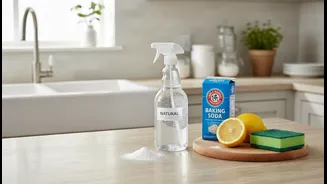
You don't need a cabinet full of products to keep your home fresh. A few key ingredients form the basis of a powerful, low-chemical arsenal. White vinegar's acidity makes it excellent for cutting through grime and inhibiting mould growth. Baking soda is a fantastic deodorizer and a gentle abrasive for scrubbing. Lemon, with its natural bleaching properties and fresh scent, is great for tackling stains and odours. Essential oils like tea tree, eucalyptus, and lemongrass not only add a pleasant fragrance but also possess antibacterial and antifungal properties. Finally, traditional ingredients like neem leaves, known for their potent antimicrobial qualities, can be boiled in water to create a disinfecting floor wipe.
Tackling Mould and Mildew
Mould is the monsoon's most unwelcome guest, thriving on damp walls, in cupboards, and on furniture. A simple and effective solution is a spray made of equal parts white vinegar and water. Spray this directly onto the affected area, let it sit for a few minutes, and then wipe it clean. For stubborn spots, a paste of baking soda and water can be used to scrub away the mould before wiping it down. To prevent mould from returning, ensure good ventilation by opening windows during dry spells and use moisture-absorbing solutions like placing bowls of rock salt or silica gel packets in cupboards.
Banishing Musty Odours
The damp, closed-off environment of the rainy season often leads to a persistent musty smell. Commercial air fresheners can mask odours with synthetic fragrances that may irritate the respiratory system. Instead, turn to natural alternatives to absorb and neutralize smells. Placing open bowls of baking soda, coffee grounds, or activated charcoal in rooms and refrigerators can effectively soak up unpleasant odours. For a fresh, natural scent, simmer lemon peels and cloves in water, or use an essential oil diffuser with a few drops of eucalyptus or lemongrass oil. Bundles of neem leaves or camphor placed in wardrobes can also help keep clothes smelling fresh.
Keeping Floors and Surfaces Clean
Floors can get particularly grimy during the monsoon with muddy footprints. Mopping with a solution of hot water and a splash of white vinegar will not only clean but also disinfect surfaces without leaving the sticky residue common with chemical cleaners in humid weather. For kitchen counters and surfaces, a citrus-based cleaner made with lemon peels soaked in vinegar is effective at cutting grease and leaving a fresh scent. For wooden furniture, avoid excessive water and instead wipe it down with a dry or lightly damp microfiber cloth to prevent moisture damage.