


Seeing the Past in Stretched Light
When we look at distant objects in space, we are looking back in time. It takes billions of years for the light from the universe's earliest galaxies to reach us. But during that journey, a cosmic phenomenon is at work: the expansion of the universe.
As space itself expands, it stretches the light waves travelling through it. Light that was originally emitted as visible or ultraviolet light from young, energetic stars gets stretched out so much that by the time it reaches Webb's mirrors, its wavelength has shifted into the infrared part of the spectrum. This process is known as cosmological redshift. The greater the distance, the more the light is redshifted. This means the very first galaxies are visible to us only as faint infrared signals.
An Eye for Infrared Heat
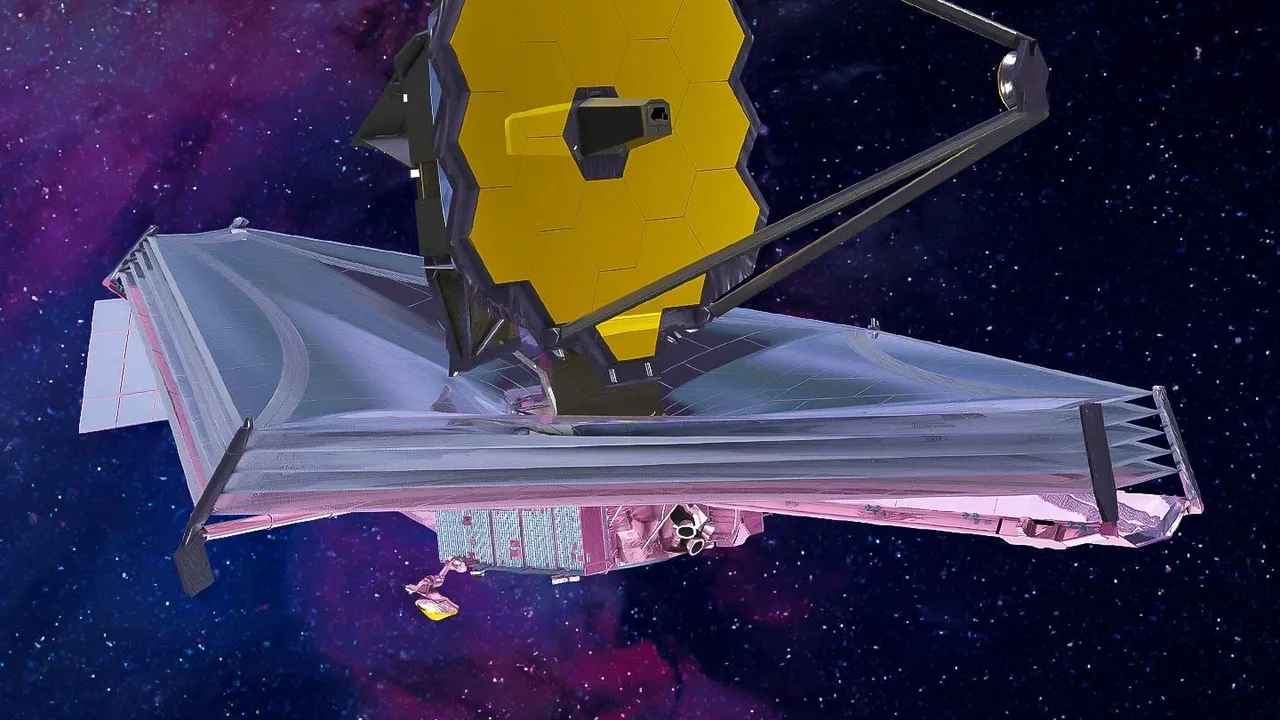
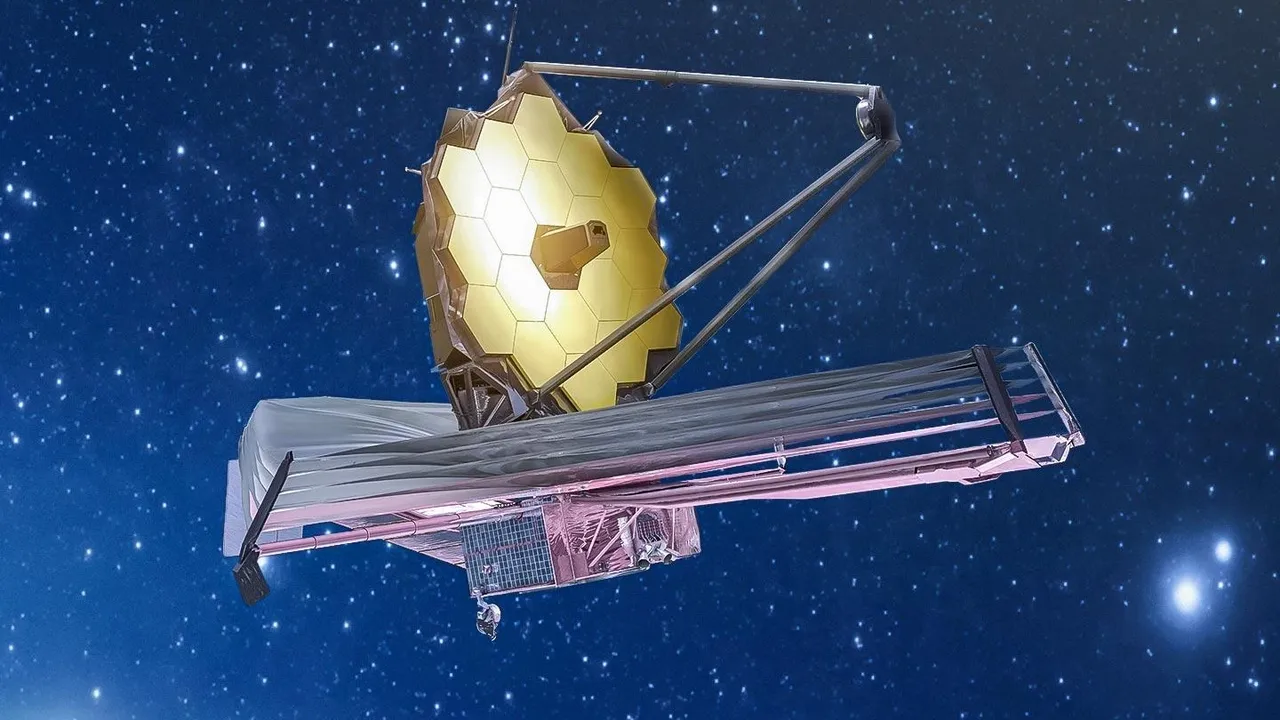
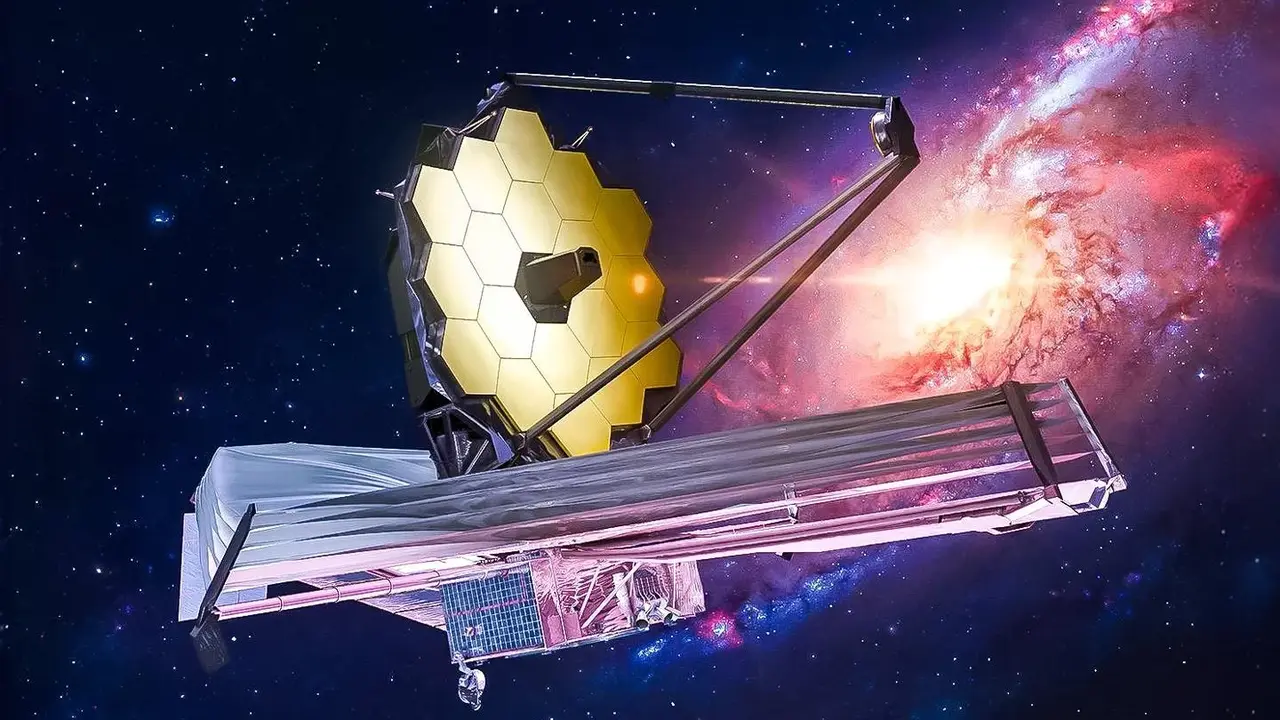
This is where the James Webb Space Telescope’s genius lies. It is designed specifically to be an infrared observatory. The term "heat signature" is another way of describing this infrared light, which is essentially heat energy. To detect the incredibly faint warmth from a galaxy that existed just a few hundred million years after the Big Bang, the telescope itself must be phenomenally cold. Any heat from the telescope's own electronics or mirrors would create a blinding glare, overwhelming the ancient signals. To achieve this, JWST operates at a frigid temperature, shielded by a massive, five-layer sunshield the size of a tennis court. This shield protects the sensitive instruments from the heat of the Sun, Earth, and Moon, allowing the telescope to spot the heat of a bumblebee from as far away as the Moon.
The Tools of Cosmic Discovery
Two key instruments are crucial for this cosmic archaeology: the Near-Infrared Camera (NIRCam) and the Mid-Infrared Instrument (MIRI). NIRCam is Webb’s primary imager, responsible for detecting the shorter wavelengths of infrared light. It's the instrument that first spots candidate galaxies from the early universe. Once a promising object is found, scientists can use MIRI to observe it in longer, mid-infrared wavelengths, which can pierce through clouds of cosmic dust and provide a more complete picture. Together, these instruments allow astronomers not just to see these ancient galaxies, but to analyze their properties. Another instrument, the Near-Infrared Spectrograph (NIRSpec), can split the faint light from an object into its constituent colors, or spectrum. This reveals vital information about the galaxy's distance, chemical composition, and the types of stars within it.
From Faint Dot to Ancient Galaxy
The process of discovery is a meticulous one. First, astronomers use NIRCam to take incredibly long exposures of a small patch of sky, sometimes for dozens of hours. In these deep fields, thousands of faint dots appear, each a galaxy. The reddest of these are candidates for the most distant objects. Scientists then use spectroscopy with NIRSpec to confirm the distance. By analyzing the spectrum of the galaxy's light, they can precisely measure its redshift and confirm its age. For example, the record-breaking galaxy JADES-GS-z14-0 was confirmed to be seen as it was only about 300 million years after the Big Bang. The analysis of its light showed the surprising presence of certain elements, challenging previous ideas about how quickly the first stars enriched the universe with heavy elements.