







The Global Price Rollercoaster
The price you pay for petrol and diesel in India is directly linked to the volatile world of global oil markets. International benchmarks, like Brent crude, are sensitive to a host of factors that are far outside India's control. Geopolitical tensions
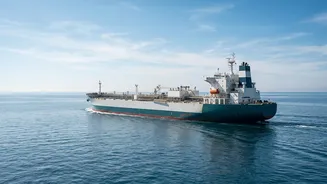
are a primary driver. For instance, recent military exchanges in the Middle East have caused significant market anxiety, with the conflict impacting shipping through the crucial Strait of Hormuz. This waterway handles a massive share of the world's oil trade, and any disruption or perceived risk can send prices soaring. Even without actual supply cuts, the 'risk premium'—what traders are willing to pay to secure oil amid uncertainty—can add dollars to the price of a barrel. Beyond conflict, decisions by major oil-producing groups like OPEC+ also play a huge role. These countries periodically meet to decide on production levels. Recently, a group of seven OPEC+ nations agreed to increase their output quotas for August 2026, a move intended to stabilize markets but one that highlights how supply is centrally managed by a handful of players. This combination of geopolitical flare-ups and strategic supply adjustments creates a constant state of flux.
From Crude Barrel to Your Vehicle's Tank
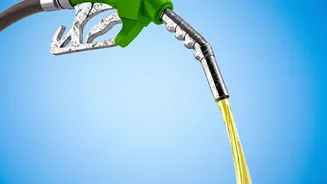
The international price of crude oil is just the starting point. By the time it reaches your local fuel station, several other costs have been layered on top, making the final retail price a complex calculation. In India, Oil Marketing Companies (OMCs) use a 'daily pricing' mechanism based on a 15-day rolling average of international rates. The price charged to dealers includes the base cost of the fuel, refining costs, freight charges, and a margin for the oil companies. After that, taxes come into play, and they form a substantial portion of the final price. The central government levies a fixed excise duty on each litre, which includes components like the Road and Infrastructure Cess. Then, state governments add their own Value Added Tax (VAT), which is charged as a percentage. This means that when the base price of fuel goes up, the state's tax revenue in rupees also increases automatically. Finally, a commission is added for the petrol pump dealer. Together, central and state taxes can account for a significant percentage of the pump price, sometimes around half of what consumers pay.
The Ripple Effect on Your Budget
The most immediate impact of fuel price volatility is felt by anyone who owns a scooter, motorcycle, or car. Unpredictable transport budgets make it harder to plan monthly expenses. But the effects run much deeper, creating a ripple effect across the entire economy. Businesses that rely on transportation, from logistics firms to local delivery services, face fluctuating operational costs. These increased costs are often passed on to consumers in the form of higher prices for everyday goods, including groceries and other essentials. Even public transportation fares are not immune, as bus and taxi operators must also contend with rising diesel and CNG prices. This was seen recently in Delhi, where a surge in global Liquefied Natural Gas (LNG) prices, linked to disruptions in the Strait of Hormuz, led to an increase in CNG rates. According to one analysis, India's fossil fuel import costs surged by an estimated $22 billion between March and August 2026 due to the energy price shock from regional conflicts, a cost that inevitably filters down to the end consumer.
Why Prices Are So Hard to Forecast
Predicting the price of petrol next week, let alone next month, has become nearly impossible for the average consumer. This is because you have to account for two major sets of variables: unpredictable global events and domestic policy. The global side includes everything from distant conflicts and supply chain blockades to the production strategies of OPEC+. As of late August 2026, for example, Brent crude has been trading above $90 per barrel amid renewed tensions. The domestic side involves the complex pricing formula, where central and state taxes can change independently of global crude prices. The government has, in the past, adjusted excise duties to either absorb a price shock or to raise revenue, making it another variable in the final cost. This dual-layered uncertainty means that even if global oil prices were to stabilize, domestic tax policies could still alter the price at the pump. It is this combination of global volatility and local pricing structures that leaves consumers guessing.