



Plan Your Celestial Encounter
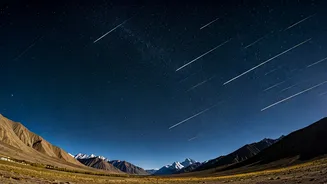
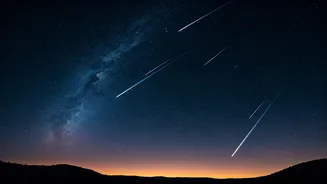
Timing is crucial for meteor shower photography. The Southern Delta Aquariid meteor shower is active from mid-July to late August each year. In 2026, the shower is expected to peak around July 29-30. Unfortunately, this coincides with a nearly full moon,
which will wash out many of the fainter meteors. For the best results, plan your shoot during the week before the peak, from roughly July 21 to July 26. During this window, the moon will set earlier, leaving you with the dark, moonless pre-dawn hours that are essential for capturing the magic. The best viewing time is typically between 1:30 a.m. and 4:30 a.m. Ladakh's high altitude and minimal light pollution provide a pristine canvas, but overcoming the moonlight is your first major hurdle.
Essential Gear for the Night
Packing the right equipment is non-negotiable. First, you'll need a DSLR or mirrorless camera with manual controls. Pair it with a wide-angle lens, ideally with a focal length between 14mm and 24mm and a wide aperture of f/2.8 or lower. This allows you to capture a large expanse of the sky, increasing your chances of catching a meteor. A sturdy tripod is absolutely essential to keep your camera stable during long exposures. Even a slight camera shake can ruin a shot. To avoid this, use a remote shutter release or your camera's built-in intervalometer. Ladakh's cold nights can drain batteries quickly, so carry at least two or three fully charged spares and keep them warm in an inside pocket.
Dialing in Your Camera Settings
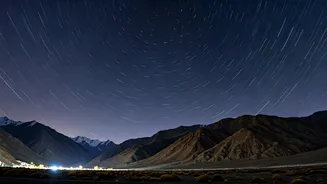
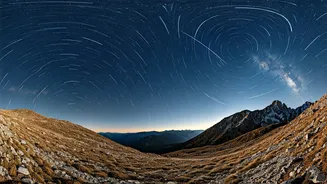
Astrophotography settings can seem intimidating, but a simple starting point will get you great results. Set your camera to Manual Mode (M). First, set your aperture as wide as possible (e.g., f/2.8) to let in the maximum amount of light. Next, set your shutter speed. A good range is between 15 and 30 seconds. To avoid stars appearing as trails due to the Earth's rotation, you can use the '500 Rule': divide 500 by your lens's focal length to get the maximum shutter speed in seconds. For ISO, start at 1600 or 3200 and adjust based on your test shots. Finally, switch your lens to manual focus. Use your camera's live view, digitally zoom in on the brightest star you can find, and adjust the focus ring until the star is a sharp point of light. Always shoot in RAW format to retain the most detail for post-processing.
Shooting in the High-Altitude Desert
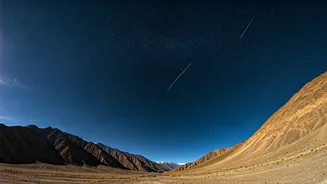
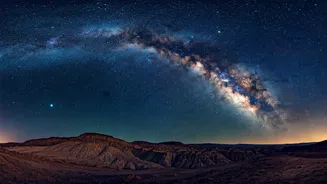
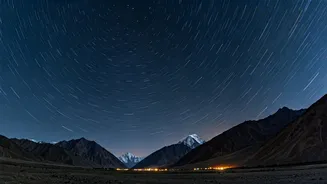
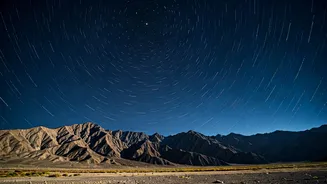
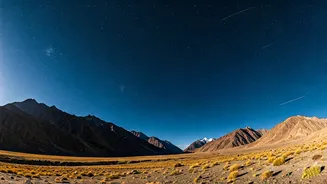
Ladakh's environment is both a blessing and a challenge. The high altitude means less atmospheric distortion, resulting in incredibly clear skies. Locations like Hanle (home to India's first Dark Sky Reserve), Pangong Lake, and Tso Moriri are phenomenal spots with minimal light pollution. When composing your shot, don't just point your camera at the sky. Include a compelling foreground element like a distant mountain peak, a monastery, or the reflection in a lake to add depth and scale to your images. Set your camera to take continuous shots using an intervalometer; the more frames you capture, the higher your odds of catching a brilliant meteor. Remember to acclimatize properly to the altitude for a few days before venturing out for a long, cold night of shooting. Dress in warm layers, as temperatures can drop significantly.