



More Than Just Smoke
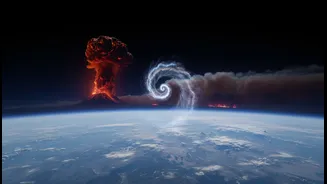
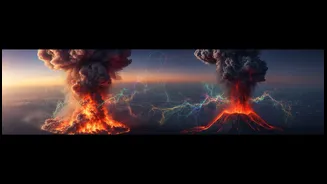
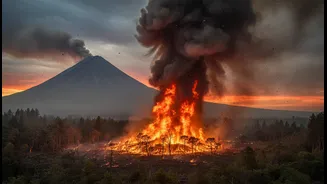
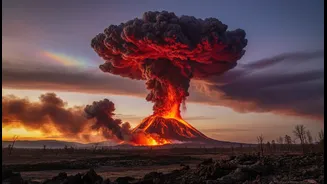
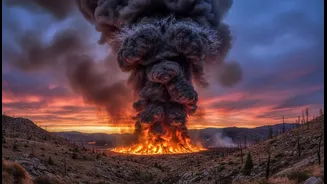
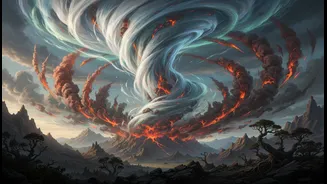
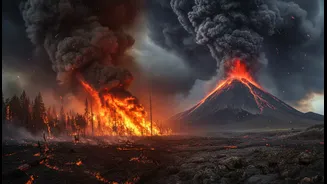
When a wildfire becomes exceptionally large and intense, its tremendous heat can generate its own weather system. This creates a powerful, smoke-infused thunderstorm cloud known as a pyrocumulonimbus, or pyroCb. These are not ordinary storms. They act
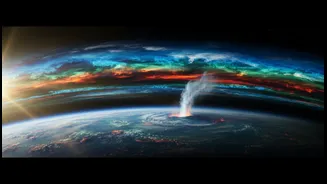
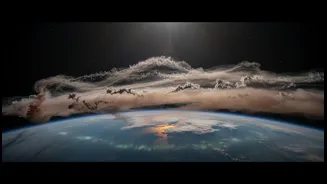
like massive atmospheric elevators, powered by the fire's energy. A pyroCb can rapidly transport huge quantities of material from the ground, punching through the troposphere (the lowest layer of the atmosphere where we live and where weather occurs) and injecting its contents directly into the stratosphere, which begins about 10 kilometres up. For years, scientists focused on the smoke and carbon particles carried by these plumes, but recent discoveries have revealed another, equally important passenger: water vapour.
Water Where It Doesn't Belong
The stratosphere is an incredibly dry place. The discovery that pyroCb events can pump significant amounts of water vapour into this layer is a game-changer for atmospheric science. The 2022 eruption of the Hunga Tonga-Hunga Ha'apai underwater volcano, for example, injected a record-breaking 150 million tons of water vapour into the stratosphere. Now, studies show that extreme wildfires, like those in Australia in 2019-2020, are also capable of lofting vast quantities of moisture along with smoke. This matters because water vapour is a potent greenhouse gas. While in the troposphere it's a key part of the water cycle, in the stratosphere it can linger for months or even years, absorbing heat and potentially altering the delicate chemical balance.
The Volcanic Comparison
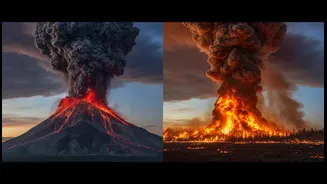
For decades, large volcanic eruptions were considered the primary natural events powerful enough to significantly impact the stratosphere. Volcanoes blast sulfur dioxide gas high into the atmosphere, which converts into sunlight-reflecting particles that can cause a temporary global cooling effect. Scientists now recognize that the most intense wildfire events can have atmospheric impacts comparable to a moderate volcanic eruption. However, the payload is different. Volcanoes primarily inject sulfur-based aerosols, which tend to scatter sunlight and cool the surface. In contrast, wildfire plumes are rich in black carbon (soot) and now, we know, water. Black carbon absorbs sunlight, leading to a warming effect in the stratosphere. This means that while both phenomena disrupt the stratosphere, they can do so with opposite thermal effects.
A Complicated Climate Signal
The long-term consequences of pumping more smoke and water into the stratosphere are complex and still being studied. The warming caused by dark, sunlight-absorbing smoke particles in the stratosphere can alter circulation patterns. Furthermore, the introduction of excess water vapour and other chemicals can affect the fragile ozone layer. Some research suggests that wildfire aerosols can lead to both the depletion and creation of ozone at different altitudes, further complicating the picture. What is clear is that these effects are no longer rare. Some studies estimate that pyroCb events are now responsible for 10 to 25% of the key aerosol particles in the lower stratosphere, a contribution far larger than previously thought.
An Era of 'Mega-Fires'
This isn't just a scientific curiosity; it's a direct consequence of a warming world. Climate change is leading to hotter, drier conditions, which in turn fuel more frequent and intense 'mega-fires'. As these extreme fires become the new normal, their ability to perturb the stratosphere is no longer an episodic event but a chronic, growing influence on our climate system. The smoke from a single major fire event can now remain in the stratosphere and circle the globe for months, with lasting effects. For example, smoke from the 2017 Pacific Northwest fires lingered for over eight months, and its impact was tracked worldwide. This new understanding highlights the urgent need to incorporate the complex atmospheric impacts of wildfires into our climate models to accurately predict future changes.