


The Uncanny Valley of AI Art
Generative AI has revolutionized the speed at which visual content can be created. With a simple text prompt, creators can conjure entire worlds in seconds. But this speed often comes at the cost of precision. The results are frequently a near-miss: a stunning
landscape with a floating tree, a perfect portrait with unsettlingly strange eyes, or a marketing graphic where the brand name is misspelled. This 'messiness' has been a significant barrier, forcing creators into a frustrating cycle of regenerating an image over and over, hoping the AI gets it right the next time. Until now, the output was a static, flat file, leaving little room for the subtle edits and refinements that define professional creative work.
From Flat Image to Editable Canvas
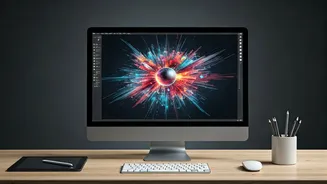
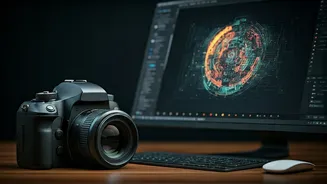
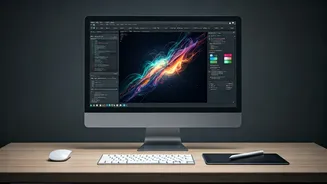
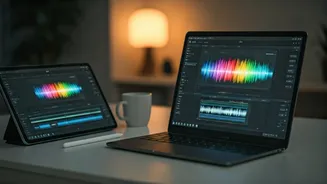
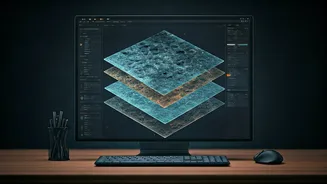
Magic Layers technology is designed to solve this exact problem. Tools from companies like Canva and Codia are now able to take a static, flat image—whether it was generated by AI or is simply a standard JPG or PNG—and intelligently break it down into a set of editable layers. Instead of a single, locked-down picture, the creator gets a flexible canvas. The background, foreground objects, text, and other visual elements are separated into their own distinct layers, much like a file created from scratch in a professional design program. This gives the user the power to move, edit, resize, or delete individual parts without disturbing the rest of the image.
How Does It Actually Work?
Unlike older tools that simply traced the outlines of shapes, Magic Layers technology uses AI to understand the structure and context of an image. It identifies what is text, what is a person, and what belongs in the background. For example, Canva's proprietary 'Design Model' analyzes the relationships between different components to rebuild the design's original structure. This allows it to not only separate a character from its background but also to convert what was once just pixels of text back into an editable text box with a live font. The result is that a flat image is transformed into a fully structured design asset, ready for fine-tuning.
A New Era of Creative Control
This shift from a static output to an editable one is more than just a convenience; it fundamentally changes the creative workflow. It puts the human creator firmly back in the driver's seat. No longer are they just a prompter, hoping for a lucky result. They are now curators and editors, using AI-generated content as a starting point for their vision. If an AI generates a marketing poster with the perfect graphic but the wrong headline, a designer can now simply correct the text. If a product photo needs a different background, it can be swapped out instantly. This level of control bridges the gap between the chaotic, rapid ideation of AI and the precision required for finished, professional work.
Beyond Just Fixing Mistakes
While the immediate benefit is fixing AI's notorious errors, the creative possibilities extend much further. This technology allows for unprecedented remixing and iteration. A creator could take elements from multiple different AI generations and composite them into a single, cohesive image. They can experiment with layouts, animate individual layers, and adapt a single design for various social media platforms with ease. This workflow treats AI output not as a final product, but as a library of raw materials. The creator’s skill is then applied to composition, color grading, and storytelling—the very things that separate generic content from compelling art.