




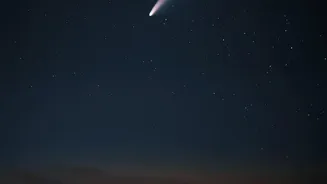

What Are the Orionids?
The Orionid meteor shower is an annual celestial event that occurs when Earth passes through the dusty trail left behind by one of history's most famous comets: 1P/Halley, better known as Halley's Comet. While the comet itself only graces our skies once
every 76 years, its debris field gives us two yearly showers: the Eta Aquariids in May and the Orionids in October. These tiny particles, many no larger than a grain of sand, burn up upon entering our atmosphere at incredible speeds, creating the bright, fast streaks of light we call meteors or shooting stars. The Orionids are particularly known for their speed and brightness, sometimes leaving glowing trails that linger for a few seconds.
Mark Your Calendar for the Peak
The Orionids are active from early October to early November, but the best time to watch is during the peak. In 2026, the shower is set to peak on the night of October 21-22. The most crucial viewing window will be in the predawn hours, specifically after the moon sets. On these peak nights, the moon will be a bright waxing gibbous, about 80% full, which can wash out fainter meteors. However, it is expected to set around 3 a.m. local time, creating a dark, moon-free window from then until dawn—the prime time for your stargazing attempt.
Location, Location, Location
For city dwellers, finding a good viewing spot is the biggest challenge, but it's not impossible. The goal is to get as far away from direct city and street lights as you can. Think about wide-open spaces that offer an unobstructed view of the sky. This could be a large park, a sports field, or even the top floor of a tall building with rooftop access. If possible, heading to the outskirts of the city will dramatically increase your chances of seeing more meteors. The key is to find a spot where your eyes aren't fighting the glare from nearby light sources. Even a slight reduction in light pollution can make a big difference.
Your Urban Stargazing Toolkit
The best part about meteor showers is that you don't need any advanced optics. In fact, telescopes and binoculars are not recommended because they restrict your field of view. Your naked eyes are the best tools for the job, as they allow you to take in as much of the sky as possible. The essential items for your urban expedition are simple: a comfortable reclining chair or a blanket to lie on, warm clothing, and maybe a flask of a warm beverage. Since you'll be sitting still, you can get cold faster than you expect. Comfort is key, as patience is a huge part of the experience.
Let Your Eyes Adjust
This is the most critical and often overlooked step. Your eyes need at least 20 to 30 minutes to fully adapt to the darkness and achieve what's known as night vision. During this time, you must avoid all bright lights, especially your phone screen. A single glance at a bright screen can reset the entire process. Be patient. Once your eyes have adjusted, you'll be surprised at how many more stars become visible, and you'll be primed to spot the faint, quick streaks of the Orionids. This adjustment period is the single best thing you can do to improve your viewing experience.
Know Where to Look (and Where Not To)
The Orionids are named because their radiant—the point from which they appear to originate—is in the constellation Orion the Hunter. You can find Orion rising in the east after midnight. However, you shouldn't stare directly at the radiant. Meteors that appear close to this point will seem short and stubby due to perspective. For the best views of long, dramatic streaks, look about 45 to 90 degrees away from the radiant, towards the darkest part of your sky. The meteors can appear anywhere, so the best strategy is simply to lie back and look up, taking in as wide a view of the sky as possible.
Set Realistic Expectations
Under perfect, dark-sky conditions, the Orionids can produce about 15 to 20 meteors per hour at their peak. From a city or suburban location, this number will be significantly lower. You might only see a few of the brightest meteors over the course of an hour. But don't be discouraged. The goal isn't to count dozens of meteors; it's to experience the thrill of seeing a few incredibly fast and bright pieces of Halley's Comet streak across the urban sky. Remember that meteors often come in spurts, followed by lulls, so patience is rewarded. Each one you spot is a win.