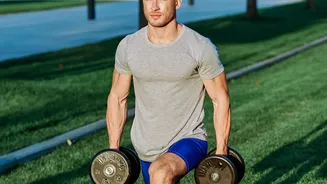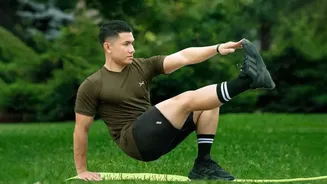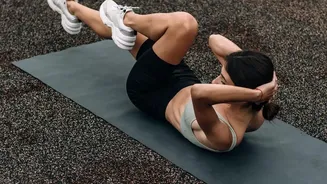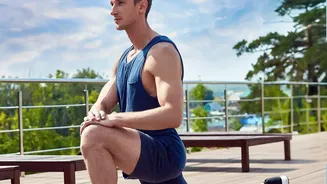

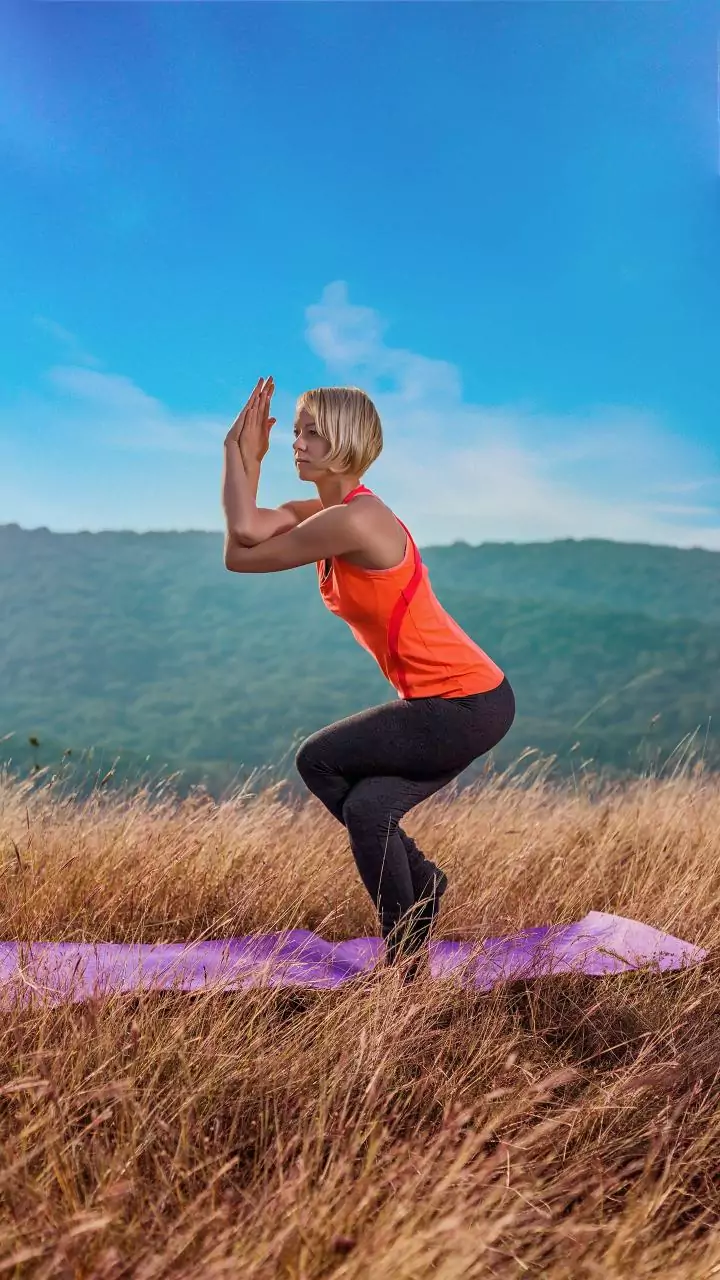



First, A Proper Warm-Up
Before you jump into any workout, it's crucial to prepare your body. A good warm-up increases blood flow to your muscles and gets your joints ready for action, reducing the risk of injury. Start with five to ten minutes of light cardio, like jogging around
the park or doing jumping jacks. Follow this with dynamic stretches such as arm circles, leg swings, and torso twists. Focus on moves that mimic the exercises you're about to perform. This isn't about holding a stretch but rather moving your body through its full range of motion.
The Bench: Your All-in-One Station
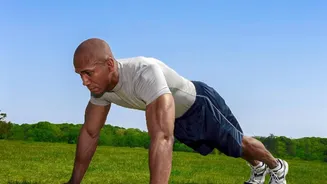
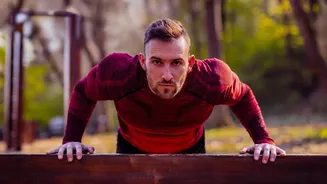
The humble park bench is one of the most versatile pieces of workout equipment you can find. For your upper body, use it for tricep dips. Sit on the edge of the bench with your hands gripping the seat next to your hips. Slide your bottom off the bench and lower yourself down until your elbows are at a 90-degree angle, then push back up. You can also perform incline push-ups by placing your hands on the seat or backrest, which is great for beginners. For a lower-body challenge, try Bulgarian split squats by placing the top of one foot on the bench behind you and squatting down with your front leg. Step-ups are another excellent option to target your glutes and quads.
The Swings: More Than Just for Fun
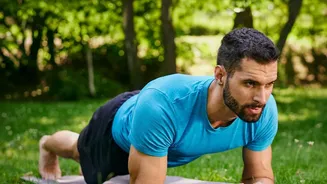
Swings introduce an element of instability, which forces your core to work overtime. For a killer ab exercise, try the swing plank. Get into a push-up position with your hands on the ground and place your feet onto the seat of the swing. Hold this position, keeping your body in a straight line. To make it harder, pull your knees in towards your chest for an ab tuck. You can also use the swings for suspended lunges or split squats, similar to the bench version but with the added challenge of keeping the swing steady. This instability fires up smaller stabilising muscles that are often neglected.
The Monkey Bars: Upper Body Powerhouse
Monkey bars are the ultimate test of upper-body and grip strength. If you can't yet travel from one bar to the next, simply start by hanging. A dead hang, where you just hold onto the bar for as long as you can, is a fantastic exercise for building grip strength and decompressing your spine. Once you're comfortable with that, you can progress to scapular pulls, where you pull your shoulder blades down and back without bending your arms. For a more advanced move, try hanging knee raises to target your lower abs. And of course, the classic pull-up is a goal to work towards. You can start with negative pull-ups, where you jump to the top position and slowly lower yourself down.
Putting It All Together In a Routine
To create a balanced workout, combine exercises that target different muscle groups. A simple circuit could look like this: perform each exercise for 45 seconds, then rest for 15 seconds before moving to the next. Complete the entire circuit of 4-5 exercises, rest for one to two minutes, and then repeat the circuit two or three more times. For example, a circuit could be: Bench Step-Ups, Incline Push-Ups, Swing Planks, and Hanging Knee Raises. This structure ensures you get both strength and cardio benefits. Listen to your body and adjust the intensity as needed. The goal is consistency, not exhaustion.
Safety and Etiquette
Before starting, always inspect the equipment for any potential hazards like rust, sharp edges, or instability. Be mindful that playgrounds are shared spaces, primarily for children. Try to work out during off-peak hours, like early mornings or later in the evening, to avoid interfering with playtime. If the equipment is wet from rain or dew, it can be slippery and dangerous, so it's best to wait until it's dry. Always use proper form to prevent injury and stop if you feel any sharp pain.