





A Visitor Like No Other
In October 2017, astronomers using the Pan-STARRS telescope in Hawaii spotted something unprecedented: an object moving so fast and on such a trajectory that it could only have come from another star system. Named 'Oumuamua, Hawaiian for “scout,” it was
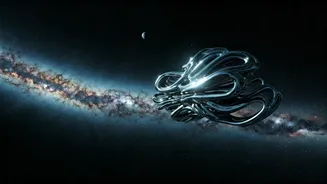
humanity’s first confirmed interstellar visitor. But from the very beginning, it refused to follow the rules. Observations suggested it was a dark, reddish object, highly elongated—perhaps ten times longer than it was wide, like a cosmic cigar or pancake. It was also tumbling chaotically on its journey through our solar system. It wasn’t an asteroid, but it also wasn’t quite a comet. It was something new, and it left scientists with more questions than answers.
The Great Acceleration Puzzle
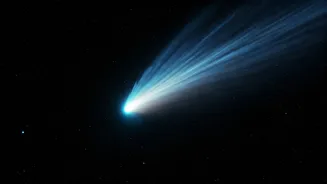
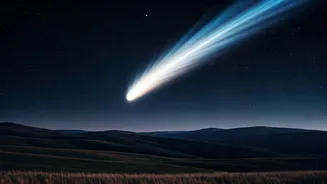
The biggest mystery surrounding 'Oumuamua was its movement. As it looped around the sun and began its journey back into deep space, astronomers noticed it was accelerating, pushing away faster than gravity alone could explain. This “non-gravitational acceleration” is common for comets; as they near the sun, ice on their surface vaporises, creating a jet-like effect that gives them a push, along with a visible halo or tail called a coma. But that’s the problem: 'Oumuamua had no visible coma. Telescopes saw no tail, no gas, no dust. It was accelerating for no apparent reason. How could an object get a push without any visible engine? This single contradiction fueled years of scientific head-scratching and wild speculation.
From Aliens to Nitrogen Icebergs
The absence of a clear explanation created a vacuum that was quickly filled with theories. The most famous, and controversial, came from Harvard astronomer Avi Loeb, who proposed 'Oumuamua could be an extraterrestrial artifact—a solar sail or probe sent by an alien civilisation. While this idea captured the public imagination, it was never embraced by the broader scientific community, which sought a natural explanation. A more plausible but still problematic theory suggested 'Oumuamua was a “nitrogen iceberg,” a chunk of frozen nitrogen chipped off a Pluto-like planet in another solar system. This could explain the acceleration, but it required the object’s origins to be a very specific and rare type of planetary system. The puzzle remained unsolved.
The 'Dark Comet' Breakthrough
Now, a compelling new theory appears to solve the paradox. In 2023, researchers Jennifer Bergner and Darryl Seligman published a study proposing that 'Oumuamua was, in fact, a comet—but a very special kind. They argue it was a water-rich comet that, as it passed near our sun, experienced a unique form of outgassing. The sun’s heat would have released trapped hydrogen gas from within the comet's water ice. Molecular hydrogen is not only extremely light and effective at providing a push, but it’s also invisible to the telescopes that were observing 'Oumuamua. This theory elegantly explains everything: the strange acceleration is caused by the invisible hydrogen jets, and the lack of a visible coma is because the gas itself cannot be seen. It was a 'dark comet' hiding in plain sight.