




The Sunshine Paradox: Why Are We Deficient?
It's a strange situation: in a country blessed with abundant sunlight, an estimated 70% to 90% of Indians have insufficient levels of Vitamin D. This widespread issue, often called 'hidden hunger', contributes to poor bone health, weakened immunity, and
fatigue. Several factors are to blame. Urban lifestyles mean more time spent indoors during peak sunlight hours. Air pollution can scatter the UVB rays necessary for skin to produce Vitamin D. Furthermore, Indian skin tones, which are richer in melanin, act as a natural sunscreen and require longer sun exposure to generate the same amount of the vitamin. Cultural clothing norms that cover most of the skin also play a significant role, limiting the body's natural production.
Nature's Limited Bounty
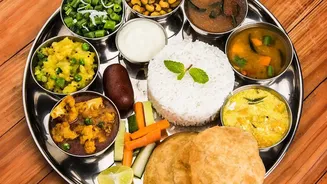
Turning to diet presents another challenge. Naturally occurring, Vitamin D-rich foods are rare, especially in vegetarian diets which are common in India. For non-vegetarians, the best sources are fatty fish like salmon, mackerel (bangda), and sardines (tarli). Egg yolks also provide a small amount. Some mushrooms, when exposed to UV light, can be a plant-based source of Vitamin D2. However, for most people, these foods are not consumed in sufficient quantity to meet the daily requirement, which the Indian Council of Medical Research (ICMR) recommends as 600 IU (International Units) per day for adults. This dietary gap is precisely where food fortification becomes a critical public health strategy.
The Rise of Fortified Foods
Food fortification is the process of deliberately adding essential micronutrients, like vitamins and minerals, to staple foods to improve their nutritional quality without changing their taste or appearance. In India, this is regulated by the Food Safety and Standards Authority of India (FSSAI). Recognizing the widespread deficiency, FSSAI allows for the fortification of common staples like milk and edible oil with Vitamins A and D. This strategy is a cost-effective and sustainable way to deliver essential nutrients to a large population through everyday food items, helping to bridge the nutritional gap that diet and sunshine alone cannot fill.
Decoding The Label: Your Guide to Finding Vitamin D
The key to finding these nutrient-boosted foods is learning to read the label. FSSAI has made this easier by introducing the '+F' logo, a blue square symbol that identifies a product as a fortified food. When you see this logo on a packet of milk, oil, or atta, it means the product has been enriched according to FSSAI standards.Beyond the logo, the nutrition information panel on the back of the pack is your best friend. Here's what to look for:1. Check the Ingredients List: The list will confirm the addition of 'Vitamin D', 'Cholecalciferol' (D3), or 'Ergocalciferol' (D2).2. Scan the Nutrition Facts Table: Look for 'Vitamin D' under the list of micronutrients. The amount is usually listed in micrograms (µg or mcg) or International Units (IU). To convert, remember that 1 microgram equals 40 IU.3. Mind the Serving Size: The nutritional information is often provided 'per 100g' and 'per serving'. Pay attention to the serving size to understand how much Vitamin D you're getting in a realistic portion.
Common Fortified Foods in Your Kirana
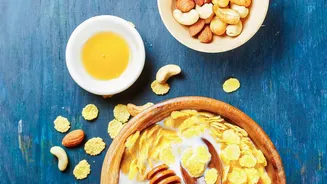
You don't need to visit specialty stores to find Vitamin D fortified foods. Many are readily available in local shops and supermarkets. Keep an eye out for the '+F' logo on these common items:Milk: Both dairy and plant-based milks (like soy or almond) are often fortified. A glass of fortified milk can be a significant contributor to your daily intake.Edible Oils: Many brands of vegetable oil are now fortified with Vitamins A and D, making it an easy addition to daily cooking.Atta (Wheat Flour) and Rice: While primarily fortified with iron and folic acid, some brands may also include Vitamin D.Breakfast Cereals and Juices: Many ready-to-eat breakfast cereals and some packaged orange juices are fortified. Always check the label, as fortification levels can vary widely between brands.