



What Exactly Is the Summer Solstice?
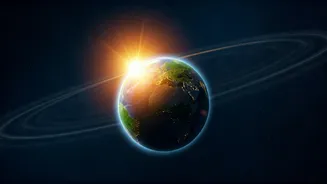
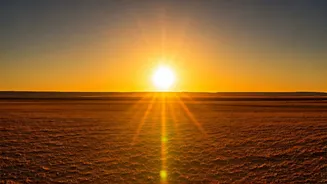
Think of the summer solstice not just as a day, but as a precise moment in time. It’s the instant when the Earth’s North Pole is tilted most directly towards the sun. In 2026, this moment occurs on June 21. For India and the rest of the Northern Hemisphere,
this alignment means the sun reaches its highest and northernmost point in the sky. The result? The longest period of daylight and the shortest night of the entire year. The word 'solstice' itself comes from the Latin words 'sol' (sun) and 'stitium' (to stand still). On this day, the sun’s apparent path across the sky seems to pause for a moment before reversing its direction, starting its slow journey southward again.
The Science Behind the Sunlight
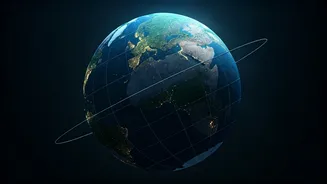
This celestial event isn’t a random occurrence; it’s all thanks to Earth's axial tilt. Our planet doesn’t spin upright as it orbits the sun. Instead, it’s tilted on its axis by about 23.5 degrees. This tilt is the very reason we have seasons. As Earth makes its year-long journey around the sun, different parts of the planet receive more direct sunlight than others. During the June solstice, the Northern Hemisphere is angled towards the sun, bathing it in maximum light and heat, giving us summer. Meanwhile, the Southern Hemisphere is tilted away, experiencing its winter solstice and the shortest day of the year. It’s a beautiful cosmic dance where one hemisphere’s peak summer is another’s deep winter.
How 'Long' Is the Longest Day in India?
While it's the longest day for everyone north of the equator, the exact amount of daylight you experience depends on your latitude. The further north you are, the longer your day will be. In India, this means there’s a noticeable difference from one end of the country to the other. For instance, in Leh, Ladakh, residents might enjoy close to 14.5 hours of daylight. In Delhi, the day will last for just under 14 hours. Head further south to Mumbai, and the duration shortens slightly to around 13.2 hours. And in Kanyakumari, at the southern tip of the country, the day will be closer to 12.5 hours long. So, while everyone gets 'more' sun, our northernmost cities get the biggest share.
More Than Just an Astronomical Event
The summer solstice has been a cornerstone of cultures and traditions around the world for millennia. In modern India, June 21 has gained a new, global significance as International Day of Yoga. The date was chosen in part because of its cultural importance in many parts of the world and its connection to the sun, a symbol of energy and life. The long daylight hours provide a perfect backdrop for mass yoga sessions and wellness events held across the country, from public parks in major cities to the serene landscapes of the Himalayas. It’s a day that marries ancient astronomical observation with a modern focus on health and well-being, celebrating both the power of the sun and the power of inner peace.
What Happens After the Peak?
While June 21 marks the day with the most sunlight, it’s ironically also the day we begin our slow march back towards winter. After the solstice, the days in the Northern Hemisphere will gradually start getting shorter, and the nights will grow longer. This change is subtle at first—you might only lose a minute or two of daylight each day—but it’s a steady astronomical shift. This doesn't mean summer is over. In fact, the hottest days of the year, often called the 'dog days of summer', typically arrive in July and August. This is due to 'seasonal lag,' as it takes time for the Earth's oceans and land to heat up and then release that warmth back into the atmosphere.