

Why Your Hair Fights Back in a Downpour
During the rainy season, the air is saturated with moisture. Your hair, especially if it's dry or porous, acts like a sponge. The outer layer of each strand, known as the cuticle, is made of overlapping scales. High humidity causes these scales to lift
and absorb moisture from the air, causing the hair shaft to swell unevenly. The result is the all-too-familiar monsoon frizz. This constant dampness doesn't just affect your style; a scalp that remains wet for extended periods becomes a breeding ground for fungal and bacterial growth, leading to itchiness and dandruff. Furthermore, hair is at its weakest when wet. The protein structure is temporarily more fragile, making it highly susceptible to breakage from simple actions like combing or tying it up.
The Hidden Damage of High-Heat Drying
When your hair takes hours to dry, grabbing a hairdryer and turning it to the highest setting feels like the only solution. However, applying intense heat to damp hair is one of the most damaging things you can do. The extreme temperature literally boils the water molecules trapped inside your hair strands. This creates tiny steam-filled bubbles within the hair shaft, a phenomenon known as 'bubble hair', which permanently damages the hair's internal structure from the inside out. This rapid evaporation process also causes the outer cuticle to crack and contract faster than the inner cortex, leading to severe structural stress. Over time, this leads to chronic dryness, extreme brittleness, split ends, and ironically, even more frizz, as the damaged cuticles are unable to lie flat.
Your Pre-Drying Monsoon Ritual
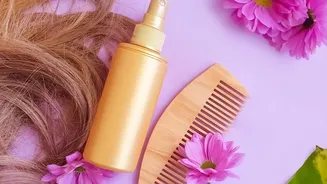
A great finish starts long before you plug in the dryer. The first step after a wash is to remove excess water gently. Instead of vigorously rubbing your hair with a coarse towel, which roughens up the cuticles and causes immediate frizz, switch to a soft microfibre towel or an old cotton t-shirt. Gently squeeze and blot your hair to absorb moisture without causing friction. Once you've removed the dripping water, never skip a heat protectant. These products work by forming a protective barrier over the hair shaft, which helps to slow down heat conduction and reduce moisture loss from within the strand. Look for formulations with ingredients like silicones, which coat the hair, or nourishing oils that can withstand high temperatures. This simple step is non-negotiable for anyone who uses heat.
How to Blow-Dry Without the Burn
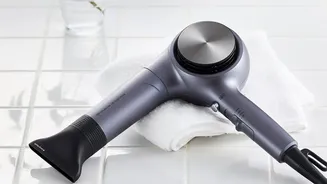
The goal isn't to blast your hair into submission, but to dry it efficiently and safely. The ideal strategy is a hybrid approach. Let your hair air-dry until it's about 70-80% of the way there. This minimizes its exposure to heat while preventing your scalp from staying damp for too long. When you do pick up the dryer, always use the low or medium heat setting. High heat is rarely necessary and almost always damaging. Keep the dryer moving constantly, never concentrating it on one spot for too long. Always point the nozzle downwards, following your brush or comb from root to tip. This encourages the hair cuticles to lie flat, sealing in moisture and creating a smoother, shinier finish. If you're in the market for a new tool, consider an ionic hair dryer. These emit negative ions that help break down water droplets faster, significantly reducing drying time and frizz.
Embracing the Air-Dry and Heat-Free Styles
On days when you have more time, skipping heat altogether is the healthiest choice. A successful air-dry in humid weather requires a little product assistance. After gently towel-drying, apply a leave-in conditioner or an anti-frizz serum to damp hair. This will help seal the cuticle and prevent it from soaking up excess moisture from the atmosphere. Rather than letting it dry in an unruly state, consider setting it in a protective style. A loose braid or a low bun will not only keep damp hair managed but will also give you soft waves once it's fully dry. Avoid tying wet hair up tightly, as this puts stress on the fragile strands and can trap moisture at the scalp, leading to weakness and breakage. With the right products and techniques, you can achieve a polished look without ever reaching for a heat tool.