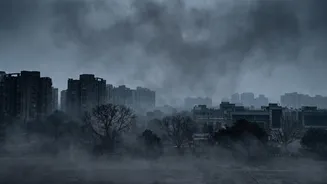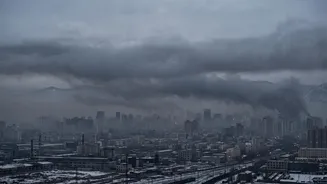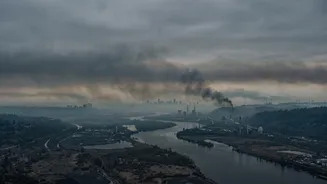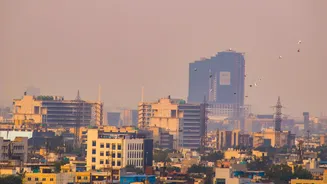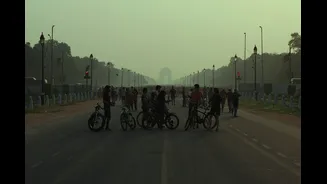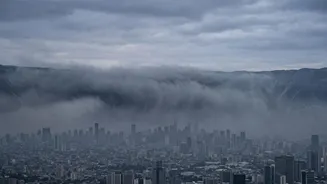







As predictable as the turning of the seasons, the air across Delhi-NCR becomes a thick, grey haze each year after the monsoon. What exactly triggers this alarming decline in air quality? The answer isn't a single culprit but a perfect storm of factors.
The Post-Monsoon Meteorological Trap
The period from October to November marks a crucial shift in weather patterns. As temperatures begin to drop, a phenomenon known as 'temperature inversion' occurs. Normally, the air closer to the ground is warmer and rises, dispersing pollutants. In winter, however, the ground cools faster at night, creating a layer of cool, dense air near the surface with a warmer layer above it. This warm layer acts like a lid, trapping pollutants and preventing them from rising. Compounding this is a significant drop in wind speed. The slow, calm winds characteristic of this season mean there is very little horizontal dispersion, allowing toxic particles to accumulate and linger in the air we breathe. Delhi's geography, situated in the landlocked Indo-Gangetic plains and blocked by the Himalayas, further exacerbates this trapping effect.
The Annual Scourge of Stubble Burning
Coinciding perfectly with these unfavourable weather conditions is the paddy harvesting season in the neighbouring states of Punjab, Haryana, and Uttar Pradesh. To quickly clear their fields for the next crop, many farmers resort to burning the leftover crop residue, or stubble. This practice releases enormous clouds of smoke containing fine particulate matter (PM2.5 and PM10), carbon monoxide, and other harmful gases. Prevailing northwesterly winds during this season carry this plume of smoke directly over the Delhi-NCR region, drastically increasing the pollution load. While the exact contribution of stubble burning can vary, studies have shown it can account for a significant percentage of Delhi's particulate pollution on the worst days.
The Baseline: A Constant Barrage of Urban Pollution
While seasonal factors act as amplifiers, the region suffers from high levels of pollution year-round. These local sources form the toxic baseline that is tipped into the 'severe' category during the transition months. Vehicular emissions are a major and consistent contributor to the city's air pollution. Added to this are emissions from industries, dust from a continuous cycle of construction and demolition activities, and the open burning of municipal solid waste. These sources continuously pump pollutants into the atmosphere. When the meteorological trap sets in, this everyday pollution has nowhere to go, leading to a rapid spike in the Air Quality Index (AQI). On November 2, 2026, Delhi recorded its first 'very poor' air quality of the season, with the AQI crossing 300 in several areas, a clear sign of this cumulative effect.
Festive Emissions and Other Factors
The transitional months also coincide with major festivals like Diwali. Despite bans and restrictions, the bursting of firecrackers can lead to a sharp, localised spike in pollutants, releasing dangerous metal particles and toxins that linger for days. Furthermore, as temperatures drop, the burning of biomass like wood and cow dung for heating by lower-income communities also adds to the particulate matter load. The combination of all these elements—a meteorological lid, incoming farm fire smoke, and a high baseline of urban and festive emissions—creates the hazardous air quality that defines this time of year in the capital region.
What is the Graded Response Action Plan (GRAP)?
To combat these predictable pollution spikes, authorities implement the Graded Response Action Plan (GRAP). Approved by the Supreme Court, GRAP is an emergency framework that enforces specific, escalating measures based on the city's AQI levels. Actions range from mechanised sweeping and water sprinkling in the 'Poor' category (Stage I) to banning non-essential construction and restricting certain vehicles in the 'Severe' categories (Stage III and IV). As Delhi's AQI entered the 'very poor' category this season, measures under Stage II—such as restrictions on diesel generators—were made applicable to curb further deterioration. The plan is designed to be a responsive, step-by-step mechanism to prevent the air from reaching its most toxic levels.