





The Smart Shopper's Blueprint
Bulk buying seems like a straightforward way to save money and reduce trips to the store. The allure of a lower price per unit is strong, but it's a trap if the product spoils before you can use it or creates chaos in your home. Smart bulk shopping isn't
just about the purchase; it's a system that begins long before you enter the store. It requires a clear understanding of what your household actually consumes and the physical space you have to store it. Before your next shopping trip, take a moment to assess your buying patterns. Keeping a simple log of the items you use most frequently can reveal what’s truly worth buying in a larger quantity. That jumbo pack of lentils is only a good deal if your family enjoys eating them regularly. This initial planning prevents impulse buys that lead to both food waste and clutter.
Measure Your Real Estate
Your home's storage spaces—pantry, cabinets, refrigerator, and freezer—are finite resources. Treating them like valuable real estate is key. Before buying in bulk, you need to know their exact dimensions. In India, standard base cabinets are typically around 24 inches deep, while wall-mounted cabinets are often shallower, at about 12 to 14 inches. Grab a measuring tape and note the height, width, and depth of your key shelves. Don't forget to measure your existing food storage containers if you plan to use them for decanting. Knowing that your favourite shelf is only 12 inches deep can stop you from buying that 14-inch-wide 'family size' box. Consider vertical space as well; tiered shelving can help you see everything on a deep shelf, preventing items from getting lost in the back.
The Art of Decanting
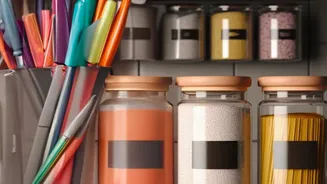
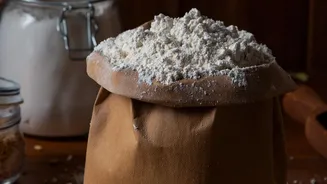
One of the most effective strategies for managing bulk purchases is decanting—transferring items from their original, often cumbersome packaging into dedicated containers. This practice comes with numerous benefits. Firstly, it keeps food fresher for longer, as airtight containers protect items like flour, sugar, and grains from air, moisture, and pests. Secondly, it saves space. Uniform, stackable containers can make much more efficient use of your shelf space than a collection of mismatched bags and boxes. Finally, it provides a clear visual inventory. When you can see exactly how much rice or pasta you have left, you’re less likely to buy duplicates. Items that are used a little at a time, like baking supplies, grains, and nuts, are perfect candidates for decanting.
Choosing the Right Containers
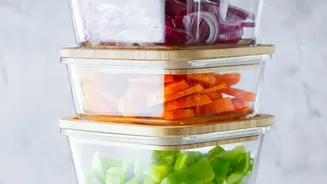
Investing in the right storage containers is crucial for a successful decanting system. The best containers will have airtight seals to ensure freshness. When it comes to materials, both glass and high-quality plastic have their advantages. Glass is non-porous, meaning it won't absorb stains or odours, and is endlessly recyclable. Plastic is lighter, less expensive, and won't break if dropped. For pantry organization, many experts favour clear, stackable, and square or rectangular containers, as they make the most efficient use of shelf space compared to round ones. Before buying, consider the size; ideally, a container should be large enough to hold a standard-sized package of the item you intend to store in it.
Develop a Backstock System
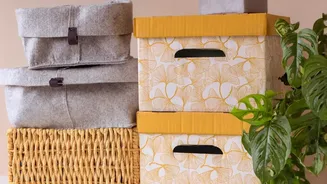
Even with decanting, you may have overflow from a bulk purchase. The solution is to create a dedicated 'backstock' zone. This could be a high shelf in the pantry, a rack in the laundry room, or shelving in a garage. The key is to have one designated area for all your overflow items. This prevents you from having three half-empty bags of rice scattered across different cupboards. When you empty a decanted container in your kitchen, you simply retrieve the backup from your storage zone. A simple and effective method for managing this is 'First In, First Out' (FIFO). When you bring a new item home, place it at the back of the shelf and move the older items forward. This ensures that you use up the oldest products first, significantly reducing food waste.