
From Shooting Star to Scientific Clue
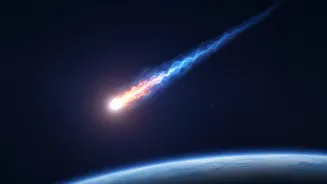
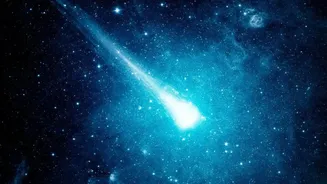
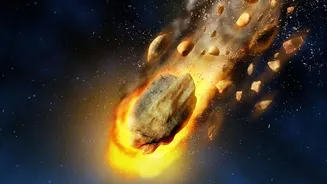
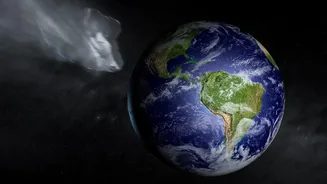
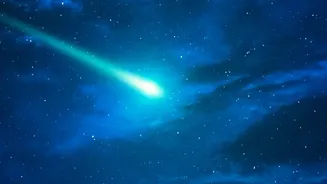
First, let's clarify our terms. What we call a meteor or a 'shooting star' is the streak of light we see when a small piece of space debris, called a meteoroid, enters Earth's atmosphere and burns up due to friction. Most are no bigger than a grain of sand.
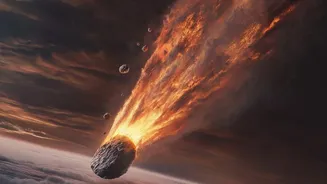
If a piece survives the fiery journey and lands on Earth, it’s called a meteorite. Each of these fleeting flashes contains a wealth of information. Astronomers use sophisticated camera networks to track a meteor's path across the sky, noting its speed, trajectory, and brightness. This initial data is the first step in a cosmic forensic investigation to trace the object back to its source millions of kilometres away.
Backtracking the Celestial Path
By precisely measuring the angle and velocity of a meteor as it enters our atmosphere, scientists can perform a kind of celestial rewind. They use computer models to calculate the object's original orbit around the Sun before its encounter with Earth. This process is like tracing a car's journey back from its final destination to its starting point using only its final direction and speed. When multiple meteors are observed following similar orbital paths, it signals they belong to a single stream of debris, known as a meteoroid stream. These streams are the remnants of a larger parent body, shedding material as it travels through space. Annual meteor showers, like the famous Perseids in August, occur when the Earth passes through one of these dense streams each year on its own journey around the Sun.
Finding the Parent: Comets and Asteroids
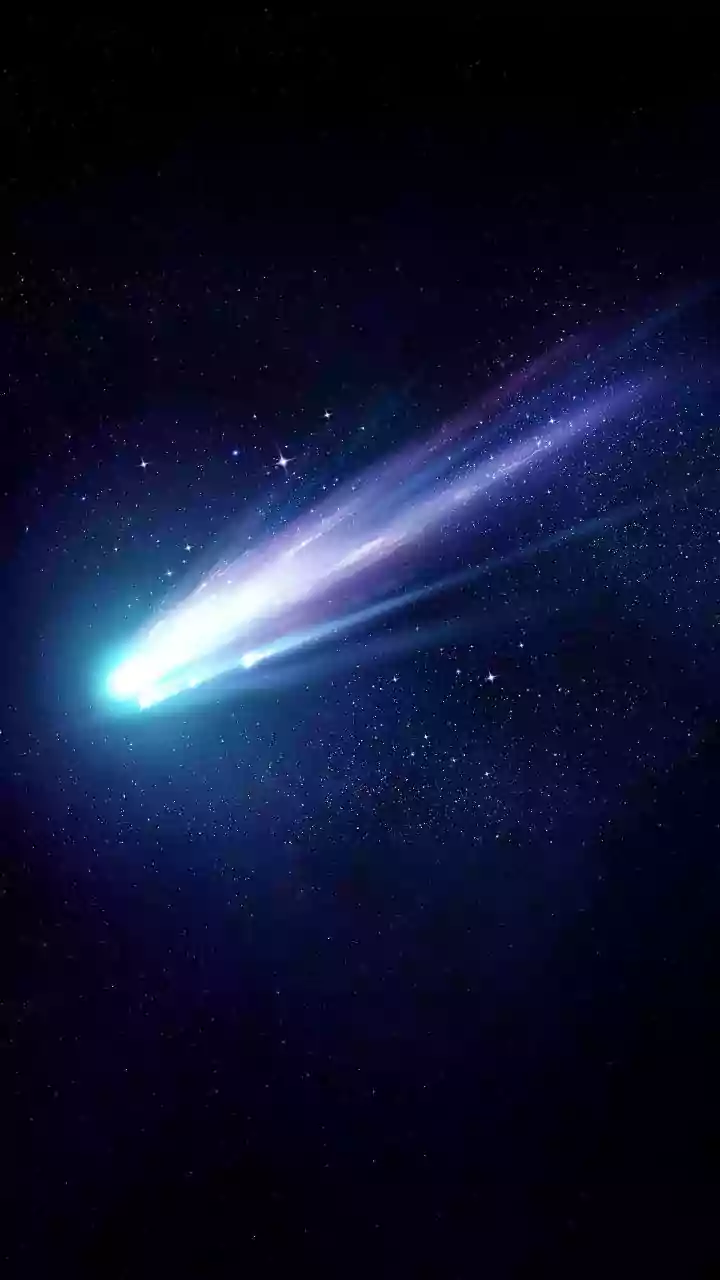
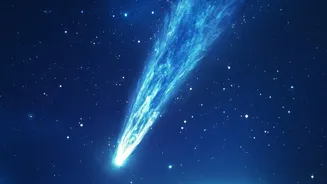
Once an orbit is established for a meteoroid stream, the next step is to find a match. Astronomers compare the calculated orbit with the known orbits of thousands of comets and asteroids. A close match strongly suggests that the stream is the debris trail of that specific object. Most of the major, predictable meteor showers are linked to comets. For instance, the Perseids are known to be particles from Comet Swift-Tuttle, while the Orionids are debris from Halley's Comet. As these 'dirty snowballs' approach the Sun, their ice vaporises, releasing trapped dust and rock that spreads along their orbit. However, not all parent bodies are comets. The Geminid meteor shower, one of the most active of the year, is sourced from an asteroid named 3200 Phaethon, which behaves in some ways like a comet, shedding rocky debris.
The Chemical Fingerprint
Another powerful tool is spectroscopy. As a meteor burns up, the intense heat causes the elements within it to glow, each emitting light at a specific wavelength. By capturing this light with a special instrument and splitting it into a spectrum, like a rainbow, astronomers can identify the 'chemical fingerprint' of the meteoroid. They can see signatures for elements like iron, magnesium, sodium, and silicon. This composition is then compared to what we know about different types of celestial bodies. For example, if a meteor's spectrum matches the known composition of a particular class of asteroids, it strengthens the link and tells us more about the parent body's geology without ever having to visit it.
Connecting to Asteroid Families
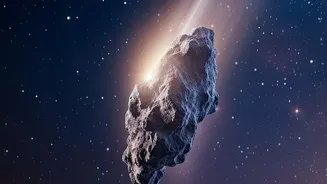
The connections can go even deeper, linking meteors to entire 'asteroid families'. These are groups of asteroids in the main belt between Mars and Jupiter that share similar orbits and compositions. Scientists believe these families are the scattered fragments from ancient, massive collisions between larger parent bodies. By linking a meteor stream to a single asteroid that is part of a larger family, astronomers can infer that the tiny grain of sand burning up in our atmosphere is actually a distant shard from a cataclysmic event that may have happened billions of years ago. This helps piece together the violent and dynamic history of how our solar system formed and evolved.