







The Classic Choice: High-Energy Aerobics
Aerobics has been a fitness staple for decades for a good reason. It involves rhythmic, continuous movement of large muscle groups, effectively raising your heart rate and improving circulation. Classes are widely available at gyms and community centres,
offering structured routines often led by a professional. The variety is vast, from dance-based classes to high-intensity step aerobics. This format is excellent for those who thrive on group energy and guided instruction. However, the primary drawback is its high-impact nature. Traditional aerobics on a hard surface can put significant stress on joints like the knees and ankles, which isn't ideal for everyone.
The Bouncing Alternative: Trampolining
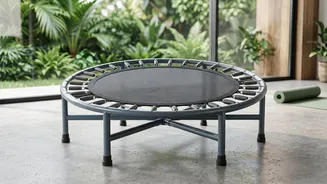
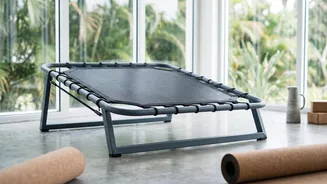
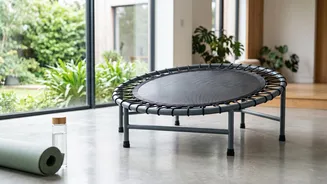
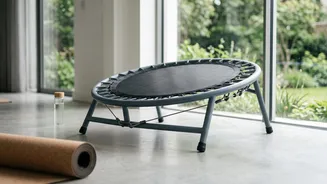
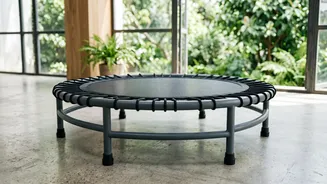
Trampolining, or rebounding on a mini-trampoline, has surged in popularity as a fun and powerful workout. The core benefit is that it's a low-impact exercise. The trampoline mat absorbs a large percentage of the shock, taking pressure off your joints while still providing an intense workout. This makes it a great option for people with joint sensitivities, those recovering from certain injuries, or anyone looking to reduce wear and tear on their body. The unstable surface also constantly engages your core and stabilizer muscles to maintain balance, adding an extra dimension to the workout.
Calorie Burn and Cardiovascular Intensity
When it comes to burning calories, both exercises are highly effective, but they work differently. A sustained, hour-long aerobics class can lead to significant calorie expenditure. Trampolining, on the other hand, often functions more like high-intensity interval training (HIIT). The calorie burn can be surprisingly high; some estimates suggest a vigorous 10-minute trampoline session can be as effective for cardio as a 30-minute run. A famous 1980 NASA study found that rebounding was up to 68% more efficient in terms of oxygen uptake compared to jogging, highlighting its effectiveness. Ultimately, the intensity you bring to either workout is the biggest factor in how many calories you'll burn.
The Joint Impact Difference
This is where trampolining has a distinct advantage. High-impact exercises like running or some forms of aerobics create force that travels up through your joints. For those with arthritis or previous injuries, this can be painful or prohibitive. The rebounding surface of a trampoline absorbs the majority of this impact, allowing for an intense workout without the jarring stress on ankles, knees, and hips. This not only enhances comfort during the workout but can also aid in recovery and long-term joint health. Studies have shown this makes it a suitable exercise for a wide range of individuals, including older adults.
Crucial Safety and Proper Technique
The playful nature of trampolining can mask its potential for injury if not approached with care. The headline is right: safe technique is non-negotiable. For exercise rebounders, using a model with a handlebar can provide crucial stability, especially for beginners. It's important to start with simple, controlled bounces, keeping your knees slightly bent and your core engaged. Avoid attempting complex tricks or somersaults, which dramatically increase the risk of neck and head injuries. Ensure the trampoline is on a level surface away from furniture or hard objects. Always allow only one person on at a time to prevent collisions, which are a major cause of injuries. Finally, children under the age of six should not use trampolines due to their developing bones and coordination.
Beyond Cardio: Other Health Perks
While cardio is the main event, both activities offer bonus benefits. The balance and coordination required for trampolining can improve your kinesthetic awareness—your sense of where your body is in space. Furthermore, many proponents claim that the vertical bouncing motion is uniquely effective at stimulating the lymphatic system, which is crucial for flushing toxins and supporting immune function. Since the lymphatic system doesn't have its own pump like the heart, this movement-driven circulation can be a significant wellness boost.