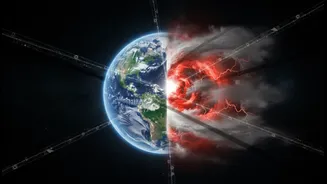









What Exactly Is Geoengineering?
Geoengineering, also called climate engineering, refers to the deliberate, large-scale intervention in the Earth's natural systems to counteract climate change. For decades, it was largely the stuff of science fiction. Today, however, as the impacts of climate change intensify
and global emissions reductions lag, it is becoming a subject of serious scientific research and heated debate. The central idea is no longer just to reduce our environmental impact, but to actively manage the planet’s climate systems to cool the Earth or reduce the concentration of greenhouse gases in the atmosphere.
Two Main Paths: Removing Carbon vs. Dimming the Sun
Geoengineering approaches are generally split into two broad categories. The first is Carbon Dioxide Removal (CDR), which focuses on pulling legacy carbon from the atmosphere. This includes nature-based solutions like large-scale reforestation and technological ones like Direct Air Capture (DAC), which uses machines to filter CO2 from the air for underground storage. The second, more controversial, category is Solar Radiation Management (SRM), also known as solar geoengineering. This approach doesn't reduce CO2 but aims to cool the planet by reflecting a small fraction of sunlight back into space. Methods include marine cloud brightening, where sea salt is sprayed to make clouds more reflective, and stratospheric aerosol injection, which involves releasing reflective particles high into the atmosphere, mimicking the temporary cooling effect of a large volcanic eruption.
From Models to the Real World
For years, geoengineering research was confined to computer models. Recently, however, the field has seen a push toward small-scale, real-world experiments. Research bodies in the UK and US have begun funding initiatives to study these technologies more closely. For example, Australian researchers are testing marine cloud brightening to potentially protect the Great Barrier Reef, while some private companies are pursuing stratospheric aerosol injection. This shift from simulation to physical trials is a primary reason for the growing urgency in discussions. It moves the concept from a theoretical possibility to a tangible technology with real-world implications that need to be understood and governed.
The Unsettling Questions and Immense Risks
The potential risks of geoengineering are as monumental as its proposed solutions. For SRM, scientists warn of numerous unintended consequences. Artificially dimming the sun could disrupt global weather patterns, altering monsoon seasons vital for agriculture in regions like India and Africa. It could also potentially damage the ozone layer and, if ever stopped abruptly, could lead to a rapid and catastrophic rebound in global temperatures. Furthermore, it does nothing to address the root cause of climate change—greenhouse gas emissions—or its other major symptom, ocean acidification. There is also the 'moral hazard' argument: the fear that the mere prospect of a technological fix could undermine the global will to cut emissions.
A Global Governance Nightmare
Perhaps the most complex challenge is governance. Who gets to control the global thermostat? A technology like stratospheric aerosol injection could theoretically be deployed by a single nation or even a wealthy corporation, yet its effects would be global. This creates a huge potential for geopolitical conflict, as an action that benefits one region could cause droughts or floods in another. There is currently no international framework to govern geoengineering research, let alone its deployment. Organizations like the UN have highlighted the profound ethical risks and the potential for such technologies to exacerbate global inequalities, raising calls for inclusive dialogue and a cautious approach.