






The Old Orbit: An ISRO-Dominated World
For decades, the Indian Space Research Organisation (ISRO) was not just the primary player in India's space journey; it was practically the only one. A government job at ISRO represented the pinnacle of achievement for aspiring aerospace engineers and
scientists. Getting in was highly competitive, with hundreds of thousands of applicants vying for a few hundred positions annually. The work was mission-driven and prestigious, but the opportunities were finite, concentrated within the government's structure. This created a bottleneck for the immense talent pool in the country, where the ambition to work on rockets and satellites far outstripped the number of available jobs.
The Game Changer: Unlocking the Private Sector
The major shift began in 2020 when the government announced historic reforms to open the space sector to private participation. This led to the creation of the Indian National Space Promotion and Authorisation Centre (IN-SPACe), a single-window agency designed to promote, authorise, and supervise the activities of private companies. The goal was clear: to transform India's space ecosystem from an ISRO-led program into an ISRO-led ecosystem. The Indian Space Policy 2023 further clarified this, encouraging ISRO to focus on advanced research and development while transferring mature manufacturing technologies to private players. This policy shift wasn't about diminishing ISRO, but about expanding India's overall capacity to compete on the global stage.
A Universe of Startups
The result has been an explosion of private innovation. From just a handful in 2020, India is now home to over 400 space-tech startups. Companies like Skyroot Aerospace and Agnikul Cosmos are building their own launch vehicles, with both achieving successful test flights. Pixxel is deploying constellations of hyperspectral imaging satellites, while Dhruva Space focuses on satellite platforms. These aren't just paper projects; they are well-funded businesses with hardware in orbit, international clients, and real revenue. This burgeoning private industry is projected to help grow India's share of the global space economy from around $8 billion to $44 billion by 2033.
New Roles, Broader Skills
This new landscape has fundamentally changed what a 'space career' means. The demand is no longer just for aerospace or astronautical engineers. Today's space companies are hiring aggressively for roles in software development, data science, artificial intelligence, robotics, and cybersecurity. Upstream companies building rockets and satellites need mechanical engineers with experience in composites and thermal management. Downstream companies, which use satellite data, are looking for geospatial analysts and data scientists to build applications for agriculture, climate monitoring, and urban planning. Even non-technical roles in finance, marketing, and space law are becoming crucial as these startups scale into global businesses.
ISRO's Evolving Mission
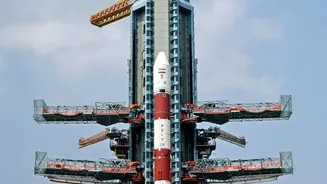
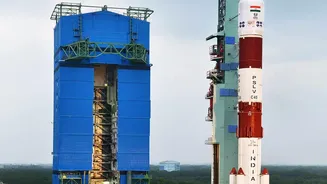
With private firms taking over routine manufacturing of proven systems like the PSLV and SSLV rockets, ISRO is free to concentrate on the next frontier. The agency's focus is shifting towards advanced R&D, deep space exploration missions, space science, and strategic projects like the Gaganyaan human spaceflight program and the proposed lunar station. ISRO now acts as a mentor, a partner, and a customer to the private sector, transferring its technologies and providing its world-class facilities. This collaborative model is essential to meet the country's growing ambitions, which may require as many as 50 launches per year—a capacity far beyond what ISRO could achieve alone.