

The Humidity and Hair Connection
During the rainy season, the air is saturated with moisture. Your hair, being porous, tries to balance itself with the environment by absorbing this excess water. This causes the hair shaft to swell, lifting its protective outer layer, known as the cuticle.
When these 'shingles' of the cuticle are raised, your hair becomes rough, unruly, and significantly weaker. This repeated cycle of swelling and shrinking, known as hygral fatigue, puts immense strain on hair strands, making them brittle and highly susceptible to snapping and breakage. Hair that is already dry, curly, or chemically treated is even more porous and therefore more vulnerable to this effect.
Your Scalp is Not a Fan of Dampness
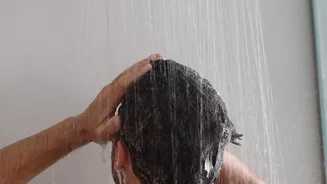
A constantly damp scalp is the perfect breeding ground for fungal and bacterial growth. The combination of warmth from your head, moisture from wet hair, and humidity in the air creates an ideal environment for microorganisms to thrive. This can lead to a host of uncomfortable issues, including persistent itchiness, increased dandruff, and even scalp breakouts or folliculitis, which are small, inflamed bumps. Tying up wet hair in a tight bun or ponytail is particularly problematic as it traps moisture at the roots, worsening the risk of scalp infections and potential odour.
The Problem with Aggressive Towel Drying
When your hair is wet, it's in its most fragile state. The temptation to vigorously rub it with a coarse bath towel to speed up drying is a recipe for disaster. This aggressive friction roughs up the already-lifted cuticles, causing immediate frizz and mechanical damage. The loops of a traditional terry cloth towel can snag on individual hair strands, leading to tangles and breakage. Instead of solving the problem of wetness, this method creates a new one: a frizzy, damaged texture that's difficult to manage.
A Guide to Gentle Drying
The key is to remove excess water without causing stress to the hair. First, gently squeeze, don’t wring, the water out of your hair after washing. Next, swap your regular bath towel for a soft, old cotton t-shirt or a microfiber towel. These materials are much gentler and have a smoother surface that absorbs water effectively without creating friction. Instead of rubbing, blot or pat your hair in sections. For curly hair, a technique called 'plopping'—wrapping your hair in a t-shirt or microfiber towel—can help absorb water while enhancing your natural curl pattern. Finally, use a wide-tooth comb to detangle, starting from the ends and working your way up to the roots to minimize pulling.
Using Heat the Right Way
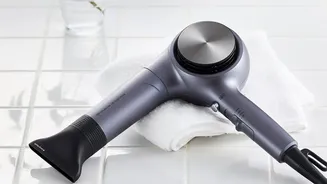
While air-drying is often the gentlest option, it can take hours during the monsoon, prolonging the time your hair and scalp stay damp. A strategic approach to blow-drying can be beneficial. Let your hair air-dry until it's about 70-80% dry first. Before using any heat, always apply a heat protectant spray to create a barrier. When you do blow-dry, use the lowest heat and speed setting. Keep the dryer moving and hold it at least six inches away from your head to prevent heat damage. Using a concentrator nozzle can help direct the airflow and smooth the cuticle, but always point it downwards along the hair shaft. The goal is to get your hair and scalp dry, not to scorch them.