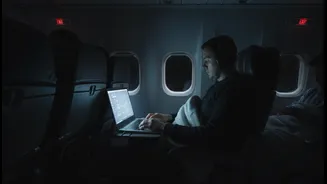









The Always-On Cabin
Not long ago, an airplane cabin was one of the last true sanctuaries from the internet. The act of taking flight was a forced digital detox. Today, in-flight Wi-Fi has transformed from a rare luxury into a standard expectation for many travellers. While
this connectivity offers the comfort of staying in touch with family or catching up on work, it also brings the office, the group chat, and the endless scroll of social media to 30,000 feet. The former dead zone is now just another node in our hyper-connected lives, and the casualty is often our ability to truly switch off and rest. The flight was once a period of enforced downtime; now, it requires active effort to achieve the same peace.
Why Your Brain Hates That 'Ping'
That seemingly harmless notification has a powerful effect on your brain, especially when you're trying to sleep. Each alert, whether a sound or a screen lighting up, is designed to capture your attention. This can trigger a release of cortisol, the body's stress hormone, pulling you out of the early, fragile stages of sleep. The blue light emitted from device screens is also a well-known enemy of rest, as it can interfere with the production of melatonin, the hormone that regulates your sleep-wake cycle. The result isn't just a brief interruption; it’s a disruption to your body's natural rhythm that can leave you feeling groggy and unrested upon arrival, defeating the purpose of trying to sleep on the plane in the first place.
The Myth of a 'Quick Look'
The temptation to just quickly check the message is strong. But a 'quick look' is rarely quick. Responding to one email often leads to reading another, or falling into a rabbit hole of news and notifications. This cycle not only keeps your brain in an alert and engaged state but also makes it significantly harder to fall back asleep. Even if you don't respond, the mental load of processing the message—whether it's a minor work query or a dramatic family text—can linger, causing low-level anxiety that prevents deep, restorative rest. Studies on the impact of constant connectivity show that it can increase stress and fatigue, diminishing the mental health benefits that travel is supposed to provide.
Your Pre-Flight Disconnection Plan
Reclaiming your in-flight rest requires a little preparation. Before you even board, take a few simple steps to create your own peaceful bubble. First, download any movies, music, podcasts, or books you might want to enjoy. Relying on streaming means you need Wi-Fi, and keeping Wi-Fi on invites interruptions. Second, familiarize yourself with your devices' 'Do Not Disturb' or 'Focus Mode' settings. You can customize these to allow only urgent calls while blocking all other app notifications. For a more foolproof method, simply turn on Airplane Mode after boarding and leave it on. This severs all connections, creating an effective digital barrier. Pack physical sleep aids like a comfortable eye mask and earplugs to block out light and cabin noise, reinforcing your signal to your brain and your seatmates that you are off-duty.
Embrace the Opportunity to Unplug
Instead of viewing the lack of connectivity as a problem to be solved, consider reframing it as a rare opportunity. A flight can be a time for genuine, uninterrupted reflection, reading a physical book, or simply letting your mind wander—an activity that is surprisingly crucial for creativity and mental restoration. Experts and seasoned travellers alike increasingly advocate for 'unplugged travel,' pointing to benefits like reduced stress, deeper connections with travel companions, and a heightened awareness of the present moment. By consciously choosing to disconnect, you're not just avoiding interruptions; you're actively choosing to invest in your own well-being, ensuring you arrive at your destination refreshed and ready to explore, not exhausted from a night of digital disturbances.