







A Tale of Two Philosophies
On one side, you have England, a team now managed with the tactical precision of Thomas Tuchel. After years of being criticised for conservatism, the Three Lions are now expected to blend their deep talent pool with more aggressive, vertical football.
Their squad is littered with stars from Europe's biggest clubs, bringing tournament experience from recent deep runs in major competitions. On the other side stands Mexico, a team revitalised under the familiar guidance of veteran manager Javier Aguirre. Known for their tactical versatility and high-energy approach, El Tri thrives on quick transitions and defensive solidity. As co-hosts of the 2026 World Cup, they carry the momentum of being reigning CONCACAF champions and the immense backing of their passionate home support.
The Attacking Arsenal
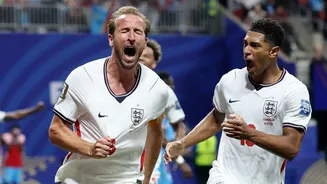
England's attack is, on paper, one of the world's most formidable. Led by captain and all-time leading scorer Harry Kane, they possess an elite finisher capable of both scoring and creating. Supporting him is a dazzling array of talent including Real Madrid's Jude Bellingham, whose runs from midfield are a constant threat, and Bukayo Saka on the wing. The depth is so profound that world-class players can be left out, yet the attack remains fearsome. Mexico’s attack relies on a different formula. Veteran striker Raúl Jiménez remains a crucial focal point, using his physicality and link-up play to bring others into the game. He is complemented by the dynamic abilities of players like Julián Quiñones and Roberto Alvarado, who have shown standout form. While perhaps lacking the same household names as England, Mexico’s forward unit is built for quick, coordinated attacks that can disrupt any defence.
The Midfield Battleground
The contest could very well be won or lost in the middle of the park. England’s midfield is anchored by Declan Rice, a player who provides defensive stability and allows creative forces like Jude Bellingham to surge forward. The primary challenge for Tuchel has been finding the perfect balance to control the tempo against elite opposition, a puzzle that has at times seen England struggle to keep the ball under pressure. Mexico’s midfield is built around the formidable presence of captain Edson Álvarez, whose job is to shield the defence and recycle possession. Supported by energetic players, El Tri’s midfield is designed for winning second balls and launching rapid counter-attacks. Their tactical setup often involves overloading the central areas to create space out wide, a strategy designed to stretch opponents and create one-on-one situations.
Defensive Fortitude and Intangibles
Historically, England have maintained a strong head-to-head record against Mexico, winning six of their nine encounters. However, recent form paints an interesting picture. Under Aguirre, Mexico has developed a reputation for being defensively resolute, keeping an impressive number of clean sheets leading into and during the World Cup. They are compact and difficult to break down, a crucial attribute in knockout football. England, for all their attacking might, have shown vulnerability. A persistent question mark hangs over their ability to manage games when put under sustained pressure by top-tier teams. Furthermore, the advantage for Mexico of playing on home soil, potentially at the high altitude of the Estadio Azteca, cannot be understated. It is a psychological and physiological weapon that has historically given them a significant edge.