









The Air We Breathe: A Hazy Picture
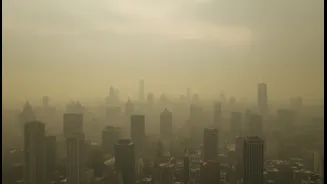
India's struggle with air pollution continues to be a defining public health crisis in 2026. Reports released this year paint a grim picture, with nearly half of monitored Indian cities failing to meet the country's own National Ambient Air Quality Standards
(NAAQS) for PM2.5 in January. Not a single city managed to comply with the World Health Organization's stricter daily guidelines. Ghaziabad and Delhi were ranked as the most polluted cities in early 2026, with PM2.5 concentrations reaching alarming levels. The National Clean Air Programme (NCAP), which was revised with a target of a 40% reduction in particulate matter by 2026, shows mixed and modest progress. While some cities have reported reductions, many still grapple with air quality far exceeding safe limits. A January 2026 analysis revealed that out of 97 cities under the program with sufficient data, 46 still exceeded India's daily PM2.5 standards. This isn't just a winter problem in the north; a recent study found that ground-level ozone is becoming a year-round issue, with Delhi-NCR, Mumbai, and Bengaluru experiencing prolonged exposure.
Our Troubled Waters: Scarcity and Contamination
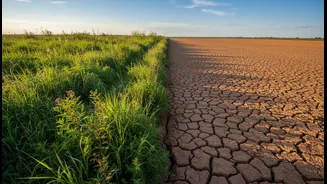
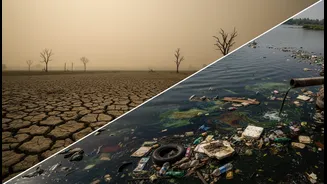
The state of India's water resources is equally concerning, defined by a dual crisis of scarcity and pollution. With 18% of the world's population but only 4% of its freshwater, the strain is immense. By mid-2026, water levels in India's major reservoirs had fallen significantly, with many operating well below capacity and some even running dry. This crisis is compounded by extreme weather events, which became more frequent and severe in 2025, leading to widespread floods and affecting millions of hectares of cropland. Beyond scarcity, water quality remains a major hurdle. Industrial discharge and untreated sewage continue to pollute rivers and groundwater. Contamination from arsenic and fluoride remains a persistent health threat in several regions. Over-extraction of groundwater, the primary source for millions, has led to a silent collapse, with aquifers depleting at an unsustainable rate. This not only threatens drinking water security but also agricultural livelihoods, as farming consumes nearly 80% of India's freshwater.
Policy vs. Reality: A Tale of Two Missions
On paper, India has robust programs to tackle these challenges. The National Clean Air Programme (NCAP) and the Jal Jeevan Mission (JJM) are ambitious in their scope. The NCAP, aimed at reducing particulate matter, has seen a massive infusion of funds, but reports suggest that spending is heavily skewed towards managing road dust, with less than 1% allocated to critical areas like industrial pollution or public outreach. Furthermore, significant gaps in air quality monitoring persist, with an estimated 85% of the population living outside measurable monitoring zones, particularly in smaller towns and industrial belts. The Jal Jeevan Mission has made impressive strides in expanding rural tap water access, with coverage reaching over 81% of households by early 2026. However, the focus is now shifting from simply laying pipes to ensuring service quality and water potability. A parliamentary committee recently highlighted that the mission's long-term objectives could be unfulfilled without ensuring the sustainability of water sources, some of which are being exhausted within a few years of schemes becoming operational. The challenge is moving from infrastructure creation to ensuring that the tap in every home delivers water that is truly safe to drink.
Decoding the Human Cost
The environmental deficit comes with a staggering human cost. Air pollution is linked to a host of diseases, including lung cancer, heart disease, stroke, and diabetes. Exposure to PM2.5 is a leading risk factor for premature death in India. Studies have shown that a 10 µg/m³ increase in annual PM2.5 concentration is associated with a significant rise in diabetes risk and overall mortality. The economic impact is also severe. The World Bank noted in a 2026 report that lost productivity from air pollution-related illnesses and premature deaths cost India's economy an equivalent of 1.36% of its GDP in 2019 alone. Simultaneously, the water crisis directly threatens public health through water-borne diseases and impacts food security by putting immense pressure on agriculture. Extreme weather events in 2025 alone were responsible for over 4,400 reported deaths.