


A 'Bloop' in the Darkness
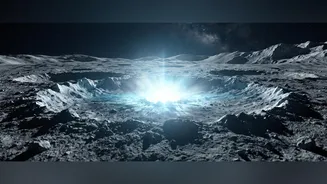
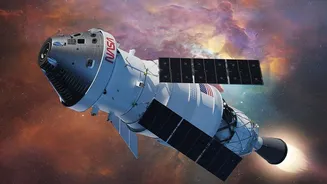
As the Orion capsule sailed through space, some 46,000 miles away from the Moon, astronauts were treated to a rare spectacle. During a period when the Moon eclipsed the Sun from their perspective, the crew witnessed five distinct, faint 'pinprick' bursts
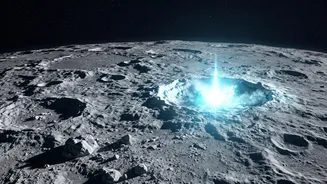
of light on the unlit lunar surface. In audio released from the mission, Commander Reid Wiseman exclaimed, 'I just saw a flash, 100 percent'. Mission Specialist Jeremy Hansen of the Canadian Space Agency described it as a 'bloop'. These weren't reflections or equipment glitches; after analysis, NASA's science team confirmed they were something far more interesting: lunar impact flashes. The sightings, some of which were seen by multiple crew members, caused audible screams of delight back in Mission Control, where scientists were astonished by the observation.
The Science of Lunar Fireworks
So, what is a lunar impact flash? The Moon has no significant atmosphere to protect it, so it is constantly bombarded by space debris. When a meteoroid—even one as small as a pebble—strikes the surface at thousands of miles per hour, its immense kinetic energy is instantly converted into heat and light, vaporizing the rock and a small amount of lunar soil. This creates a momentary flash of light, like a tiny firework. These events are fleeting, lasting only a fraction of a second, which makes them difficult to detect. Ground-based telescopes have been monitoring these flashes for years to understand the rate of impacts, but seeing them from an orbiting spacecraft provides a unique vantage point. The Artemis II crew likely witnessed the faintest impact flashes ever seen by the human eye, caused by rocks estimated to be only a few inches across.
Why This Observation Matters
These fleeting flashes are more than just a cosmic curiosity; they represent crucial data for the future of lunar exploration. Every impact, no matter how small, tells scientists about the frequency and distribution of meteoroids in the near-Earth environment. This information is vital for assessing the long-term risk to future astronauts, lunar habitats, and infrastructure planned for the Artemis program. An area constantly peppered by small, high-velocity rocks could pose a significant hazard. The observation also underscores the unique value of human explorers. While robotic cameras can capture images, the Artemis II crew's ability to interpret their surroundings in real-time, rule out other light sources, and provide descriptive context proved invaluable. It was a powerful demonstration of astronauts acting as trained scientific observers in a dynamic environment.
More Than Just Flashes
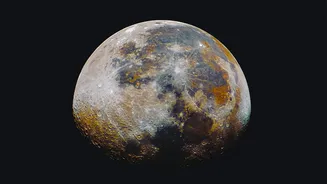
The impact sightings were a highlight, but they were part of a much broader scientific mission for Artemis II. The 10-day flight was primarily a test of the Orion spacecraft's life-support, navigation, and communication systems in deep space. Astronauts served as both scientists and research subjects, participating in studies on how deep space affects the human body, from immune responses to sleep patterns. They also used their extensive geological training to document the Moon's surface in unprecedented detail, noting a surprising range of colors like 'jaundiced yellow' and 'swampy green' that hint at the varied mineral composition of the lunar soil. The crew gathered over 800 gigabytes of data, including thousands of images and hundreds of minutes of audio, creating a rich dataset that will fuel lunar science for years to come.