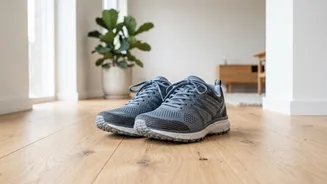






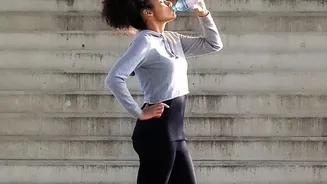
Think you need a park, a track, or a pricey treadmill for a great walking workout? Think again. Your living room has all the space you need for an effective, heart-pumping cardio session that will boost your energy and improve your health.
Why Walk at Home?
The benefits
of walking are well-known, from strengthening your heart to improving your mood. Bringing that workout indoors makes it one of the most convenient and accessible forms of exercise available. There's no need to worry about bad weather, gym fees, or finding time to travel. An indoor walking routine is a low-impact workout, meaning it's gentle on your joints, making it an excellent choice for beginners, seniors, or anyone recovering from an injury. It's a flexible and inclusive way to introduce regular activity into your life, right in the comfort of your own home.
Your Five-Minute Warm-Up
Before you start, it's crucial to prepare your body for movement. A good warm-up gradually increases your heart rate and loosens up your muscles and joints, which can help reduce the risk of injury. Spend about five minutes on these simple moves. Start with gentle marching in place to get the blood flowing. Then, perform some arm circles, both forward and backward, to wake up your shoulders. Follow that with some leg swings, holding onto a wall or chair for support, swinging one leg forward and back like a pendulum. Finally, do a few ankle circles on each foot to prepare them for the work ahead.
The Core Small-Space Workout
This routine is built around movements that don't require much space but still get your heart rate up. You can mix and match them or do them in intervals, such as 45 seconds of a move followed by 15 seconds of marching in place. Start with a brisk march in place. Then, transition to 'high knees', bringing your knees up towards your chest. Next, try 'butt kicks' or hamstring curls, where you bring your heels up towards your glutes. Incorporate 'side steps' by stepping out to one side and bringing your other foot to meet it, then repeating in the other direction. You can also do 'V-steps', where you step forward and out with one foot, then the other, and then step back to the center. These varied movements ensure you're working different muscles.
Turn Up the Intensity
When you're ready to make your workout more challenging, there are several ways to do it without needing more room. One of the easiest methods is to engage your upper body. Swing your arms more vigorously, punch forward, or press your arms overhead while you march. Adding light hand weights or wrist weights will also increase the calorie burn and build strength. You can also focus on your pace. Try listening to music with a tempo of 120–140 beats per minute (BPM) and match your steps to the beat. Introducing intervals—short bursts of high–intensity moves like fast high–knees or jumping jacks, followed by a recovery period of slower marching—is another proven way to boost the effectiveness of your workout.
The Essential Cool-'Down''
After your workout, don't just stop. A cool-'down'' period helps your heart rate return to normal gradually and can improve flexibility and reduce muscle soreness. Spend at least five minutes on gentle, static stretches, holding each for 15 to 30 seconds without bouncing. A standing hamstring stretch is a great place to start; place one heel on a low surface and gently lean forward until you feel a stretch in the back of your thigh. Follow this with a calf stretch against a wall and a quad stretch, where you stand and gently pull one foot toward your glute. Finally, a chest stretch can help open up your posture after the workout.