




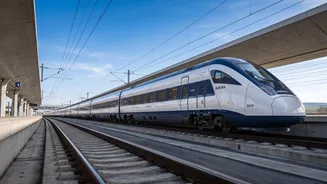
A New Era for Overnight Journeys
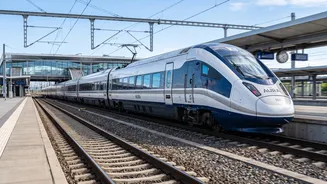
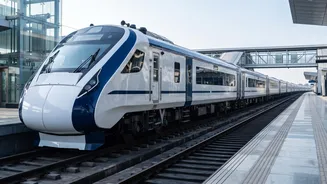
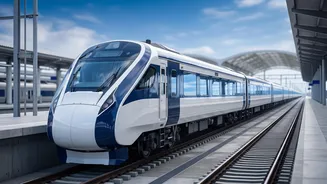
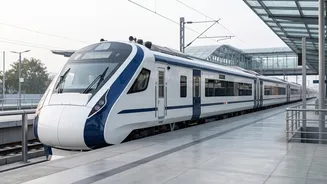
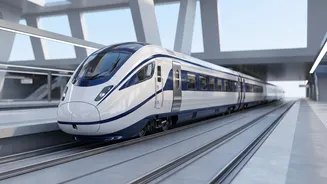
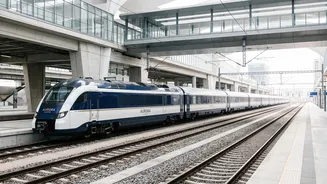
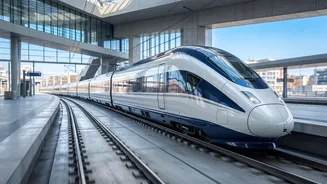
The Vande Bharat Express has already changed the game for daytime inter-city travel in India, but its next evolution is aimed squarely at the overnight market. While the first Vande Bharat sleeper prototype features 16 coaches, Indian Railways is already planning
the next step: a 24-coach version designed specifically for high-demand, long-distance routes. This move signals a strategic ambition to modernise and upgrade the entire premium overnight travel segment, which has long been dominated by the Rajdhani Express trains. The development of this longer train is being handled by the Integral Coach Factory (ICF) in Chennai, with a target to roll out a prototype by June 2027.
More Capacity for Major Routes
The most significant advantage of the 24-coach configuration is the substantial increase in passenger capacity. While the 16-coach sleeper can accommodate 823 passengers, the proposed 24-coach version is expected to carry around 1,224 passengers. This nearly 50% increase in capacity will be crucial for serving some of the busiest corridors in the country. The new configuration is expected to include one AC First Class coach, five AC 2-Tier coaches, and seventeen AC 3-Tier coaches. This allows the railways to offer more berths on popular routes, potentially reducing waitlists and making premium travel more accessible.
Enhanced Onboard Experience
Beyond just adding more coaches, the 24-coach Vande Bharat sleeper is being designed with enhanced passenger comfort for long journeys in mind. A key addition will be a dedicated pantry car, allowing for better onboard catering with freshly heated meals. The initial 16-coach versions do not have a full pantry. Furthermore, plans include installing more bio-vacuum toilets to accommodate the larger number of passengers and creating dedicated spaces for linen storage in each coach to improve service efficiency. Passengers can also expect modern amenities like cushioned berths, individual reading lights, charging points, and automatic doors. The AC First Class coaches will even feature hot-water showers.
The Contenders: Rajdhani vs Vande Bharat Sleeper
The Vande Bharat sleeper is positioned as a direct competitor and eventual successor to the Rajdhani Express. A key difference lies in the train's design. As a self-propelled trainset, the Vande Bharat offers faster acceleration and deceleration compared to the locomotive-hauled Rajdhani. This can lead to significant time savings on long routes. For example, the upcoming Mumbai–Bengaluru service is expected to reduce travel time from 24 hours to just 16. The interiors are also getting an upgrade, with superior ambient lighting, smoother, jerk–free rides, and better soundproofing for a more restful journey. While Rajdhani has an established reputation, the Vande Bharat sleeper aims to set a new benchmark in speed, comfort, and modern amenities.
The ambitious plan to roll out hundreds of sleeper trains involves multiple manufacturing consortiums. The initial $16$-coach sleeper prototypes are being manufactured by BEML in collaboration with ICF. Looking ahead, the production landscape is expanding. A consortium of BHEL and Titagarh Rail Systems is tasked with building $80$ sleeper trains, while Kinet Railway Solutions, an Indo–Russian joint venture, will manufacture another $120$ sets. The plan for $50$ of the new $24$-coach trains will be handled by ICF in Chennai, showcasing a broad 'Make in India' effort to scale up production and meet the massive demand for modern rail infrastructure.