



Beyond the Fruit Chaat
For many, the use of fruit in Indian meals starts and ends with a bowl of fruit chaat or perhaps some pomegranate seeds sprinkled over a raita. While delicious, these applications barely scratch the surface. Across India, fruits have been a cornerstone
of savoury cooking for centuries, not as a modern twist, but as a fundamental ingredient. The line between fruit and vegetable has always been fluid in the Indian kitchen. Ingredients we classify as fruits—like raw mango, tamarind, and jackfruit—are treated as essential components for building flavour in everything from dals to complex curries. Their role isn't to make a dish sweet, but to provide sourness, texture, and a unique complexity that elevates the entire meal.
A Masterclass in Flavour Balancing
The genius of Indian cooking lies in its sophisticated understanding of flavour balance. The six tastes—sweet, sour, salty, pungent, bitter, and astringent—are artfully combined to create a harmonious dish. Fruits are a powerful tool in achieving this balance. The sharp, unapologetic sourness of raw mango (kaccha aam) cuts through the richness of lentils in dishes like Andhra's Mamidikaya Pappu. The deeper, more mellow tang of tamarind provides the foundational backbone for countless South Indian sambars and rasams. Even dried fruits play a crucial role. Anardana, or dried pomegranate seed powder, lends a rounded, gentle sourness to North Indian dishes like chole, while dried apricots (jardaloo) are the star of the classic Parsi lamb stew, Jardaloo Salli Boti, offering a perfect sweet-and-sour counterpoint to the rich meat.
A Journey Through Regional Traditions
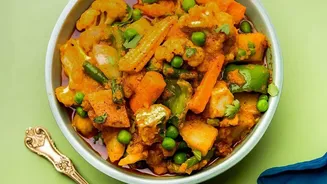
Different regions have their own unique ways of incorporating fruit into savoury meals. In Kashmir, the cuisine is famous for its use of apples and plums. The Kashmiri Green Apple Curry, or 'Tschunth', uses tart apples which hold their shape and provide a surprising and delicious element to the spiced gravy. Parsi cuisine, with its Persian influences, masterfully blends sweet and savoury, most famously in dishes like the aforementioned Jardaloo Salli Boti. In South India, the tropical climate provides an abundance of fruits that find their way into daily cooking. Ripe mangoes are cooked into a tangy Mambazha Pulissery in Kerala, a yogurt-based curry that is a staple of the Sadya feast, and pineapples often feature in rich coconut-based gravies.
Modern Interpretations and Getting Started
This long-standing tradition is also inspiring contemporary Indian chefs to experiment with a wider range of seasonal produce. You might find savoury dishes featuring figs, grapes, or even starfruit on modern menus. But you don’t need to be a professional chef to try this at home. Unripe or raw fruits are a great place to start. Green, starchy bananas can be used like a vegetable in stir-fries or koftas. Unripe jackfruit has a wonderfully meaty texture that soaks up spices beautifully, making it a popular meat substitute in curries. The key is to think of the fruit not just in terms of its sweetness, but its overall flavour profile. A tart fruit can replace lemon or vinegar to brighten a dish, while a firm, less sweet fruit can provide texture and substance.