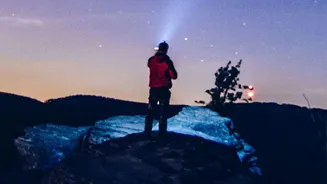





In a world where 80% of the population lives under light-polluted skies, the experience of a truly dark night is becoming rare. But in the remote, high-altitude valleys of the Himalayas, the universe reveals itself in breathtaking clarity.
A Darkness You Can Measure
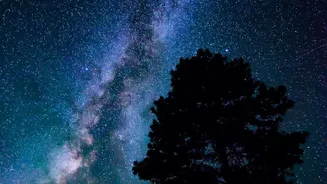
The primary
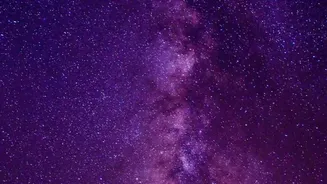
draw for any astrophotographer is darkness, and the Himalayas offer some of the darkest skies on Earth. Astronomers measure sky brightness on the Bortle scale, from Class 9 (inner-city sky) to Class 1 (pristine wilderness). Many accessible Himalayan regions, like India's Spiti Valley and parts of Ladakh, are rated as Bortle Class 1 or 2. This isn't just dark; it's a level of darkness where the Milky Way can be bright enough to cast a soft shadow on a moonless night. In these valleys, there are no cities for hundreds of kilometers, and tiny villages with minimal electricity create a near-total absence of the artificial skyglow that washes out faint stars and nebulae elsewhere. This pristine darkness allows cameras to capture celestial objects with a depth and detail that is simply impossible from more populated areas.
The High-Altitude Advantage
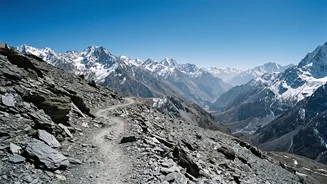
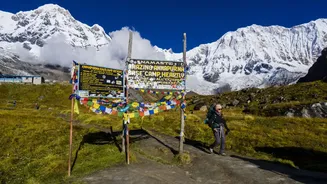
While darkness is crucial, it's the altitude that elevates the Himalayas to a premier status. Locations like the Spiti Valley, Ladakh, and the Annapurna region in Nepal sit at altitudes often exceeding 10,000 feet. At these heights, you are physically above a significant portion of the Earth's atmosphere. The air is thinner, drier, and more stable. This has several key benefits for photography. Thinner air means less atmospheric extinction, so more starlight reaches your camera's sensor, making faint objects appear brighter. The extremely low humidity and lack of dust reduce scattering and haze, resulting in exceptional transparency. Finally, the stable air minimizes atmospheric turbulence, the phenomenon that causes stars to 'twinkle'. Less twinkling, or better 'seeing', means stars appear as sharp, steady points of light, allowing for crisper, more detailed images.
Landscapes That Frame the Cosmos
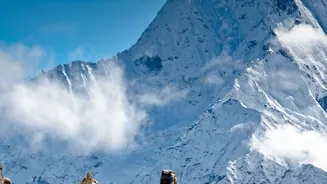
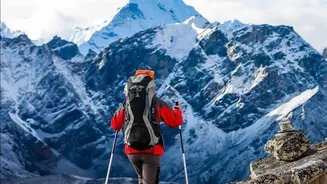
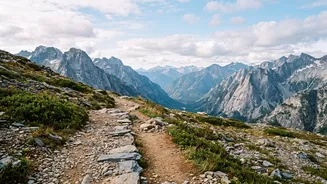
Great astrophotography isn't just about the sky; it's about the composition. A stunning celestial scene becomes unforgettable when paired with a dramatic foreground, and the Himalayas deliver this in spades. Photographers can frame the arc of the Milky Way behind jagged 6,000-meter peaks, capture star trails over ancient Buddhist monasteries, or see constellations reflected in the still waters of a high-altitude lake like Pangong Tso or Chandratal. These landscapes provide a profound sense of scale and place, connecting the otherworldly beauty of the night sky to the Earth. This unique combination of epic foregrounds and pristine skies allows for images that tell a more complete story than a simple star chart ever could.
Prime Destinations for Stargazers
Several regions across the Himalayas have become bucket list destinations for night sky enthusiasts. In India, the Spiti Valley in Himachal Pradesh is renowned for its accessibility and Bortle Class 1–2 skies in villages like Langza and Komic. Nearby Ladakh is home to Hanle, India's first official Dark Sky Reserve, which hosts the Indian Astronomical Observatory precisely because of its clear, dry, and dark conditions. Other areas like Nubra Valley and Pangong Lake in Ladakh also offer spectacular opportunities. In Nepal, remote trekking routes in areas like Upper Mustang and the Everest region (Sagarmatha National Park) provide similarly pristine views, far from any urban light pollution. While these locations are remote, their unparalleled celestial views are the reward for the journey.