



Why Frozen Beats Fresh (and Ice)
We’ve all been there: you want a thick, chilled smoothie, so you add a handful of ice to your fresh fruit and milk. The result? A drink that starts out okay but quickly becomes a watery, diluted disappointment. Using frozen fruit cubes is the game-changer.
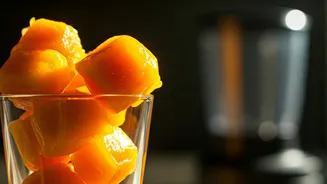
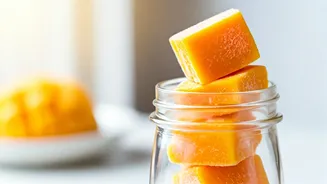
When you blend frozen mango, it breaks down into a sorbet-like consistency, creating a luxuriously thick and creamy texture that ice can never replicate. Furthermore, you’re getting pure, concentrated mango flavour without any dilution. It’s the single best trick for achieving that café-quality smoothie texture at home. Plus, it means you can buy mangoes in peak season when they’re sweet, juicy, and affordable, and enjoy them for months.
Selecting Your Mangoes
The quality of your smoothie cubes starts with the fruit itself. For the sweetest, most vibrant flavour, choose ripe mangoes. Don’t just rely on the colour of the skin, as this varies by variety. Instead, gently squeeze the fruit. A ripe mango will have a slight give, similar to a ripe avocado or peach. It should also have a strong, sweet, fruity aroma near the stem. If your mangoes are still a bit firm, just leave them on your kitchen counter for a few days to ripen. Avoid mangoes that are mushy, bruised, or have black spots. While any variety works, Kesar, Alphonso, or even the common Kent and Tommy Atkins varieties are all fantastic for freezing.
The Prep: Peel and Cube Like a Pro
Dealing with a slippery mango can be intimidating, but a simple method makes it easy. First, wash the mango. Stand it on its end and, using a sharp knife, slice downwards along the large, flat pit in the centre. You’ll end up with two fleshy “cheeks.” Score the flesh of each cheek in a grid pattern, cutting down to the skin but not through it. Then, you can either scoop the cubes out with a spoon or press the skin from underneath to pop the cubes outwards, making them easy to slice off. For the remaining flesh around the pit, carefully trim it off with your knife. Aim for uniform, bite-sized cubes, about one inch in size. This ensures they freeze and blend evenly.
The Secret to Free-Flowing Cubes
Do not just throw your freshly cut mango cubes into a bag and toss it in the freezer. If you do, you’ll end up with a giant, solid brick of frozen mango that’s impossible to use without a chisel. The professional secret is flash-freezing. Line a baking sheet or a large plate with parchment paper (this prevents sticking). Arrange the mango cubes on the sheet in a single layer, making sure none of them are touching. Place the sheet in the freezer for 2-3 hours, or until the cubes are completely solid. This freezes each cube individually, so they won’t clump together later.
Storage and Long-Term Success
Once your mango cubes are frozen solid, you can transfer them from the baking sheet into a freezer-safe bag or an airtight container. Squeeze out as much air as possible from the bag before sealing to help prevent freezer burn. Now, instead of a frozen boulder, you have a bag of free-flowing, individual mango cubes. You can easily scoop out exactly what you need for a single smoothie. Label the bag with the date; your mango cubes will stay delicious and vibrant for up to 6 months in the freezer, giving you a taste of summer all year long.
Building Your Epic Breakfast Smoothie
Now for the fun part. Building your epic smoothie is incredibly simple. For a classic mango smoothie, combine about one cup of your frozen mango cubes, half a cup of yoghurt (Greek yoghurt adds extra protein and creaminess), and about half a cup of milk (dairy or plant-based) in your blender. Blend until completely smooth. If it’s too thick, add a splash more milk. For a tropical twist, use coconut milk and add a few chunks of frozen pineapple. For a green boost, toss in a handful of spinach—the sweet mango will completely mask its flavour. The cubes do all the work, providing the chill and the creamy texture, making your morning routine faster, easier, and far more delicious.