








Before You Leave: Proactive Preparation
A successful trip with a pet begins long before you hit the road. The most critical first step is a pre-travel consultation with your veterinarian. This visit serves multiple purposes. First, it ensures your pet is healthy enough for travel and that all
vaccinations are current. Second, it's an opportunity to discuss potential travel-related issues like motion sickness or anxiety, for which your vet might prescribe medication. Lastly, for certain destinations, especially for air or international travel from India, you'll need a health certificate issued within a specific timeframe before your departure. Make digital and paper copies of your pet’s vaccination records, microchip information, and your vet's contact details. Researching your destination is also key. Identify a few local veterinarians and a 24-hour emergency animal hospital near where you'll be staying and save their numbers. Having this information ready can save precious time and reduce panic during a crisis.
Recognising the Signs of Trouble
Pets communicate discomfort through behaviour, and signs of stress or illness during travel can be subtle. Stress and anxiety often manifest as excessive panting, drooling, whining, or barking. Some animals become restless and unable to settle, while others may become withdrawn or quiet. Physical symptoms of both stress and motion sickness can include vomiting, diarrhea, or a refusal to eat. It's important to distinguish between a momentary reaction and a persistent problem. For example, trembling could be a sign of fear, but lethargy and a refusal to drink could point to something more serious like dehydration or heatstroke. Pay close attention to any changes from your pet's normal behaviour. Dilated pupils, ears pinned back, and excessive shedding can also be indicators of anxiety. Knowing these signs allows you to intervene early before the situation escalates.
Your Pet's Travel Emergency Kit
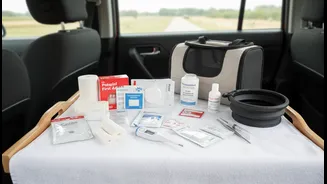
A well-stocked first-aid kit is non-negotiable and should be kept separate from your human supplies. Many items for humans, especially painkillers, are toxic to pets. Your kit should be built to handle common travel issues until you can get to a vet. Essential items include sterile gauze pads, self-adhesive bandages that don't stick to fur, and medical tape. Also include pet-safe antiseptic wipes or a diluted Betadine solution for cleaning minor cuts and scrapes. Tools like blunt-tipped scissors, tweezers for splinters, and a tick-removal tool are invaluable, especially for outdoor trips. A digital thermometer is crucial for checking for fever. Pack any prescribed medications your pet takes, along with vet-approved anti-nausea or anti-anxiety aids if needed. Finally, include basics like a collapsible water bowl, a backup leash, and disposable gloves.
Managing Stress and Sickness on the Go
If your pet gets sick or shows signs of distress while you're travelling, the first step is to pull over to a safe location and assess the situation calmly. Create a quiet environment and offer small sips of water. For mild stomach upset, your vet may have advised fasting your pet for a few hours. If you suspect motion sickness, sometimes just stopping the car and letting your pet walk around for a bit can help. Familiar items like a favourite blanket or toy can provide comfort and reduce anxiety. Maintain your pet's routine as much as possible, including regular feeding times and potty breaks. Never give your pet any medication without a veterinarian’s approval, as you could make the situation worse. For persistent vomiting or diarrhea, difficulty breathing, extreme lethargy, or any other severe symptoms, your immediate priority should be contacting the local emergency vet you previously researched.
The Emergency Action Plan
In a true emergency, your preparation pays off. Call the emergency clinic ahead to let them know you're on your way and to describe your pet's symptoms. This allows them to prepare for your arrival. When you go, bring your pet’s file containing their medical history and vaccination records. This information is vital for a vet who is unfamiliar with your pet. Be ready to provide details about the onset of symptoms and any potential causes, such as something they might have eaten. If your pet has ingested something toxic, bring a sample or photo of the substance if possible. While on the way, try to keep your pet as calm and comfortable as possible. A blanket can be used to keep them warm or to help transport them safely. Most importantly, try to remain calm yourself. Your pet can sense your stress, and a level head will allow you to make better decisions for their care.