




The Sweetener Showdown
At a basic level, both honey and table sugar are carbohydrates made of glucose and fructose. Table sugar, or sucrose, is a simple composition of 50% glucose and 50% fructose bonded together. It's refined from sugar cane or sugar beets in a process that
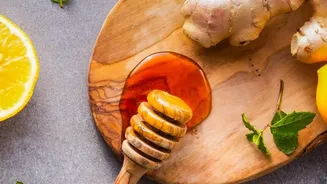
strips away all other nutrients, leaving behind what are often called 'empty calories'. Honey's composition is more complex. It's primarily sugar (about 80%), but it also contains water, trace amounts of vitamins and minerals like potassium and iron, plus enzymes and antioxidants. Unlike processed sugar, honey's makeup can vary depending on the flowers the bees visited.
A Calorie and Sweetness Comparison
When comparing sweeteners, volume matters. A tablespoon of honey contains about 64 calories, while a tablespoon of granulated sugar has around 49 calories. This is because honey is denser. However, honey is also perceived as being sweeter than sugar, largely due to its higher fructose content. This means you might be satisfied using a smaller amount of honey to achieve the same level of sweetness, which could offset the calorie difference. For example, when baking, a common recommendation is to use three-quarters of a cup of honey for every cup of sugar.
Impact on Blood Sugar
The Glycemic Index (GI) is a scale that ranks how quickly a carbohydrate-containing food raises blood glucose levels. Table sugar has a GI of about 65. Honey's GI is typically lower, averaging around 58, though it can range from 45 to over 75 depending on the variety. This means most types of honey may cause a slightly slower and more gradual rise in blood sugar compared to white sugar. While this gives honey a modest edge, especially for those monitoring blood sugar, it's crucial to remember that both are high-sugar foods and will cause a significant glucose response.
Beyond the Basics: Honey's Extras
The main argument for honey as a 'better' choice lies in the small amounts of additional compounds it contains. Raw, unprocessed honey provides antioxidants like polyphenols and flavonoids, which are absent in refined sugar. Some studies suggest these compounds may offer anti-inflammatory benefits. Honey also has well-known antibacterial properties and can act as a prebiotic, supporting gut health. However, it's important to maintain perspective. The quantity of these beneficial compounds in a typical serving of honey is small, and they shouldn't be seen as a reason for unrestricted consumption.
Portion Control is the Real Winner
Ultimately, the body metabolises the fructose and glucose in both honey and sugar in a similar way. The marginal nutritional benefits of honey do not give it a free pass. Both are considered 'free sugars' by health organisations like the WHO. For Indian adults, dietary guidelines often recommend limiting added sugar intake to about 20-25 grams per day. This is equivalent to about five or six teaspoons. A single tablespoon of honey (about 17g of sugar) or sugar (about 13g of sugar) uses up a significant portion of that daily budget. Therefore, the most critical factor for health is not which one you choose, but how little of either you use.
Practical Tips for Managing Sugar
Managing sugar intake starts with awareness. Begin by reading nutrition labels, paying close attention to 'added sugars'. A useful trick is to divide the grams of sugar by four to get an approximate number of teaspoons. Be especially mindful of sweetened beverages like sodas, packaged juices, and even some 'healthy' drinks, as they are a primary source of hidden sugars. When adding sugar to your tea or coffee, use a measuring spoon rather than pouring freely to keep track of your consumption. Two cups of chai with two teaspoons of sugar each can quickly consume your daily allowance.
How to Handle Honey Portions
The same principles of mindfulness apply to honey. Because it's a liquid and often comes in a squeeze bottle, it’s easy to over-pour. To avoid this, measure it with a spoon instead of drizzling it directly onto your food. Try portioning it out into a small bowl before you eat. This simple step helps you visualise the amount and prevents mindless additions. Since honey is sweeter than sugar, challenge yourself to use less. Start with a smaller amount than you think you need, and you may find that it's enough to satisfy your craving for sweetness.