



A Pattern of Proximity
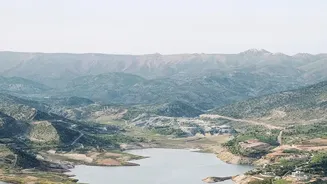
Recent reports, including a notable investigation by The New York Times, have highlighted a curious geographical correlation in Iran: the proximity of suspected underground missile facilities to a vast network of dams and water transfer projects. Water
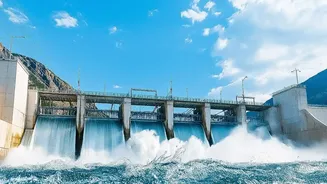
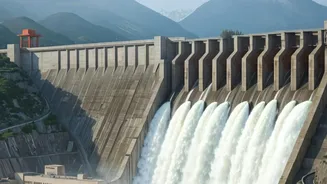
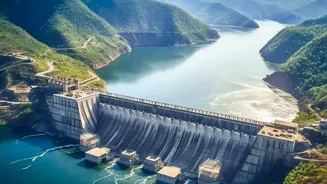
security specialists have mapped at least 533 dams in Iran, one of the highest concentrations in the region, and have long questioned the justification for building so many. The question gained new urgency when maps of recent airstrikes on suspected military sites showed a pattern that closely matched the locations of these dams. While the connection is not definitively proven and remains speculative, the spatial overlap has led multiple military and water experts to consider a deliberate strategy. The hypothesis is that these massive civil engineering projects may be serving a dual purpose, providing essential resources like steady water and power to Iran's clandestine 'missile cities'—vast underground complexes for manufacturing and launching missiles.
Strategic Shield or Geographic Coincidence?
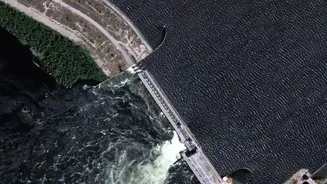
There are two main interpretations of this pattern. One is that the placement is a matter of geography and logistics. Mountainous regions are ideal for both dam construction and for digging deep, fortified military tunnels. From a purely engineering standpoint, it makes sense to build large military complexes near sources of water and power, which dams provide. The alternate, more alarming theory is that Iran is strategically using its critical civilian infrastructure as a shield. By placing a high-value military asset near a dam, Iran would present any adversary with an impossible choice. An attack on the missile facility would carry the immense risk of breaching the dam, potentially unleashing a catastrophic flood and humanitarian disaster. This turns the civilian infrastructure itself into a deterrent, complicating an enemy's strike calculations and blurring the lines between military and civilian targets.
The Human Cost of 'Dual-Use' Infrastructure
The danger of labeling civilian infrastructure as 'dual-use' is immense. Dams provide drinking water, irrigation for agriculture, flood control, and hydroelectric power to millions of people. Their destruction, whether intentional or accidental during a military strike, could trigger cascading disasters, including mass displacement, famine, and widespread power and water outages. International humanitarian law offers protections to such vital civilian structures, but this protection is eroded if they are perceived to be serving a military function. This has prompted sharp reactions from Iranian officials, who warn that promoting this narrative could justify future attacks. Parliament Speaker Mohammad Bagher Ghalibaf stated that if this logic is applied to Iran, then any dam or power plant near a U.S. or Israeli base could also be considered 'dual-use'.
A New Layer of Geopolitical Risk
This development adds a complex and dangerous layer to an already tense region. Iran has spent decades developing a sophisticated missile program and hardening its military assets in underground tunnels to ensure their survival against attack. Using dams as a potential shield is a form of asymmetric strategy that raises the stakes for any military intervention. It forces nations to weigh the military gain of a strike against the potential for immense civilian casualties and international condemnation. While experts stress that the link is a hypothesis and not a proven fact, the discussion itself changes the strategic landscape. It highlights how modern warfare is increasingly fought in grey zones, where the distinctions between legitimate military targets and protected civilian life become dangerously ambiguous.