






The Problem with 'Desk Legs'
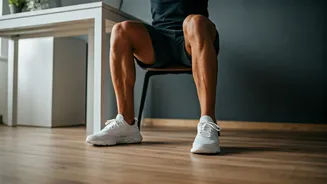
Our bodies are designed for movement. When we spend eight hours a day sitting in a chair, major muscle groups in our lower body—particularly the glutes and quadriceps—essentially switch off. This phenomenon is often called 'gluteal amnesia' or, more simply,
'sleepy leg muscles'. Prolonged sitting shortens our hip flexors, weakens our glutes, and can lead to poor posture, lower back pain, and reduced mobility. Your legs feel heavy, stiff, and unresponsive not just because they're tired, but because they haven't been properly engaged for hours. The blood flow slows down, and the neural connection between your brain and these muscles weakens. Breaking this cycle is crucial for long-term health and immediate comfort.
Your Secret Weapon: The Wall Squat
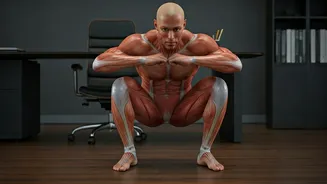
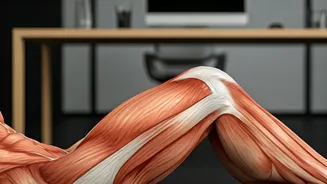
Enter the wall squat, also known as a wall sit. It’s a simple yet powerful isometric exercise, meaning you hold a static position rather than moving through a range of motion. This makes it perfect for the office environment—it’s quiet, requires minimal space, and can be done without breaking a sweat. The beauty of the wall squat is its ability to specifically target and activate the exact muscles that go dormant during a long day of sitting: the quadriceps (front of your thighs), the glutes (your buttocks), and even your hamstrings and calves as they work to stabilise you. It’s a direct antidote to the effects of your chair, forcing those sleepy muscles to wake up and get to work.
How to Do It Right: A Step-by-Step Guide
Proper form is key to getting the benefits without risking injury. Follow these simple steps: 1. **Find a Wall:** Stand with your back against a sturdy, flat wall. Your feet should be about shoulder-width apart and roughly two feet away from the wall. 2. **Slide Down:** Slowly slide your back down the wall until your thighs are parallel to the floor, as if you're sitting in an invisible chair. Ensure your knees are directly above your ankles, not extending past your toes. This protects your knee joints from unnecessary strain. 3. **Check Your Posture:** Keep your back flat against the wall and your head up. Your weight should be evenly distributed through your heels. Engage your core by pulling your belly button towards your spine. This helps stabilise your body and protect your lower back. 4. **Hold the Position:** Aim to hold the squat for 20 to 30 seconds to start. Focus on your breathing—inhale and exhale slowly and steadily. You should feel a burn in your quadriceps and glutes. That’s the feeling of your muscles firing up! 5. **Slide Back Up:** To finish, gently press through your heels and slide your back up the wall to a standing position. Shake out your legs and you're done.
Common Mistakes to Avoid
To maximise effectiveness and stay safe, watch out for these common errors: * **Letting Knees Go Past Toes:** This puts immense pressure on your knee joints. If you look down and can’t see your toes, your feet are too close to the wall. Adjust them forward. * **Not Going Low Enough:** If your thighs aren't parallel to the floor, you're not fully engaging the target muscles. It’s better to hold a proper squat for a shorter time than a partial squat for a longer time. * **Arching Your Back:** Make sure your lower back and shoulders remain in contact with the wall. Arching can strain your spine. * **Holding Your Breath:** Forgetting to breathe is a common reaction when muscles are under tension. Consciously breathe throughout the hold to supply your muscles with oxygen.
Making It a Daily Habit
The key to combating a sedentary day is consistency. You don’t need to spend a long time doing wall squats. The goal is to frequently interrupt your sitting time. Try the 'Pomodoro' technique: work for 25 or 50 minutes, then take a five-minute break to do one or two wall squats. You can also make it a habit to do a quick wall squat every time you get up to refill your water bottle or after a long meeting. Setting a quiet reminder on your phone or calendar can help build the routine. Before you know it, this quick muscle-activation break will become a natural part of your workday, leaving you feeling more energised and less stiff.