



What Exactly is EOS-05?
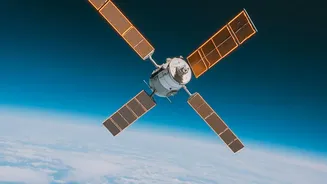
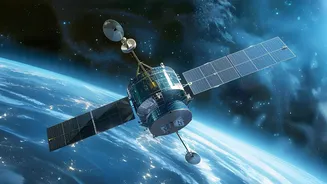
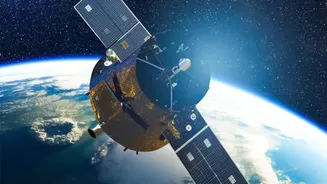
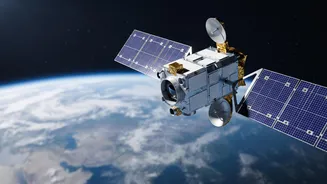
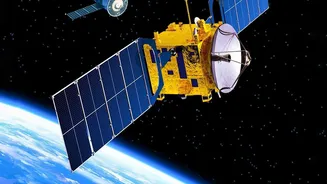
EOS-05 is the latest in a formidable line of Indian Earth Observation Satellites designed and operated by ISRO. These satellites are, in essence, highly advanced cameras and sensors placed in orbit to monitor our planet. Think of them as a crucial national
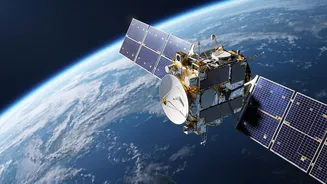
asset, constantly gathering data from hundreds of kilometers above. The EOS series builds upon the legacy of India's Remote Sensing (IRS) satellites, which have been instrumental in national development for decades. EOS-05, however, is a significant upgrade. Unlike its predecessors that often operate in Low-Earth Orbit and pass over a specific location only periodically, EOS-05 is a geo-imaging satellite positioned in a geostationary orbit roughly 36,000 kilometers high. This unique perch allows it to stay in a fixed position relative to the Earth's surface, providing continuous observation of the Indian subcontinent and its surrounding regions. This capability for near-real-time monitoring is a game-changer for tracking rapidly evolving events.
A Sharper Vision, Day or Night
The key strength of satellites like EOS-05 lies in their advanced instrumentation, particularly the Synthetic Aperture Radar (SAR). Unlike traditional optical satellites that are effectively blinded by clouds, rain, or darkness, SAR is an active sensor. It transmits its own microwave signals towards the Earth and interprets the echoes that bounce back. This allows it to create high-resolution images regardless of weather conditions or the time of day, a critical capability for a country that experiences a long monsoon season. Previous satellites in the RISAT (Radar Imaging Satellite) series, now integrated into the EOS program, have utilized C-band and X-band SAR to provide detailed imagery for various purposes. EOS-05 continues this tradition with enhanced sensors that can provide images for applications like agriculture, forestry, and flood mapping, delivering high-quality data that was previously unobtainable during adverse weather.
From Farm Fields to National Frontiers
The data gathered by EOS-05 has a direct and profound impact on the ground. For farmers, it offers invaluable insights into crop health, soil moisture, and can even help in estimating yields. This information is vital for ensuring India's food security. In urban planning, high-resolution imagery helps monitor land use changes and manage growing cities more effectively. Perhaps its most critical civilian role is in disaster management. India is prone to natural calamities like floods, cyclones, and landslides. Satellites like EOS-05 provide the synoptic view needed for early warnings, tracking the progress of cyclones, and creating near-real-time flood inundation maps that guide rescue and relief operations, ultimately saving lives. Beyond these civilian uses, the satellite is a significant strategic asset. Its all-weather, day-and-night surveillance capability enhances India's ability to monitor its borders, track maritime traffic, and support national security operations, providing a crucial layer of intelligence.
A Constellation for a Self-Reliant India
EOS-05 doesn't operate in isolation. It is a vital part of what makes India one of the world's leaders in space-based Earth observation, with one of the largest constellations of remote sensing satellites in operation. This network of satellites, including the Cartosat series for mapping, the Oceansat series for marine studies, and the various EOS platforms, gives the nation strategic autonomy. By designing, building, and launching its own satellites, India is not dependent on other nations for critical geospatial data. This self-reliance, a core objective of the Indian space program, is crucial for both socio-economic development and strategic security. Looking ahead, missions like the joint NASA-ISRO Synthetic Aperture Radar (NISAR) promise to take this capability even further, mapping the entire globe with unprecedented detail. Each launch, from EOS-01 to EOS-05 and beyond, is a deliberate step in building a comprehensive system to manage resources, protect citizens, and cement India's status as a major space power.