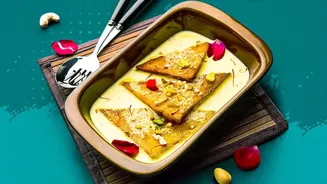




A dessert fit for kings, Shahi Tukda translates to a 'royal piece'. This decadent bread pudding, with its roots in Mughlai cuisine, offers a festive finish to any meal. Here’s a look inside celebrity chef Ranveer Brar’s approach to the classic sweet.
A Taste of Royal History
Shahi Tukda is a celebrated dessert with a story as rich as its flavour. Its origins are often traced back to the opulent kitchens of the Mughal Empire in the 16th century. The name itself, meaning 'royal piece', points to its prestigious beginnings, where it was crafted for emperors. Some food historians believe it was ingeniously created as a way to use leftover bread, transforming simple slices into a masterpiece by frying them in ghee and soaking them in sweetened milk. Others suggest it could be an Indian adaptation of Middle Eastern bread puddings, like the Egyptian 'Umm Ali', brought to the subcontinent by Emperor Babur. Regardless of its exact origin, Shahi Tukda quickly became a staple at royal gatherings and festive celebrations like Eid. It is particularly famous in the culinary hubs of Delhi, Lucknow, and Hyderabad, where it has a close cousin called 'Double ka Meetha'.
The Ranveer Brar Philosophy
Chef Ranveer Brar, born in the epicurean city of Lucknow, is known for making even complex, traditional recipes feel accessible and enjoyable. His approach often involves breaking down processes into easy steps while sharing stories and crucial tips that elevate the final dish. For a dessert like Shahi Tukda, his method focuses on achieving the perfect texture and balancing the rich flavours. One of his signature moves for this dish is creating an 'instant rabri' using condensed milk and, surprisingly, crumbled bread slices to achieve a thick, smooth consistency quickly. This shortcut doesn't compromise on the creamy texture that is essential for good rabri. He also employs a two-step soaking process: first a quick dip in a light milk-and-sugar syrup, followed by a generous topping of the rabri, ensuring the fried bread is flavourful but not overly soggy.
Key Ingredients for a Royal Treat
The magic of Shahi Tukda lies in the harmony of a few core ingredients. The foundation is, of course, bread—typically white bread with the crusts removed. The bread is then fried to a perfect golden-brown crispness in ghee, which imparts a nutty and rich aroma. The next layer of flavour comes from the 'rabri', a sweetened, condensed milk sauce. Traditionally, making rabri is a slow process of reducing full-fat milk over a low flame until it thickens considerably. It's delicately flavoured with aromatic spices like saffron and cardamom. Chef Brar’s recipe sometimes streamlines this with condensed milk for a quicker, yet still luscious, result. Finally, the dish is garnished with a generous sprinkle of sliced nuts like pistachios and almonds, and sometimes delicate silver leaf ('vark') for a truly royal presentation.
Crafting the Perfect Shahi Tukda
Following Chef Brar’s method, the first step is preparing the bread. Slices are trimmed and cut into triangles, then fried in ghee on medium heat until crisp and golden. This step is crucial for ensuring the bread holds its shape. While the bread cools, a simple milk syrup is made by boiling milk with sugar, saffron, and cardamom powder. The fried bread triangles are then briefly dipped into this warm syrup. For the rabri, his 'instant' version involves blending the remaining sweetened milk syrup with condensed milk, crumbled bread, saffron, and rose water until smooth. This mixture is then chilled. To assemble, the syrup-soaked bread pieces are arranged on a platter and the cooled, thick rabri is poured generously over them. The final touch is a garnish of sliced pistachios, rose petals, and a dusting of icing sugar for a professional finish.
Tips for a Flawless Finish
To achieve a Shahi Tukda that tastes as good as it looks, a few expert tips can make all the difference. Use full-fat milk for the richest and most authentic rabri; buffalo milk is often recommended for its high fat content. When frying the bread, maintain a medium-low flame to ensure it cooks evenly and becomes crisp without burning. Don't oversaturate the bread in the sugar syrup; a quick dip is enough to absorb flavour without making it fall apart. Finally, allow the assembled dish to chill in the refrigerator for at least 30 minutes before serving. This helps the flavours meld together and gives the rabri the perfect consistency. The contrast between the chilled, creamy topping and the rich, ghee-fried bread is what makes this dessert truly unforgettable.