




What Is a Planetary Parade?
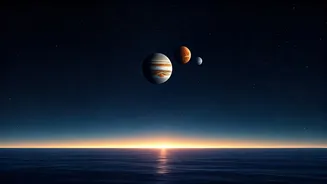
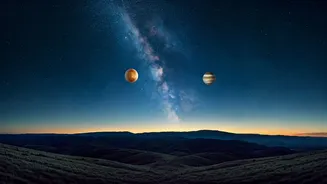
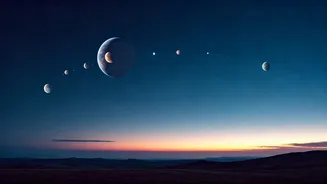
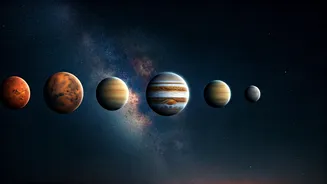
A 'planetary parade' or alignment isn't a literal straight line in space, but rather a fascinating visual trick from our perspective here on Earth. It occurs when several planets appear in the same small sector of the sky at the same time. While planets are
always orbiting the Sun on their own paths, from our vantage point, they occasionally seem to gather together. These events are not just beautiful; they are a tangible reminder of the vast, dynamic nature of our solar system. The more planets involved, the rarer and more exciting the event becomes for astronomers and sky-watchers.
The Line-Up: Which Planets to Spot
Recent and upcoming alignments feature a stunning cast. Often, a line-up can include Mercury, Mars, Jupiter, Saturn, Uranus, and Neptune. However, it's important to manage expectations. Not all of these will be easy to see. Mars and Saturn are typically the most reliable and can be spotted with the naked eye, appearing as bright, non-twinkling 'stars'. Jupiter is also very bright, but its visibility depends on its position relative to the Sun. Mercury is often lost in the Sun's glare, making it the most challenging target. Uranus and Neptune, being the farthest, are too dim to be seen without a telescope.
When and Where to Look in India
Timing and location are everything for successful planet-spotting. Most of these grand alignments are best viewed in the pre-dawn hours. You'll need to be an early bird, looking towards the eastern horizon about an hour before sunrise. The sky must be dark but just beginning to lighten. Find a location with an unobstructed view of the eastern horizon, away from tall buildings and bright city lights. Light pollution is the biggest enemy of stargazing, so if you can get to a darker area on the outskirts of your city or in a rural setting, your chances of seeing the fainter planets will increase dramatically. Check local sunrise times in your city (Delhi, Mumbai, Bengaluru, etc.) and plan to be set up at least 60 minutes prior.
Tips for the Best Viewing Experience
First, give your eyes time to adjust to the darkness. It takes about 15-20 minutes for your pupils to dilate fully, which will help you spot dimmer objects. Second, use a stargazing app on your phone. Apps like Stellarium, SkyView, or Star Walk can help you identify which bright dot is a planet and which is a star. You simply point your phone at the sky, and the app will overlay the names of constellations and celestial bodies. Finally, check the weather forecast. A clear, cloudless sky is non-negotiable for this celestial performance. Even a little bit of haze can obscure the view, especially near the horizon where the planets will appear.
Do I Need a Telescope?
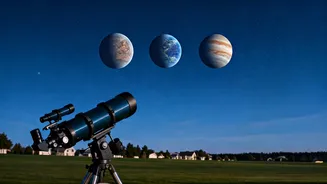
Not necessarily! The beauty of these events is that the brightest players—Mars, Saturn, and sometimes Jupiter—are visible to the naked eye. They will look like exceptionally bright stars that don't twinkle. However, a good pair of binoculars can significantly enhance your experience. Binoculars will make the planets appear as clear, sharp discs rather than just points of light, and might even reveal Jupiter's four largest moons as tiny pinpricks of light next to the planet. A telescope, of course, opens up a new world. With even a modest telescope, you could glimpse the rings of Saturn or the faint greenish hue of Uranus. But don't let a lack of equipment stop you; the simple act of seeing multiple planets at once with your own eyes is a reward in itself.