





The New Lifeline at a Glance
Indian Railways has given the green light to a new daily express train connecting Mumbai's Chhatrapati Shivaji Maharaj Terminus (CSMT) with Sawantwadi Road in the southern Konkan region. Operating as train number 15087 from Mumbai and 15088 on the return
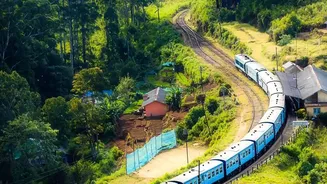
journey, the service will cover a 510-km route. With 22 stops planned, including key towns like Panvel, Roha, Chiplun, Ratnagiri, and Kudal, this service is designed for deep regional penetration, not just point-to-point travel. This isn't a seasonal special for festivals but a permanent daily fixture, aimed at addressing long-standing demands for better, more reliable connectivity.
Addressing a Decades-Old Demand
For years, residents, passenger associations, and commuters have highlighted the paradox of the Konkan Railway: a vital artery that often felt inaccessible. Despite Maharashtra holding a significant stake in the Konkan Railway Corporation, passengers have faced a shortage of services originating from Mumbai, leading to immense struggles for tickets, especially during festivals like Ganesh Chaturthi. Existing services were often insufficient to meet the needs of those travelling for work, education, or family reasons. The introduction of this permanent daily train is a direct response to this pressure, aiming to provide a reliable option for thousands who depend on the railway to connect their homes in the Konkan with their workplaces in the Mumbai Metropolitan Region.
Why This Is a 'Practical Test'
The success of the Mumbai-Sawantwadi Express will be measured by more than just ticket sales. It serves as a real-world test of several key factors. First is operational reliability. The Konkan route is notoriously challenging, particularly during the monsoon season when services are often slowed down or disrupted. Maintaining a daily schedule year-round will be a significant operational benchmark. Second is passenger load management. The service must prove its utility not just during peak festival seasons but on a day-to-day basis, attracting a consistent ridership of daily commuters, students, and traders. This will determine its financial viability and its true impact. Finally, it tests whether a single infrastructure addition can genuinely alleviate the deep-seated congestion and travel woes that have defined the corridor for years.
The Ripple Effect on the Konkan Economy
Railway officials state the new train is expected to support regional economic development and facilitate smoother passenger movement. The implications extend far beyond the tracks. Improved access is expected to provide a significant boost to tourism by making the Konkan’s beaches, forts, and temples more accessible to visitors from Mumbai. For small businesses and traders, the daily connection offers a more predictable and affordable means of transport for goods and people. Past analysis of the Konkan Railway has shown that such infrastructure projects can have positive effects on population growth and workforce participation in nearby areas. While a train line alone may not trigger large-scale industrialisation, it serves as a critical enabler, enhancing mobility and connecting local economies to larger markets.