




Just How Dry Has It Been?
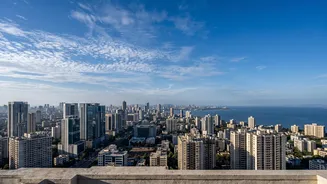
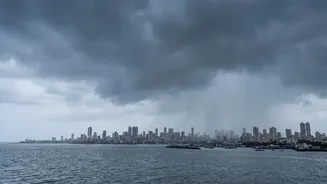
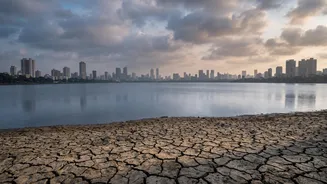
There's no denying that August has felt different. Compared to the usual deluge, this month has been noticeably drier. As of August 25, the city's primary weather station in Santacruz had recorded just over 302 mm of rain. To put that in perspective,
the same period last year saw over 1,054 mm. While the season's total rainfall since June is still at a healthy 95.5% of the average, this significant drop-off in August is what has caught everyone's attention. The India Meteorological Department (IMD) has pointed to light to moderate showers for the remainder of the week, suggesting the intense downpours are not expected to make an immediate comeback.
The All-Important Lake Levels
For any Mumbaikar, the real measure of the monsoon's success is the water level in the seven lakes that supply the city. A dry spell on the streets is one thing; a drop in the reservoirs is another. As of August 27, the city's lakes collectively held 13,87,210 million litres of water, which is 95.84% of their total capacity. This is a very comfortable position. One of the seven lakes, Vihar, is already 100% full, with others like Tulsi, Tansa, and Modak Sagar hovering near 98-99%. While this is slightly lower than the 96.74% stock on the same day last year, it's higher than the 94.87% recorded in 2024, indicating there is no immediate cause for alarm regarding the city's water supply.
Understanding the 'Monsoon Break'
This lull in rainfall is a well-documented weather phenomenon known as a 'monsoon break'. The monsoon is not a continuous four-month downpour but a cycle of active and weak phases. A break occurs when the monsoon trough—an elongated low-pressure area that drives rainfall—shifts from its normal position over the plains of India and moves north towards the Himalayan foothills. This shift causes rainfall to decrease significantly over central and peninsular India, including Mumbai, while increasing it in the Himalayan regions. These breaks can last for a few days to a couple of weeks and are a natural part of the monsoon's rhythm. They do not signify an early withdrawal of the entire season.
Putting It in Historical Context
Mumbai's history with the monsoon is full of extremes, and dry spells are not new. The city has weathered prolonged breaks in the past only to see the monsoon revive with renewed vigour in late August or September. Climatologists note that these intra-seasonal variations are normal. While a prolonged break can affect the season's overall rainfall tally, a single dry spell in August is not in itself a reason to panic, especially when the preceding months have delivered substantial rainfall. The strong performance in June and July provided a crucial buffer, filling the lakes and ensuring the city's water security was in a good state before this pause began.
What's the Forecast Ahead?
The critical question now is whether the monsoon will make a comeback in September. Meteorologists are watching for signs of the monsoon trough shifting back southwards, which would revive rainfall over the city. The IMD's forecasts for the last week of August and early September suggest that rainfall activity is likely to be below normal over Peninsular India. Factors like the developing El Niño conditions were already expected to have a potential impact, with the IMD having forecast a below-normal monsoon for 2026 overall. While the current break is a cause for watchfulness, the fate of the season will be decided by whether September can deliver a few more potent rainy spells to top up the lakes and meet seasonal averages.