
The Lithium Problem
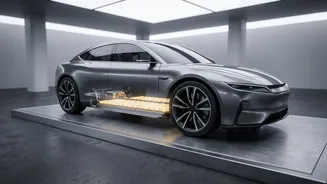
For years, the electric vehicle revolution has been powered by lithium-ion batteries. They are energy-dense and have a proven track record. However, this dependence has a downside. The cost of an EV is heavily dictated by its battery, which can account
for up to 40-50% of the total price. The primary ingredients for these batteries—lithium, cobalt, and nickel—are not only expensive but also concentrated in a few countries, leading to volatile prices and significant supply chain risks for India. This import dependency creates a strategic vulnerability for India's ambitious clean energy and EV adoption goals.
Enter Sodium-Ion: A Cheaper, Abundant Alternative
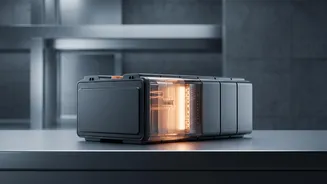
This is where sodium-ion batteries come in. As the name suggests, they use sodium ions as their charge carriers. The most significant advantage is the raw material itself. Sodium is one of the most abundant elements on Earth, readily available from sea salt and soda ash. This abundance means the materials are significantly cheaper and free from the geopolitical tensions that plague the lithium market. Indian companies are betting that this cost advantage, estimated to be 25-40% lower than lithium-ion batteries, can be passed on to the consumer, making EVs more accessible.
Indian Companies Leading the Charge
Several Indian firms are making significant strides in the sodium-ion space. Reliance Industries, through its acquisition of UK-based firm Faradion, has made a major strategic pivot towards this technology. The company plans to integrate sodium-ion battery manufacturing into its massive Dhirubhai Ambani Green Energy Giga Complex in Jamnagar, aiming to produce batteries for both EVs and energy storage. Another key player is Pune-based KPIT Technologies, which has developed its own proprietary sodium-ion battery technology in collaboration with IISER Pune. KPIT has since partnered with Trentar Energy Solutions to commercialise the technology and set up a 3 GWh manufacturing facility. These moves signal a clear intent to build a domestic ecosystem and reduce reliance on imports.
Not a Perfect Solution… Yet
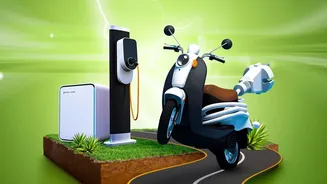
Despite the compelling advantages, sodium-ion technology is not a magic bullet. The primary drawback has been its lower energy density compared to lithium-ion batteries. This means a sodium-ion battery of the same size would historically offer a shorter range, making it less suitable for long-range passenger cars. This is why initial applications are likely to be focused on electric two-wheelers, three-wheelers, commercial vehicles, and stationary energy storage, where range is less of a critical factor and cost is paramount. However, companies like CATL and KPIT are making rapid advancements, with newer generations of sodium-ion cells closing the energy density gap with some types of lithium-ion batteries. There are also challenges in scaling up the manufacturing ecosystem, as India currently lacks domestic production of specific components like sodium-specific cathodes and anodes.
The Road to Mass Adoption
The transition to sodium-ion batteries is a strategic move for India's energy security and manufacturing ambitions. While China has a head start in commercialisation, the technology is still young enough globally for India to carve out a significant share. The Indian government is being encouraged to expand its production-linked incentive (PLI) schemes to specifically include sodium-ion chemistries to foster a domestic supply chain. For consumers, this shift promises a future where the upfront cost of an EV is no longer a prohibitive barrier. While it won't happen overnight, the plans being laid today by Indian companies could soon put the dream of an affordable electric car within reach for millions.